Central Station vs Remote Fire Alarm Monitoring: What NYC Buildings Need to Know
Two monitoring proposals can look almost identical on paper and describe genuinely different services. One connects your panel to a facility the FDNY has certified to report alarms to the Department. The other may amount to a signal arriving on a screen somewhere, with no obligation attached to what happens next.
In New York City that distinction is not a matter of preference. The city regulates who is permitted to receive a building's fire alarm signals, and a contract with the wrong company is a compliance problem rather than a service downgrade.
Comparing providers for your building? Review our NYC central station monitoring options and published costs, then request an assessment of your current system.
The Three Arrangements NFPA 72 Recognizes
Chapter 26 of NFPA 72 covers supervising station alarm systems and separates them into three arrangements. Knowing which one you are being sold makes the rest of the conversation easier.
Central station service is the full package. A prime contractor takes responsibility for the service as a whole — the connection, the testing and maintenance that keeps it working, monitoring from a listed facility, retransmission of alarms, runner service where it applies, and the records that prove all of it happened. The facility is a third party with no stake in the building it watches.
A proprietary supervising station is monitoring a large owner performs for its own properties, from its own constantly attended location. Hospital campuses, universities, and large portfolios sometimes run this way. It is not something a single commercial building buys.
A remote supervising station describes signals received at a location away from the protected premises without the surrounding obligations of central station service bundled in. The signal arrives. What is contractually promised beyond that point is narrower.
The word "remote" also gets used loosely in sales conversations to mean remote access to your panel for diagnostics, which is a different thing again and is not monitoring at all. Ask which of the three a proposal is actually describing.
The NYC Rule That Settles the Question
New York City does not leave the choice to the market. Central station monitoring of fire alarm systems is governed by the rules of the Fire Department at 3 RCNY section 901-01, and the operative requirement is a licensing one.
A company may not operate a central station that monitors fire alarm systems, or transmit alarms to the Department, without first obtaining an FDNY certificate of operation. The obligation runs to the building as well: an owner of a protected premises may not contract for monitoring with a central station company that does not hold a valid certificate of operation.
That reframes the decision. The useful question is not whether a provider calls its offering central station or remote. It is whether the company receiving your signals holds a current certificate of operation from the FDNY, and whether your building can produce evidence of it. A cheaper arrangement with an uncertified company is not a cheaper version of the same thing — it is a contract the rules do not permit you to hold.
What Actually Changes When an Alarm Comes In
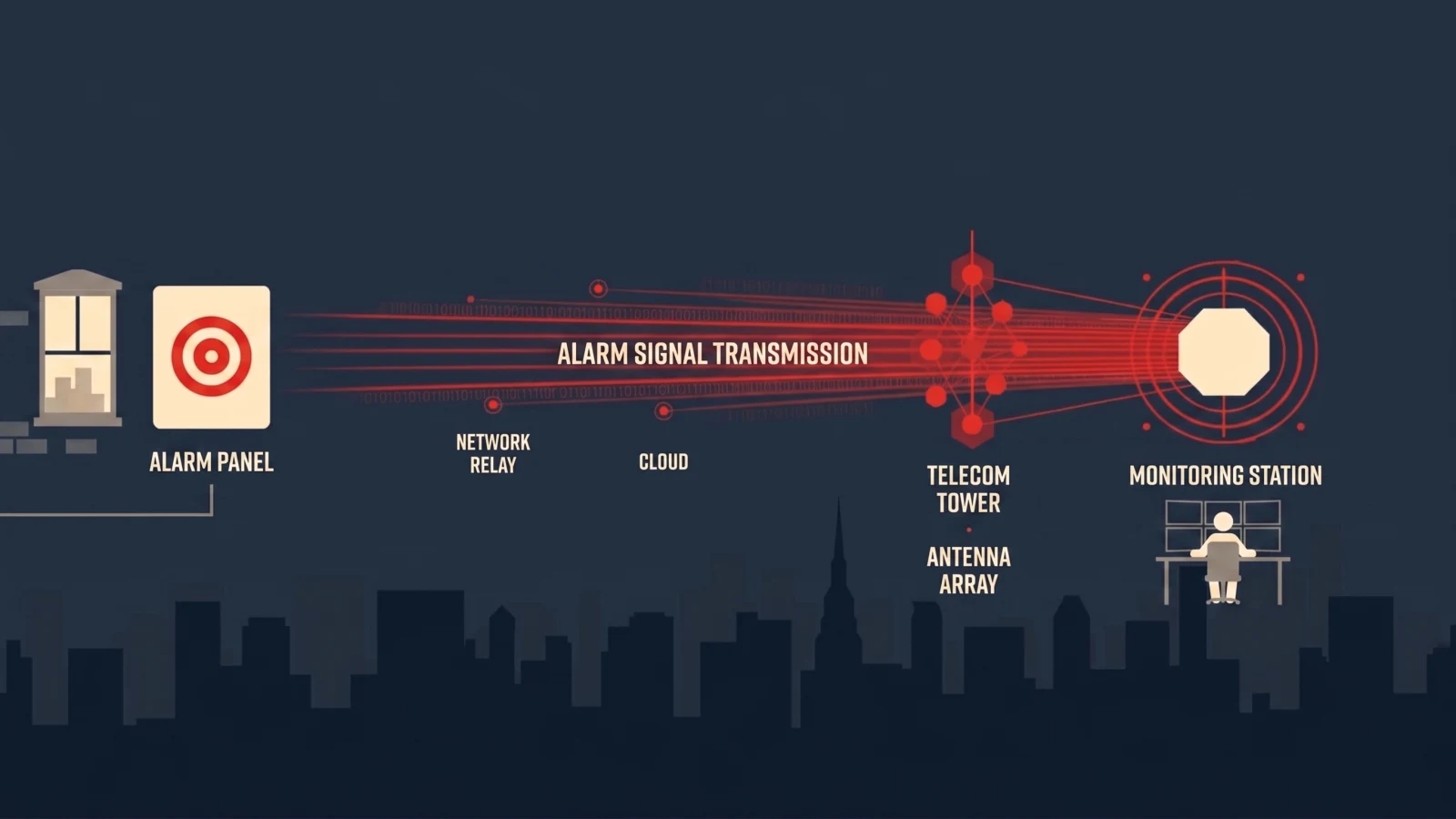
Once a signal leaves the panel, the differences between arrangements become practical rather than definitional.
A certified central station operates under a defined protocol for handling the signal and reporting fire alarms to the Department. There is an expected sequence, staffing behind it, and a record of what was received and what was done. When the FDNY or an insurer later asks what happened at 2:40 in the morning, that record is what answers the question.
Weaker arrangements tend to fail in ordinary ways rather than dramatic ones. Trouble and supervisory signals get treated as background noise, so a communicator that stopped reporting three weeks ago goes unnoticed. Contact lists go stale and nobody calls the current managing agent. Nothing is written down, so a disputed response cannot be reconstructed.
None of this shows up in a monthly rate comparison. It shows up on the night the panel goes into alarm, and again during the next inspection when the paperwork is asked for.
The Documents That Prove the Connection Is Real
Monitoring in NYC leaves a paper trail, and the trail is worth knowing because it is what an inspector asks to see.
The TB-60 application registers a central-station-monitored fire alarm system with the FDNY and identifies the terminal assignment number for the connection. It is submitted with an executed monitoring agreement between ownership and an approved central station. Together they are what establishes, on the record, that a particular building is monitored by a particular certified company.
The connection also has to be live before the system can be signed off. FDNY guidance on scheduling a fire alarm inspection puts the central station monitoring connection with the approved monitoring center among the items that must be active before the inspection is requested, alongside permanent power at the panel and a system that is complete and free of alarm, supervisory, and trouble conditions. Arriving at an acceptance test with monitoring not yet enrolled is a wasted appointment, and appointments are not quick to replace.
Communication Path Is a Separate Decision
Buildings routinely conflate two choices: who receives the signal, and how the signal travels. They are independent.
Copper phone lines are being retired by carriers, and buildings still reporting over a landline are on a path with an expiry date. A cellular communicator is the current standard for NYC commercial buildings and meets code on its own. Adding the building's internet connection as a second path through a dual-path communicator buys redundancy for properties that cannot tolerate a monitoring gap, though it is an upgrade rather than a requirement.
What none of these options do is change whether the receiving company is certified. Our fire alarm monitoring page covers the path options in more detail, and in most cases moving to a compatible communicator does not require replacing the panel.
How to Check What Your Building Actually Has
This takes about fifteen minutes and is worth doing before the question arrives from someone else.
Find the monitoring agreement and read the name of the company on it, not the name of the salesperson or the servicing contractor, which are often different. Ask that company for its FDNY certificate of operation and note the expiry. Ask for the terminal assignment number registered for your building, and confirm a TB-60 was filed for the system as it exists today rather than as it existed two renovations ago. Then ask for a recent signal history — a monitoring account that cannot show you a test signal within the last year is not being supervised in any meaningful sense.
If any of those come back vague, treat it as a finding to resolve now. It is far cheaper to correct a monitoring arrangement on your own schedule than during the run-up to an FDNY inspection.
Frequently Asked Questions (FAQ)
Is remote fire alarm monitoring allowed in New York City?
What matters in NYC is not the label on the service but whether the company receiving your signals holds an FDNY certificate of operation. The Fire Department rules make it unlawful to operate a central station monitoring fire alarm systems without one, and equally unlawful for an owner to contract with a company that lacks a valid certificate. Ask for the certificate before you sign anything.
How do I find out whether my monitoring company holds an FDNY certificate of operation?
Ask the company directly for its certificate of operation and the terminal assignment number registered for your building. A certified operator produces both without hesitation. If your servicing contractor subcontracts the monitoring to another firm, the certificate you need is the one held by the company that actually receives the signals.
Do I need a new fire alarm panel to switch to a certified central station?
Rarely. Most panels in service accept a compatible communicator, and a provider change is usually an account transfer plus a communicator that reports to the new receiver. The new account is normally enrolled and tested before the old one is deactivated so the building is not left unmonitored during the changeover.
Does dual-path monitoring make a system more compliant?
No. Dual-path addresses reliability of the connection, not the standing of the company at the other end of it. A single cellular path to a certified central station is compliant; a redundant path to an uncertified one is not. Decide the receiver first, then the path.
County Fire Inc. has connected and maintained monitored fire alarm systems across the five boroughs since 2015, and we will tell you plainly what your current arrangement is before recommending a change to it. Monitoring is one of our commercial fire protection services. To have your monitoring reviewed, call (888) 470-3473 or see our fire alarm monitoring service.