FDNY Re-Inspection Process: What to Expect After a Failed Inspection
A failed FDNY inspection feels like a judgement. Procedurally it is closer to an instruction with a deadline attached, and treating it as the second thing rather than the first is what keeps it from becoming expensive.
What follows is the sequence between the failure and the finding being closed, and the places buildings tend to stall.
Read the Document Before You Call Anyone
The first question is what you are actually holding, because the answer determines whether you are scheduling a repair or preparing a response.
A Violation Order carries a freeform description of the condition, the remedy required, and an explicit correction period. There is no hearing attached and no initial financial penalty. These are typically issued for conditions treated as an immediate hazard, so the absence of a fine signals urgency rather than leniency.
A Notice of Violation uses standard violating-condition checkboxes and is adjudicated at a hearing where monetary penalties are possible. That path gives you a forum to contest a finding you believe is mistaken.
Both routes can end in a re-inspection. Only one of them also involves a hearing calendar, and confusing the two is how owners end up preparing an argument when they needed a contractor, or the reverse.
The Correction Period Is the Clock That Matters
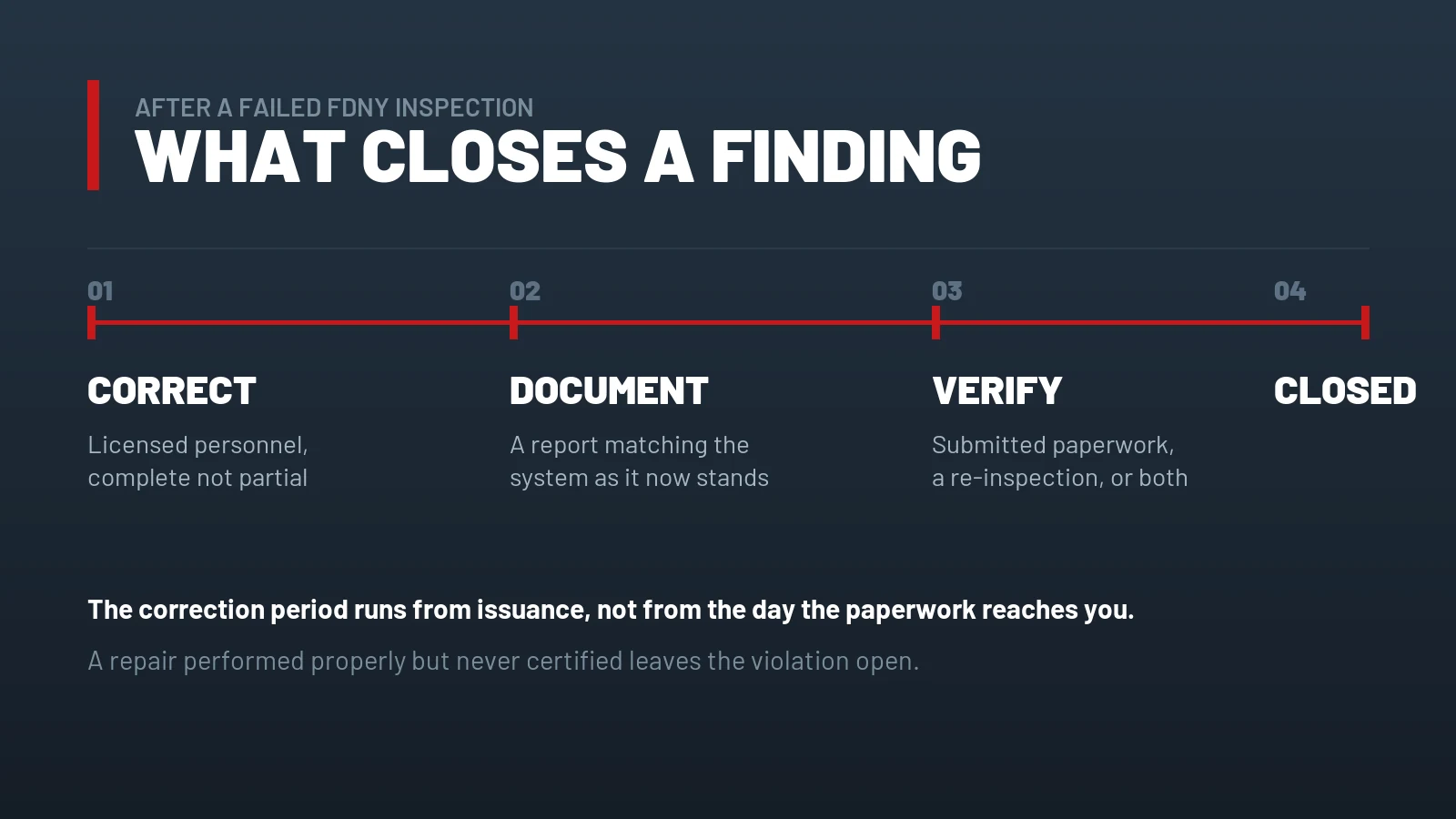
The correction period appears on the document and generally runs from issuance rather than from the day the paperwork reaches whoever handles compliance for the building. Where mail routes through a managing agent, a meaningful share of the window is gone before anyone has read it.
Work backwards from that date rather than forwards from today. Parts have lead times, licensed contractors have schedules, and a re-inspection has to be arranged after the work is complete rather than in parallel with it. A window that looks generous on paper compresses quickly once those three are sequenced honestly.
If the remedy is ambiguous, the issuing District Office is the correct place to resolve it, and it is worth doing early. Guessing at scope, completing work in good faith, and discovering at re-inspection that the department wanted something else is a costly way to learn.
If you believe the finding itself is wrong, that is a different conversation and it belongs on a different track. A Notice of Violation is adjudicated at a hearing, which is where a disputed condition gets argued. Correcting under protest while the hearing is pending is often the pragmatic choice, because the correction period does not pause while you disagree with it.
What Has to Be True Before a Re-Inspection Is Worth Requesting
A re-inspection is a test you should already know you will pass. Three things need to be in place.
The correction is complete. Not started, not scheduled, not substantially done pending a part. A partially corrected condition generally reads as an uncorrected one.
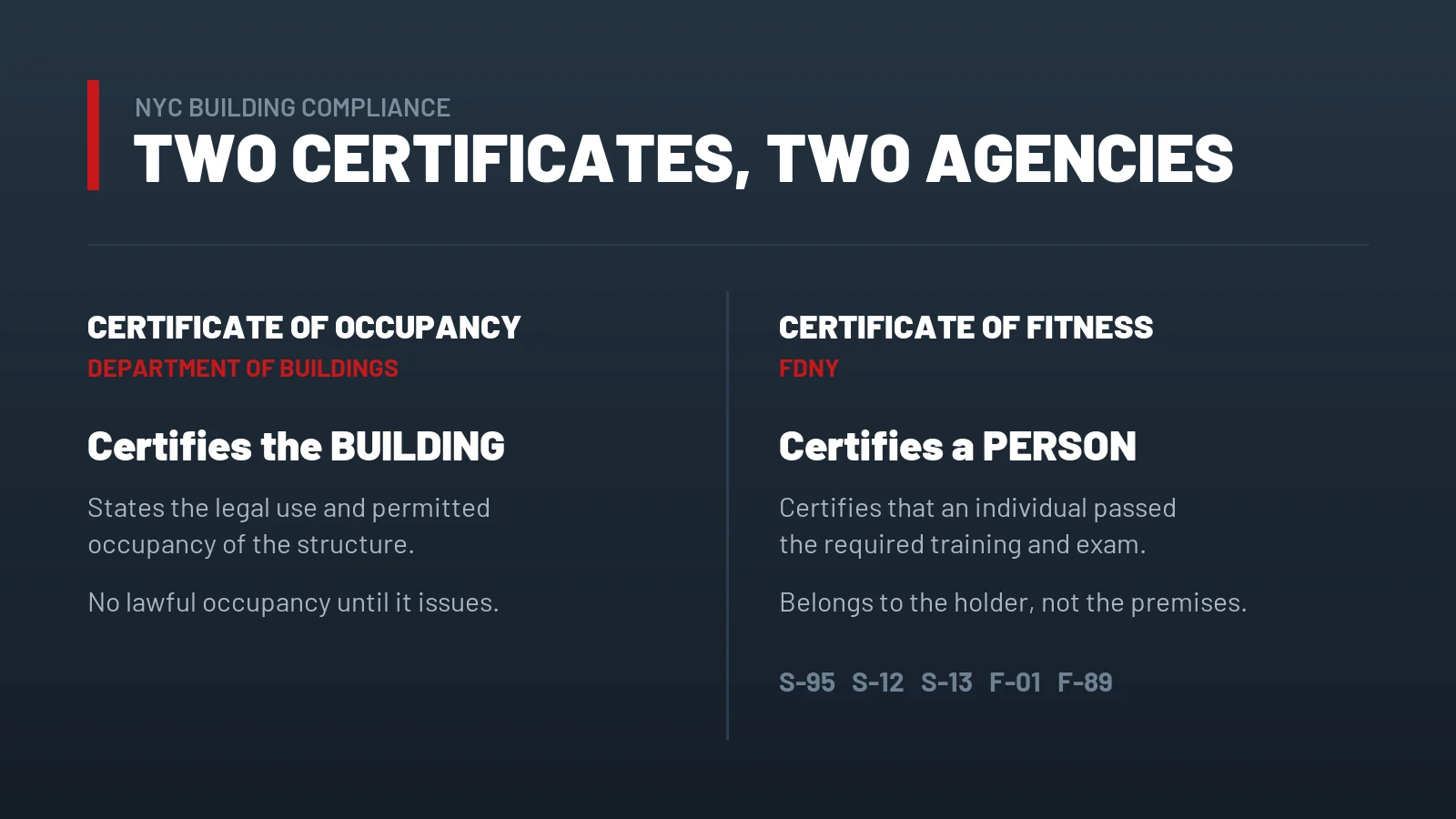
Licensed personnel performed it. Corrections to fire protection systems need to be carried out by people qualified to perform them, because the report they produce is what demonstrates compliance. Whoever was already on site may resolve the physical problem perfectly well and leave you without the document that closes the finding.
The paperwork exists and matches. The report should describe the system as it now stands and reference the condition that was cited. Records that describe a different configuration, or that predate the correction, invite questions rather than settling them.
Depending on the system involved, that work runs through fire alarm violation removal, sprinkler violation removal, or extinguisher violation removal.
What the Re-Inspection Examines
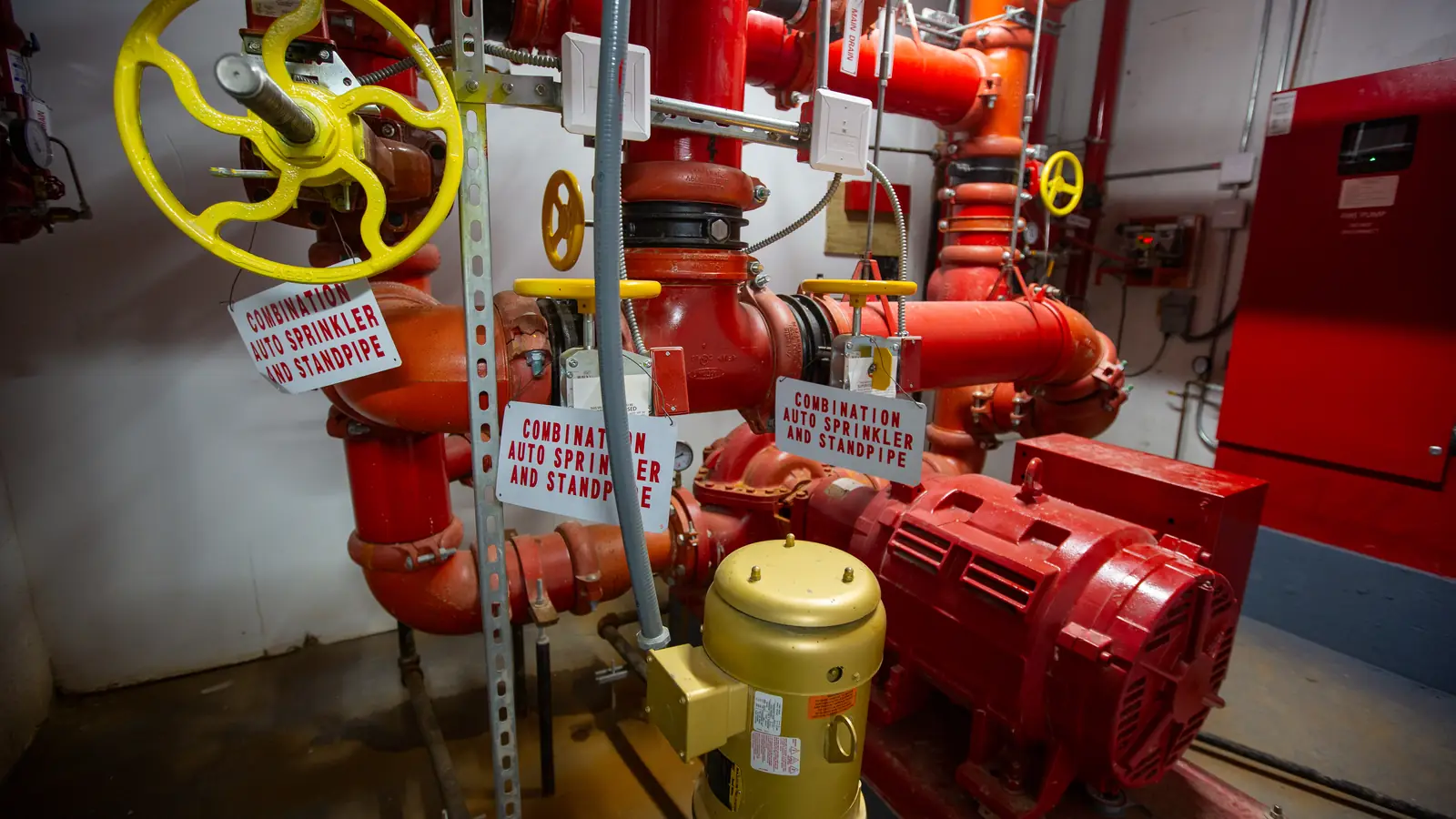
Expect the cited condition to be checked directly, and expect the surrounding system to be looked at while the inspector is there.
This surprises people. A building that corrected exactly what was cited and left an adjacent deficiency untouched can fail a re-inspection on the second item, having genuinely fixed the first. If the original finding pointed at a system, the sensible preparation is to bring the whole system to a defensible standard rather than the single component named on the form.
Have the equipment room accessible and the records reachable by whoever meets the inspector. Access delays at a re-inspection carry more weight than at a first visit, because the building is already on record as having had a problem.
Delay Compounds in Two Directions
Missing a correction deadline rarely means the original finding simply persists. It generally means escalation, and penalties on the FDNY schedule rise substantially for a second or subsequent violation in the same category — Fire Protection Systems findings move from $950 to $2,250, against a maximum of $5,000. Standard and mitigated penalties may be lower, and the amount that applies is determined by FDNY and OATH. Source: NYC FDNY Summons Penalty Schedule, 3 RCNY §109-03.
The second direction is evidentiary. Clearing depends on records, and records decay: vendors change, technicians leave, and the report that would have demonstrated the system's condition becomes harder to obtain each month. A finding addressed inside its window is a scheduling problem. The same finding a year later is a reconstruction problem first.
Frequently Asked Questions (FAQ)
How long do I have before the FDNY re-inspects?
The correction period is stated on the document and varies with the severity of the condition, with immediate hazards carrying the shortest windows. It generally runs from issuance rather than from receipt, so confirm the date printed on the form rather than assuming it started when the paperwork reached you.
Does correcting the problem automatically close the violation?
No. The correction has to be documented by appropriately licensed personnel and, in many cases, verified through submitted paperwork or a re-inspection before the finding is closed. A repair done properly but never certified leaves the violation open against the property, which is the single most common reason a resolved problem still appears on the record.
What happens if I fail the re-inspection?
You are generally back in the same process with less room in it, and exposure to the higher penalty tier that applies to repeat violations in the same category. The usual causes are a correction that was incomplete, one performed without the documentation the department expects, or an adjacent deficiency found during the second visit.
County Fire Inc. has taken NYC buildings through FDNY re-inspections since 2015, including findings that had been open well past their correction period. The corrections themselves run across our full service line. If you are working against a deadline, call (888) 470-3473 or start with our FDNY compliance overview.