Most FDNY inspections are unannounced, which makes preparation a standing condition rather than an activity. A building that can only pass after a week of notice cannot reliably pass at all.
The good news is that readiness is a short list, and almost all of it is verifiable in an afternoon. What follows is the walk a property manager can do without a technician present, in roughly the order an inspector will.
Start With the Records, Not the Equipment
This is counterintuitive and it is where most buildings lose.
Systems are frequently in working order while the documents proving it are expired, incomplete, or held by a vendor nobody has contacted in two years. An inspector cannot credit a test that cannot be produced, so a functioning system with missing paperwork is treated much the same as an untested one.
Before touching anything, confirm you can produce, on the day and without phoning anyone: the most recent fire alarm inspection and test report, sprinkler inspection records at the intervals NFPA 25 requires, extinguisher service tags, and any hood suppression service reports if the building has a commercial kitchen.
Keep them where the person who greets the inspector can reach them. Records held only by a managing agent, or only in a former employee's inbox, are records you do not have.
Fire Alarm
Look at the panel first. It should read normal — no trouble, no supervisory, no silenced condition that somebody meant to come back to. A panel showing trouble tells an inspector that a fault was known and left, which is a worse finding than the fault itself.
Confirm the panel is accessible and the room is unlocked or the key is available. Delays caused by an inaccessible equipment room are common and entirely avoidable.
Check that the annual inspection is current and that the report matches the system actually installed. Buildings that have added devices during a renovation sometimes carry a report describing the system as it was two configurations ago. If anything about the alarm is uncertain, inspection and testing is the place to resolve it before an inspector does.
Sprinkler and Standpipe
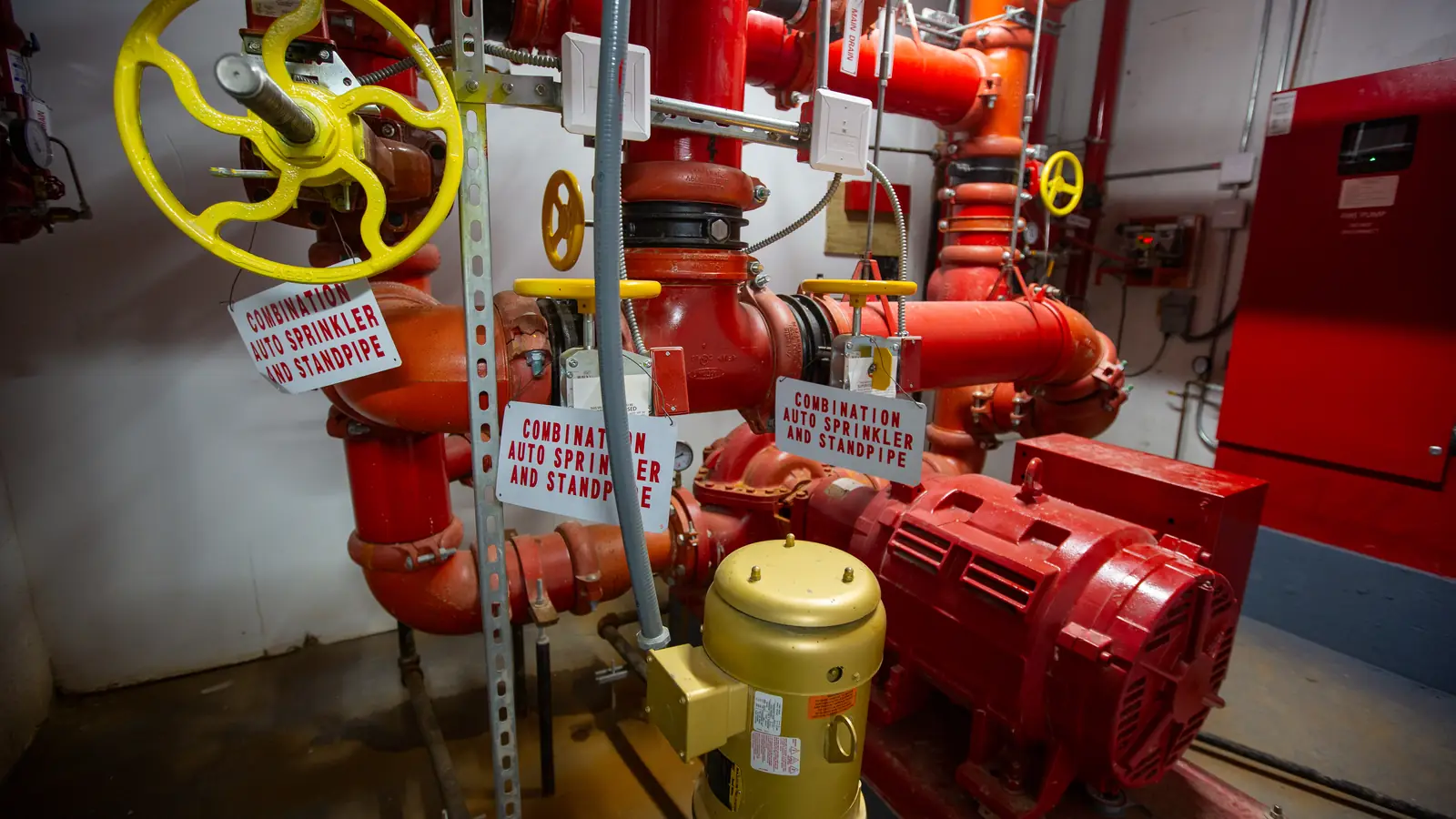
Control valves should be open and supervised. A closed or partially closed valve is among the most serious findings available, because it renders the system incapable of doing the one thing it exists to do.
Read the gauges and confirm pressure sits where it should. Walk the accessible areas and look up: heads must be unobstructed, with the required clearance beneath them, and free of paint, corrosion, or storage stacked into their spray pattern. Painted heads need replacing, not cleaning.
Confirm the NFPA 25 intervals have been met and the reports exist. Our sprinkler inspection and testing page covers what each interval requires.
Portable Extinguishers
This is the fastest category to check and one of the most frequently cited, because the requirement is continuous rather than annual.
Every unit should be in its designated location, mounted at the correct height, visible, and unobstructed. Check the tag is current, the pressure gauge sits in the operable range, the pin and seal are intact, and the body shows no corrosion or damage. Confirm the type suits the hazard — a commercial kitchen needs Class K coverage for cooking oils in addition to whatever covers the rest of the space.
Anything failing those checks needs extinguisher service rather than a note to deal with it later.
Egress and Housekeeping
Walk the exit path as an occupant would, from the furthest point to the street.
Exits must be unobstructed and unlocked in the direction of travel. Exit signage should be lit, and emergency lighting should activate on test. Fire doors need to close and latch on their own — propped doors are cited routinely, because they are trivial to spot and trivial to fix. Corridors and stairwells should be clear of storage.
Housekeeping belongs in the same walk. Accumulated combustible waste is both a hazard and a finding, and it signals to an inspector that the building is not actively managed.
Finish outside. The fire department connection should be visible, unobstructed, and capped, with nothing parked, planted, or stacked in front of it. Confirm the building address is legible from the street, and that whatever secures access after hours can actually be opened by whoever responds. These are quick to check and awkward to explain if an inspector finds them otherwise.
Build the Walk Into the Calendar
The buildings that pass consistently are not the ones that prepare hardest. They are the ones that do a version of the above monthly, so nothing accumulates far enough to matter.
A short recurring walk catches the drift that produces findings — a head obstructed by new storage, an extinguisher moved during a fit-out, a door propped for a delivery and never unpropped. None of those is expensive to correct when found. All of them are expensive to discover at once, with an inspector present. Our FDNY compliance resources cover what to keep on file and at what intervals.
Frequently Asked Questions (FAQ)
Does the FDNY give notice before an inspection?
Many inspections are unannounced, which is why readiness has to be maintained rather than arranged. Some scheduled activity does occur, but a building that depends on advance warning to pass is relying on something it cannot count on.
What is the most common reason buildings fail an FDNY inspection?
Documentation. Systems are frequently in acceptable condition while the records proving they were tested at the required intervals are expired, incomplete, or unreachable during the visit. An inspector cannot credit a test that cannot be produced, so missing paperwork behaves much like a missing test.
Who should be present when the inspector arrives?
Someone who can unlock equipment rooms, produce records, and answer questions about the systems — typically the building manager or superintendent. An inaccessible sprinkler or alarm room turns a straightforward walkthrough into a delay, and delays tend to expand the scope of what gets examined.
County Fire Inc. has kept NYC commercial buildings inspection-ready since 2015, across alarm, sprinkler, and extinguisher systems in all five boroughs. If you would rather find the gaps before an inspector does, call (888) 470-3473 or start with our FDNY compliance overview.