Fire Sprinkler Water Damage: Who Is Liable and How to Prevent False Activations
A sprinkler head opens on the fourth floor over a weekend, and by Monday morning there is water in three tenant spaces, a ruined server closet, and a ceiling that has to come down. Nobody disputes what happened. What everyone wants to know, usually within the hour, is who is paying for it.
The answer is rarely settled by the fire protection contractor. It is settled by the lease, the insurance policies, and the maintenance records — and the maintenance records are the part a building owner still controls after the fact.
Water Damage Is an Allocation Question, Not a Plumbing One
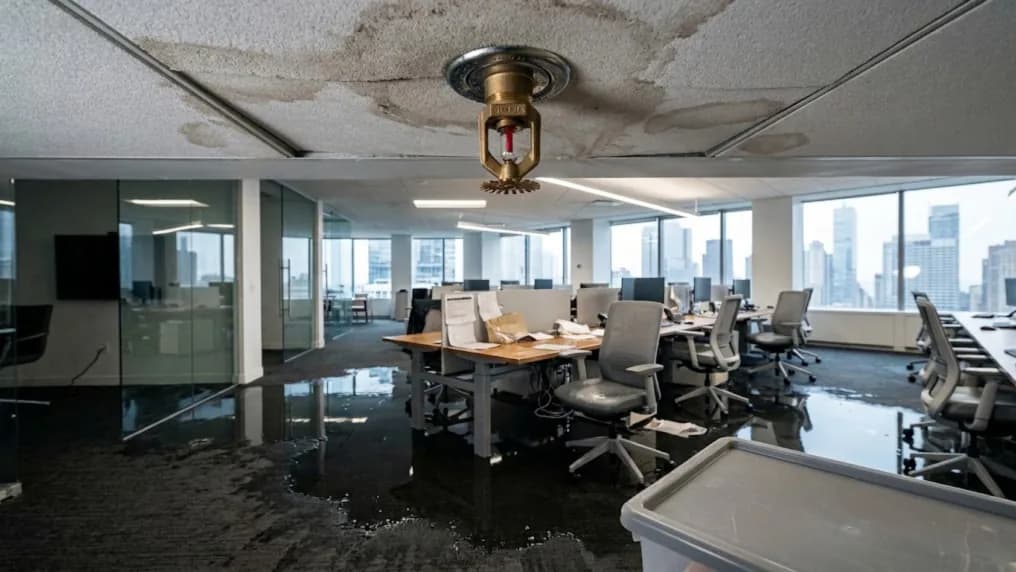
Start by separating two things that get confused in the first phone call: what broke, and who bears the cost of what it damaged. Those have different answers and different documents behind them.
The sprinkler system is a building fire protection system, and the FDNY Fire Code holds the building owner responsible for keeping it maintained and operational. That is a regulatory duty, and it is worth keeping separate from the question of who pays for any given repair. Who ultimately bears a particular repair cost can depend on the lease, where the affected equipment sits, what caused the damage, and whether any tenant work or alteration contributed to it.
What the water ruined is a different matter. A tenant's inventory, equipment, finishes, and lost trading days are the tenant's loss in the first instance, covered — if the tenant bought the coverage — by the tenant's own property and business interruption policies. The building's structure, common areas, and base-building systems generally fall to the owner's property policy, again subject to that policy's own terms.
The fight, when there is one, is about whether somebody's negligence moved a loss from the column it would ordinarily sit in. That is where the lease and the inspection history start doing the real work, and it is why a discharge should trigger a document search as fast as it triggers a cleanup crew.
What the Lease Usually Decides
Before anyone reaches for a legal theory, read the lease. Commercial leases in New York City typically settle most of this in advance, and four clauses carry the weight.
The insurance clause says who must carry what. It usually obliges the tenant to insure its own contents and improvements and to carry general liability at a stated limit, and the owner to insure the building. A tenant who skipped the coverage the lease required is in a materially worse position than one who bought it.
The repair and maintenance clause divides responsibility for building systems, and it is where you learn whether the sprinkler system inside the demised premises was yours to maintain or the tenant's.
The waiver of subrogation is the clause people most often forget. It may restrict an insurer's ability to pay its own insured and then pursue the other party to recover what it paid, which can keep a loss with whoever insured against it. How far it reaches depends on the lease wording and the insurance arrangements behind it, so it is worth reading rather than assuming. Where no such clause exists, an insurer that writes a large check has more reason to look for a cause it can pursue.
The alterations clause matters when the discharge traces back to work somebody had done — a contractor who moved a head, hung something from a branch line, or worked above a ceiling without protecting what was up there.
None of this is legal advice, and a significant loss is a conversation with your broker and your counsel. But knowing which four clauses govern turns a panicked argument into a document review.
Deferred Maintenance Is What Shapes a Negligence Argument
Here is the part worth internalizing, because it is the part a building manager can change.
An accidental discharge with a clean maintenance file reads very differently from the same discharge with a file full of deferred recommendations. Negligence generally turns on whether the responsible party knew or should have known about a condition and failed to act on it, and a two-year-old inspection report recommending the exact repair that just failed speaks directly to that question.
This cuts both ways, which is the useful part. Complete records under NFPA 25 — the inspections performed, the deficiencies found, the dates they were corrected — can become some of the strongest evidence of whether a system was responsibly maintained. The same records that can expose deferred maintenance can also demonstrate that deficiencies were addressed promptly.
Corrosion is a good example of why the file matters. Internal corrosion can develop over time without being obvious from an external inspection. Recurring leaks, rust or foreign material discharged during testing, or other signs of deterioration can indicate that the piping's internal condition needs further investigation — and what gets done once those signs appear is what ends up in the record. A pinhole leak in a pipe whose condition had already been questioned and never investigated sits differently from one in a system that had given no such indication. Keeping sprinkler maintenance and repairs current is risk management with a paper trail, not just compliance for its own sake.
An open violation complicates this further. If the system was under an FDNY notice at the time of the loss, there is a documented record that the deficiency had already been identified, which is reason enough to treat sprinkler violation removal as urgent rather than administrative.
Preventing the Discharge in the First Place
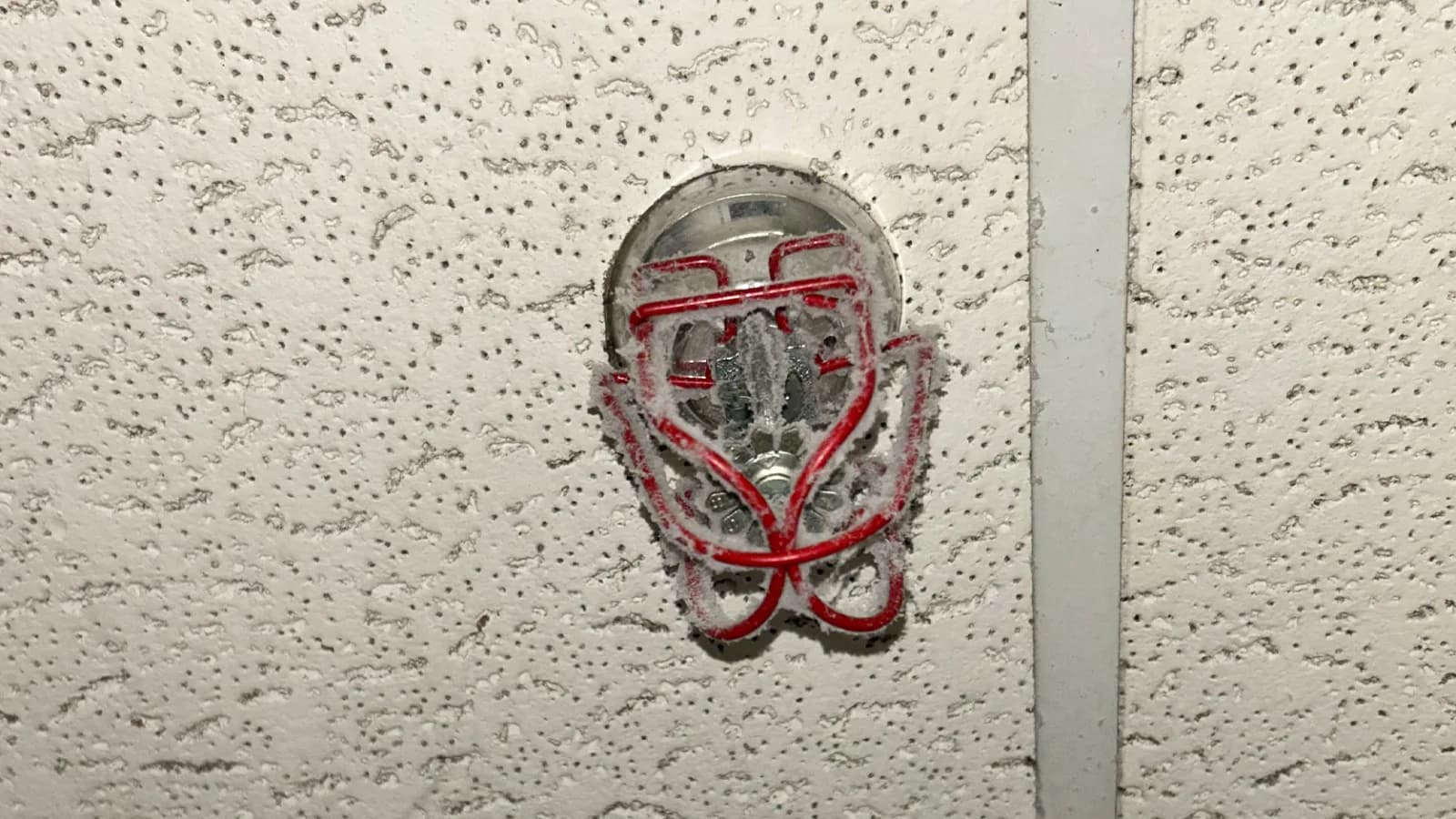
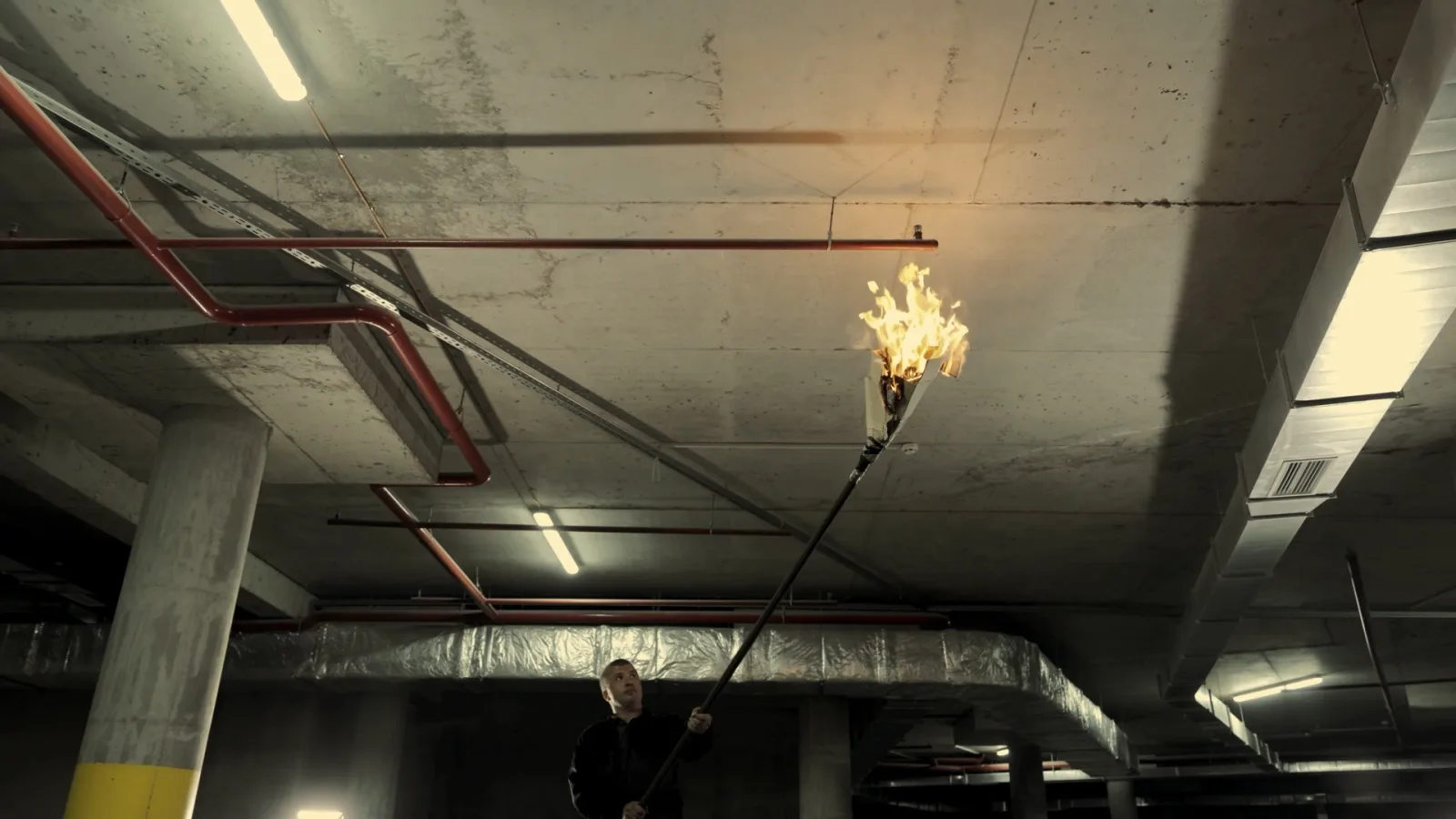
False activations have specific mechanical causes — impact, freezing, corrosion, and heads rated wrong for where they sit. We covered those causes in detail in what actually triggers a sprinkler system. What follows is the management side: the handful of controls that stop those causes from reaching a head.
Guard the heads that get hit. In parking garages, loading docks, warehouses, and storage rooms, heads within reach of a forklift, a ladder, or a pallet jack should have listed guards on them. Impact is a common cause of accidental sprinkler discharge, and one of the cheapest to engineer out.
Make "nothing hangs from the sprinkler" a written rule. Plants, cables, signage, and seasonal decorations all end up on sprinkler piping because it is the most convenient thing at ceiling height. Put it in your tenant handbook, say it to your own staff, and walk the floors after the holidays.
Keep storage clear of the heads. NFPA 13 requires clearance between the top of storage and sprinkler deflectors — eighteen inches in the common case — and a tenant who stacks to the ceiling both blocks the spray pattern and puts stock where it will be hit.
Control the people working near the ceiling. Any contractor working overhead gets briefed before they start, and any planned system shutdown goes through a documented impairment procedure with a tag, a fire watch where required, and a known restoration time. Unplanned work around sprinkler piping can release a significant amount of water, particularly when contractors do not follow an appropriate impairment procedure.
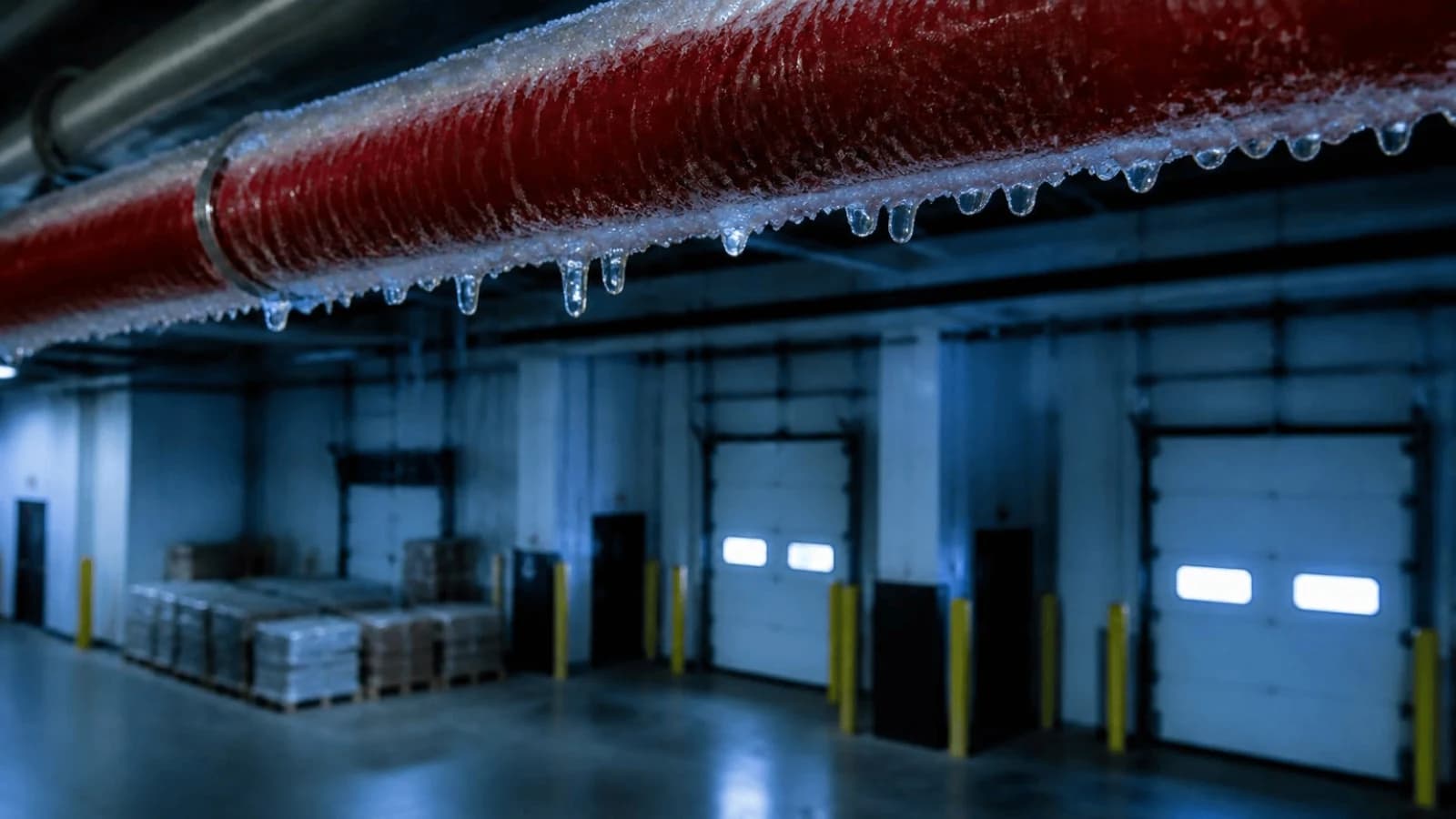
Handle the cold before it arrives. Freezing splits pipe in unheated spaces every winter in this city, and it is an entirely preventable loss on a calendar. Our guide to winterizing a commercial sprinkler system covers the autumn checklist.
Know who can close the valve. A single open head keeps flowing — on the order of tens of gallons a minute — until somebody shuts the control valve. The difference between a wet floor and a gutted floor is often how many minutes it took to find the valve and the person authorized to close it. That should be posted, not institutional memory.
Frequently Asked Questions (FAQ)
Who pays for water damage from a fire sprinkler in a NYC commercial building?
It depends on the lease and the policies rather than on a single rule. The owner's coverage generally responds to the building and the sprinkler system, and the tenant's to its own contents, improvements, and business interruption, though what each policy actually says governs. Where negligence or deferred maintenance contributed to the discharge, responsibility can shift toward whoever was responsible for the condition, which is why the maintenance file matters so much.
Does my insurance cover a sprinkler discharge when there was no fire?
Often, but not automatically. Commercial property policies frequently provide coverage for accidental sprinkler leakage or discharge whether or not there was a fire, but coverage depends on the specific policy, its exclusions, endorsements and conditions, and the cause of the loss. Coverage is also not the same as finality: an insurer that pays may then seek recovery from whoever caused the discharge, and a waiver-of-subrogation clause in the lease may restrict its ability to do so.
Can a tenant hold the building owner responsible for sprinkler water damage?
A tenant can bring a claim, and whether it succeeds generally turns on whether the owner failed to maintain a system it was responsible for — a question that depends on the lease, the facts, and applicable law. A documented NFPA 25 inspection history with deficiencies corrected on schedule is what an owner would point to. An inspection report recommending a repair that was never done is what a tenant would point to.
How do I prove the sprinkler system was properly maintained?
With the inspection, testing, and maintenance records NFPA 25 requires — what was inspected, on what date, what was found, and when each deficiency was corrected. Keep the closed-out repair documentation, not just the inspection reports, because the correction is the half that proves you acted on what you were told.
County Fire has maintained, repaired, and inspected commercial sprinkler systems across Manhattan, Brooklyn, Queens, the Bronx, and Staten Island since 2015, and we keep the kind of records that answer these questions years later. To get a system assessed, close out an open deficiency, or put a prevention plan in place before the next winter, call (888) 470-3473 or see our fire sprinkler maintenance and repairs page.