Frozen sprinkler failures often become apparent during the first sustained freezing conditions of the season, particularly where piping has gone unchecked since the previous winter. The cause is usually mundane and was visible months earlier — a door propped open onto a loading dock, or a unit heater that stopped working in March and was never repaired.
Winterizing is not one task. It is a short survey of where your piping is genuinely exposed, followed by the specific work each exposure calls for. Done in the fall, it is routine maintenance. Done in January, after a pipe has already split, it can become an emergency repair, a water damage claim, and a fire-protection system impairment that must be managed under NYC Fire Code requirements.
Start With Where the Piping Is Actually Cold
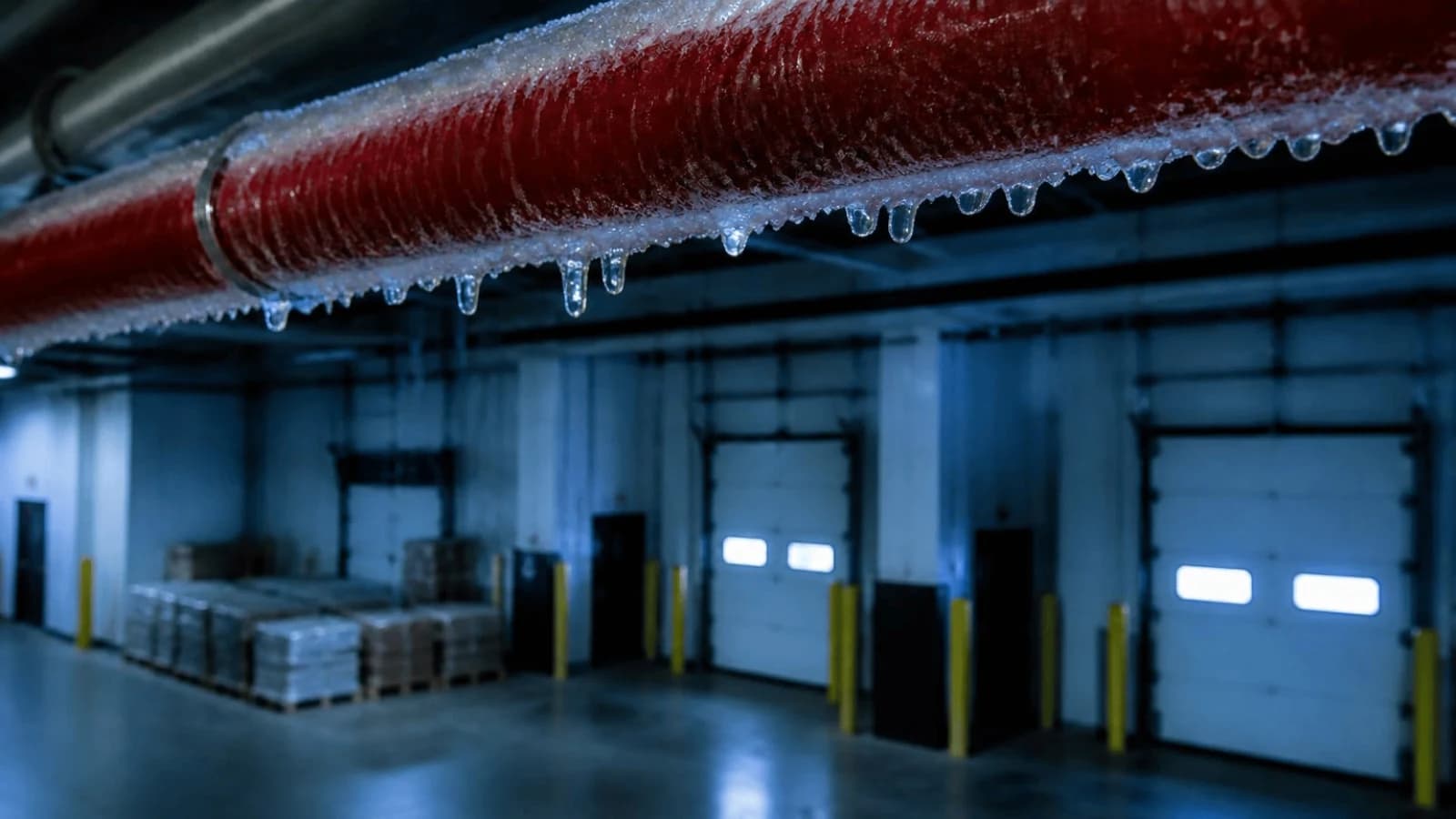
Walk the building before the weather turns and find every place sprinkler piping leaves conditioned space. In NYC commercial properties, the recurring offenders are loading docks, unheated parking garages, sidewalk canopies and marquees, stairwells and vestibules with doors to the street, attic and roof-level spaces, exterior walls where piping runs through an uninsulated chase, and cold-storage rooms.
Pay particular attention to spaces that changed since last winter. A tenant who removed a ceiling, a storefront renovation that altered airflow, a landlord who cut back heat in a vacant unit, or a loading dock door that no longer seals will each turn a previously safe run of pipe into an exposed one. The system was designed around the building as it existed at the time of approval, and buildings do not stay that way.
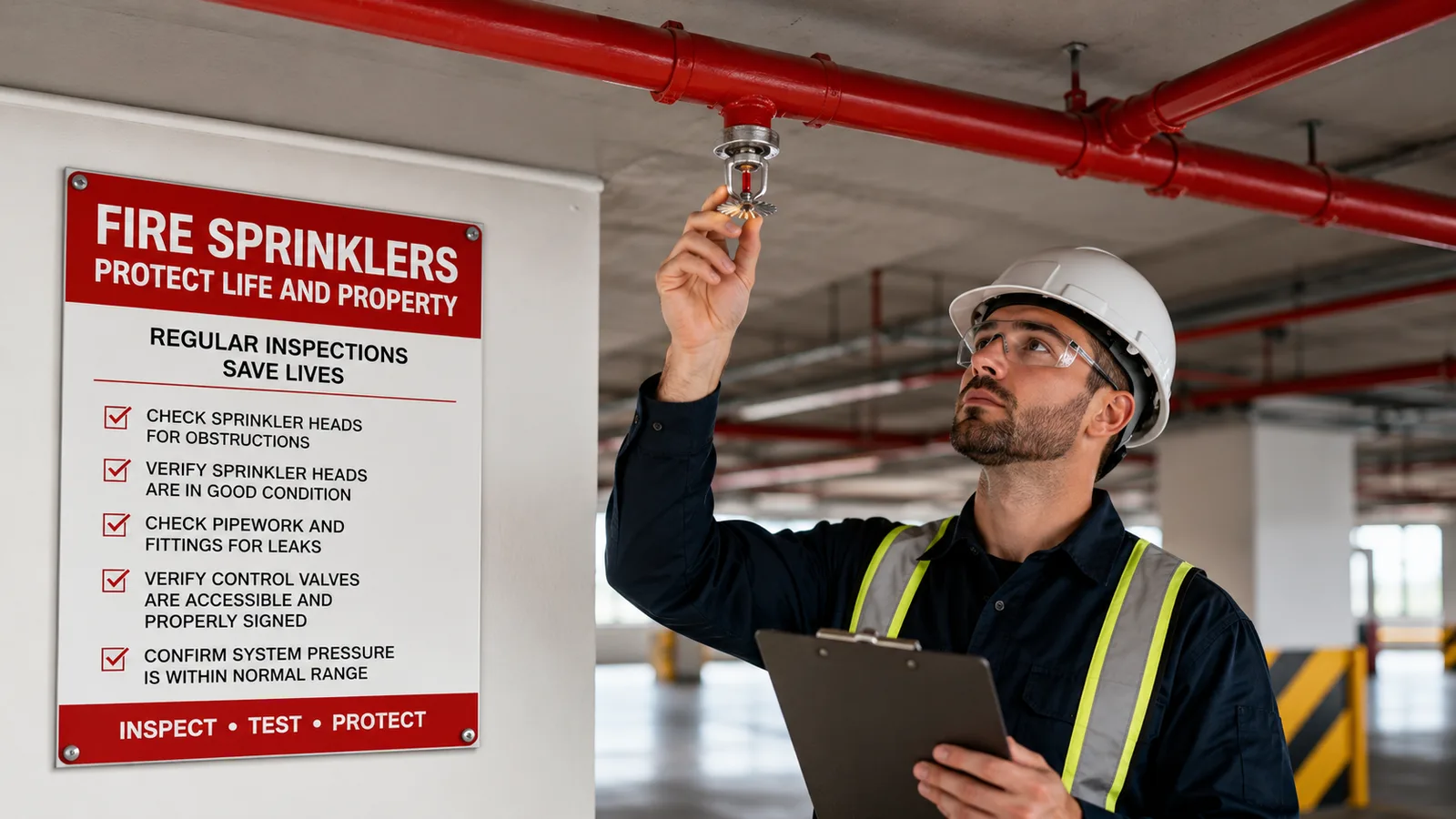
Write the survey down. A photographed, dated list of exposure points is what lets you compare this year to last, hand the same checklist to a new superintendent, and show an inspector that the condition was being managed rather than discovered.
Heat Is the First Line of Defense
For wet-pipe areas, the answer to freezing is almost always heat, not a change to the sprinkler system. NFPA 13 uses 40°F (4°C) as the threshold for areas containing water-filled sprinkler piping, and the practical implication is that winterization work is largely building maintenance: repair the unit heater, fix the door sweep, insulate the chase, or reseal the louver.
Valve rooms and riser closets deserve their own check. A sprinkler riser, its control valves, and the associated gauges and trim are frequently in a small room with a single heater nobody tests. The fire department connection and backflow preventer are often worse, sitting in an exterior enclosure or a sidewalk vault where a failed heater goes unnoticed until something splits.
Where heat alone cannot solve the problem, listed heat tracing designed for fire protection piping is the appropriate remedy, installed and documented properly. Portable space heaters are not a winterization measure. They are a fire and electrical hazard, they fail silently, and an inspector who finds one propped next to a riser has learned something about how the building is run.
Dry Systems Need Air Pressure and Drained Low Points
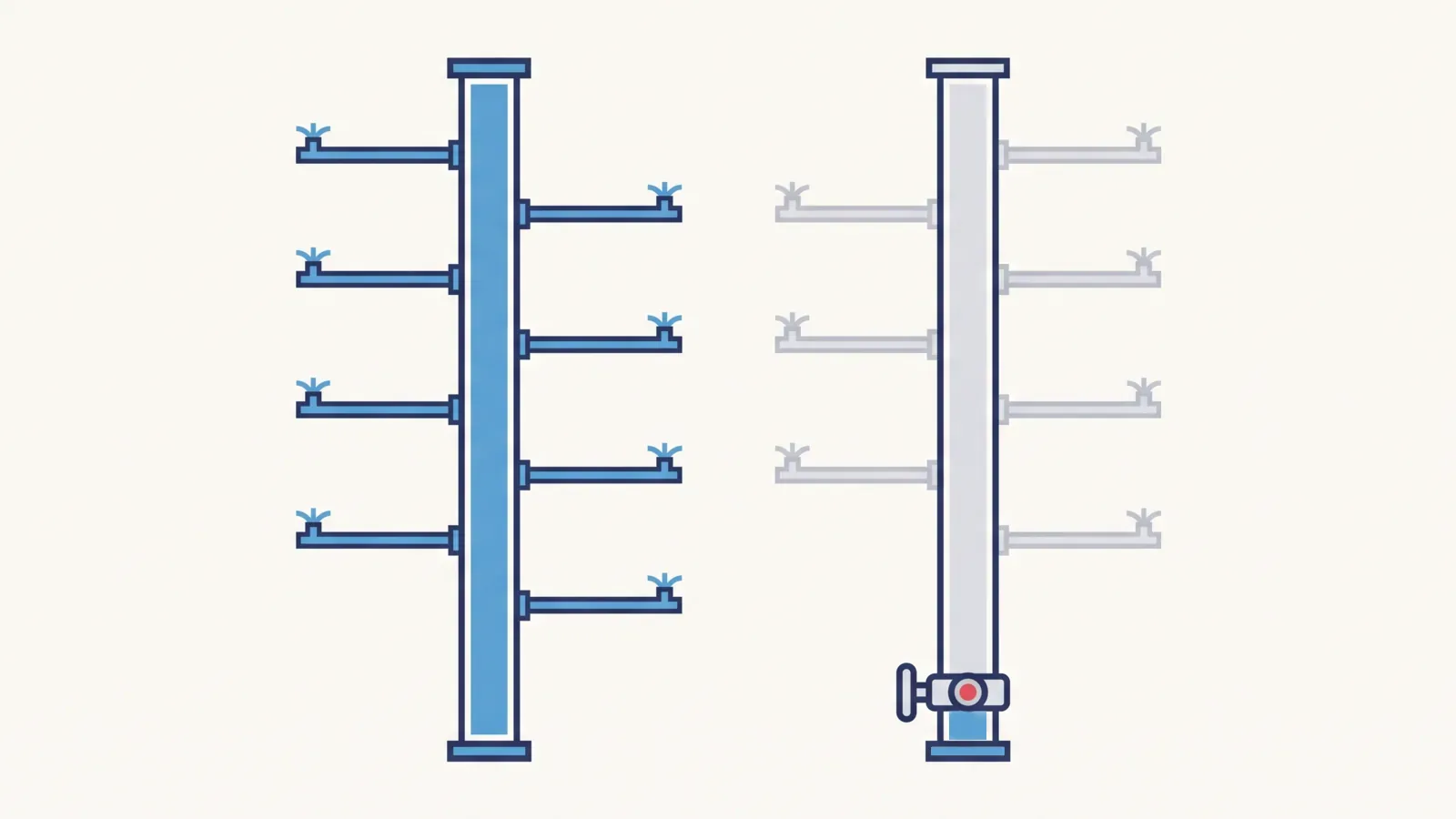
If you have dry-pipe protection, winterization is more than a heat question. A dry system holds pressurized air above the water in the dry pipe valve, and that arrangement only works if the air pressure is correct, the compressor is functioning, and water is not sitting where it should not be.
Residual water is the recurring problem. Water enters dry piping through condensation, after testing, and after any operation of the system, and it collects at low points. NFPA 25 addresses draining those low points, and the practical schedule is to drain them ahead of freezing weather and again after any event that puts water into the pipe. A drum drip nobody has touched since spring is a reasonable guess at where a dry system will split.
Check air pressure against the manufacturer's stated range rather than a number you remember, confirm the compressor cycles and is not running continuously, and verify the dry pipe valve enclosure and its priming water are protected from freezing. If you are still deciding which system a given area needs, our comparison of wet pipe and dry pipe systems covers that selection in detail — this post assumes the system is already in place and needs to survive the season.
Antifreeze Is Narrower Than It Used to Be
Antifreeze loops were once a routine answer to a small cold area, and many NYC buildings still have them. That changed after research into antifreeze solutions discharging from sprinklers found that some solutions could contribute to ignition rather than control it. NFPA subsequently restricted the use of antifreeze, particularly in new work, where listed antifreeze solutions are now expected.
If your building has an existing antifreeze loop, two things matter. First, the solution concentration has to be tested rather than assumed — concentration drifts as the loop is topped up or diluted, and a weak solution freezes while a solution mixed richer than intended creates its own hazard. That testing is a recurring NFPA 25 obligation, not a one-time commissioning step.
Second, an antifreeze loop is not automatically something to preserve. Depending on the area, the solution in place, and what the current standard permits, replacing the loop with a properly heated wet system or a dry system may be the more defensible long-term position. That is a design question for a New York State registered design professional, and it is a far better conversation to have in October than after a discharge.
How a Freeze Becomes an FDNY Problem
A frozen sprinkler pipe rarely stays a maintenance issue. Ice blocks the pipe, so the affected area is no longer protected, which means the system is impaired whether or not anyone has noticed. A split sprinkler pipe can cause substantial water damage while also leaving part of the building without normal sprinkler protection, and the system stays out of service until the repair is complete.
Under the NYC Fire Code, a sprinkler system that is out of service is subject to impairment procedures and requires interim measures while protection is restored, and FDNY notification may be required depending on the extent and duration of the outage. Handling that badly — leaving an impairment unmanaged, or restoring water without confirming the affected section is actually intact — is how a cold-weather failure becomes a violation on top of a repair bill.
Inspectors also read the surrounding evidence. A space heater in the valve room, a drum drip that has clearly not been operated, an antifreeze loop with no test records, or a unit heater tagged out since spring all indicate a system that was not being maintained. If a freeze has already produced a violation, our sprinkler violation removal team handles the correction and the paperwork, and the broader FDNY compliance process is worth understanding before you need it.
Frequently Asked Questions (FAQ)
When should I winterize my sprinkler system in NYC?
Do the work in the fall, before the first sustained freeze. October into early November is the practical window for most NYC buildings, which leaves time to repair a failed unit heater or insulate an exposed run before it matters. Waiting until a cold snap is forecast usually means competing for a contractor with everyone else who waited.
Does a wet-pipe sprinkler system need winterizing?
Yes, though the work is different. A wet system holds water throughout the piping, so the entire protected area has to stay above freezing — the winterization task is confirming the heat, the building envelope, and the valve room and fire department connection enclosures are all sound. There are no low points to drain, but there is far less margin if the heat fails.
Can I just add antifreeze to stop my pipes freezing?
No. Antifreeze in fire sprinkler systems is restricted, has to be a listed solution in new work, and requires recurring concentration testing where an existing loop is in place. Do not add or alter antifreeze in a sprinkler system as routine building maintenance. Existing antifreeze systems must comply with the applicable NFPA requirements, and modifications should be evaluated by the appropriate licensed fire-protection professional and handled under applicable NYC filing and notification requirements.
What happens if my sprinkler pipe freezes and breaks?
The affected portion of the system is out of service, which triggers NYC Fire Code impairment procedures and may require FDNY notification depending on the extent and duration of the outage. You also have a water damage event to manage at the same time. The immediate priorities are shutting down the affected section, notifying as required, and getting the repair started — a frozen system that nobody reports is the version of this that produces a violation.
County Fire has serviced sprinkler systems across the five boroughs since 2015. Fall is the right time to identify freeze exposure before emergency repairs are competing with cold-weather failures. If you want the exposure survey, the dry-system drains, and the valve room heat checked before the weather turns, call us at (888) 470-3473 or read more about our fire sprinkler maintenance and repairs.