What Triggers a Fire Sprinkler System: Debunking the Most Common Myths
Almost everything the average tenant believes about sprinklers comes from film and television, where one candle sets off every head on the floor and drenches the building. That version is wrong in nearly every detail, and the misunderstanding has practical consequences: tenants who panic about steam from a kettle, owners who assume a small fire means a total loss, and managers who hang decorations from sprinkler piping because they think the system is triggered from somewhere else.
Here is what actually opens a sprinkler head, what does not, and the handful of real reasons a head discharges when there is no fire.
Myth: Smoke Sets Off a Sprinkler
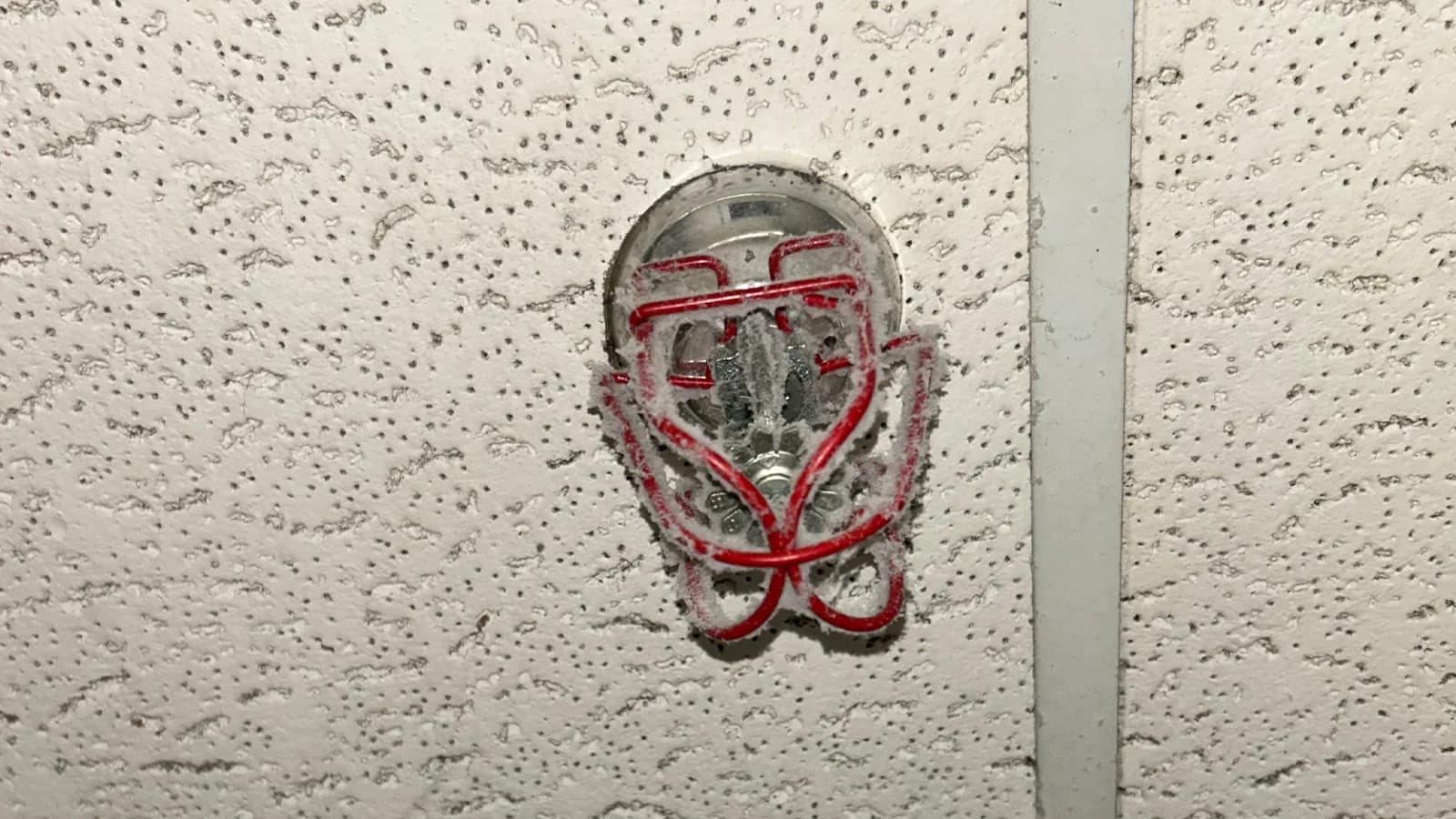
A standard sprinkler head has no idea whether there is smoke in the room. Each head is held closed by a heat-sensitive element — either a small glass bulb filled with liquid that expands and shatters, or a metal link held together by solder that melts. Either way, the trigger is heat at the head itself, and nothing else.
This is why burnt toast, cigarette smoke, a smoky kitchen or a steamy bathroom do not open a sprinkler. Those things set off smoke detectors, which are part of a separate system entirely. A smoke detector sounds an alarm and notifies people; a sprinkler head puts water on a fire. They are designed to do different jobs at different stages, and confirming that both work is why a building needs fire sprinkler inspection and testing alongside its alarm testing rather than instead of it.
The distinction also explains the timing. A detector responds to the products of combustion within seconds. A head has to be heated to its rated temperature by an actual fire directly beneath it, which takes longer and requires a real fire, not a nuisance source.
Myth: One Fire Sets Off Every Head in the Building
Each sprinkler head is an independent device. The head over the fire opens because it got hot; the head two rooms away stays closed because it did not. There is no central command that releases them together, and no head knows what any other head is doing.
In practice, most sprinkler activations involve a small number of heads — often just one — because a sprinkler operating early in a fire tends to control it before the heat spreads far enough to open more. That is the design intent: apply water where the fire is, at the moment it is still small.
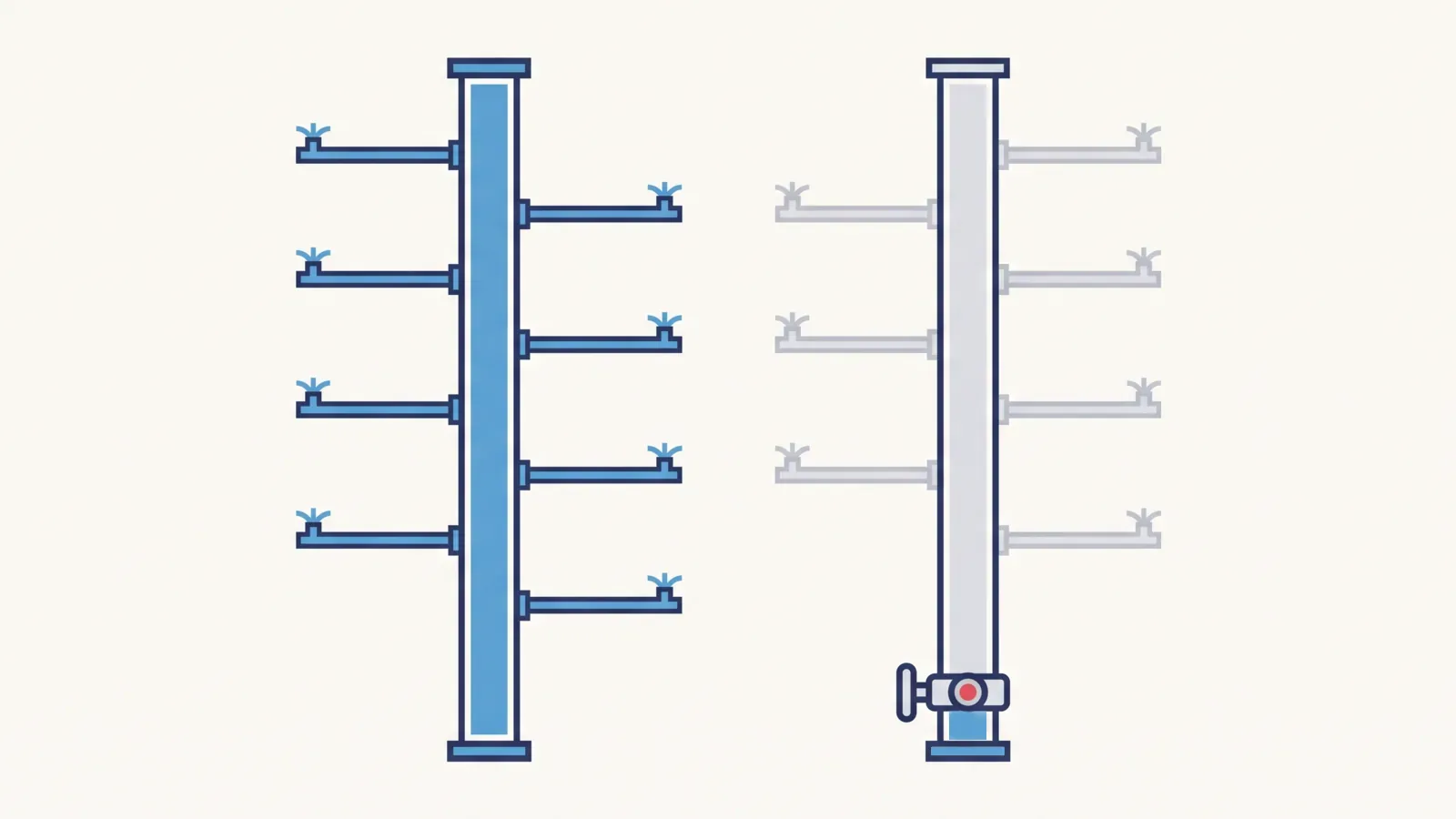
The one legitimate exception is a deluge system, where every head is open by design and a separate detection system opens a single deluge valve to discharge water through all of them at once. Deluge systems exist for special hazards — aircraft hangars, certain industrial and chemical processes, some transformer rooms — and they are rare in ordinary NYC commercial buildings. If you are not sure which type protects your building, the difference is fundamental rather than a detail, and it belongs in your system records.
Myth: The Temperature That Opens a Head Is the Same Everywhere
Heads are manufactured in a range of temperature ratings, and the rating is chosen for the space. Ordinary-rated heads, the type over most offices, retail floors and corridors, operate in roughly the 135°F to 170°F range. Intermediate-rated heads cover about 175°F to 225°F, and high-rated heads run higher still.
The rating is marked on the head, and it is color-coded — the liquid in a glass bulb and the color of the frame arms both indicate the rating, which is how a technician reads a ceiling at a glance. Higher-rated heads go where the ambient temperature is legitimately high: above commercial cooking equipment, near unit heaters, under skylights, in boiler rooms and attic spaces. Putting an ordinary-rated head in one of those locations invites an activation with no fire behind it.
This is also why a head that has been replaced casually is a problem. A maintenance worker who grabs whatever head fits the thread has quietly changed when that part of the ceiling will operate, in either direction — too early and you get a discharge, too late and you get a fire that grows first. Matching type, orifice and temperature rating is part of any competent sprinkler maintenance and repair work, and it is one of the reasons the spare head cabinet has to be stocked correctly.
Myth: Pulling the Fire Alarm Releases the Sprinklers
Pulling a manual station sounds the alarm and, on a monitored system, notifies the central station. It does not put water in the pipes or open a single head. The two systems are connected in the opposite direction: when water starts flowing through a sprinkler system, a flow switch signals the fire alarm panel, so a sprinkler activation sets off the alarm rather than the other way around.
Preaction systems are the important exception, and worth understanding because they get used as evidence for the myth. A preaction system keeps its piping dry, and a separate detection system can participate in admitting water to the sprinkler piping. The exact sequence depends on the arrangement — single-interlock, non-interlock and double-interlock systems each handle it differently. Even in a preaction system, however, water discharges into the protected space only through sprinkler heads that have opened. Keeping water out of the piping until it is needed is the whole point, which is why preaction systems are used in data centers, archives, museums and similar spaces where an accidental discharge would be expensive.
Dry-pipe systems, common in NYC for unheated areas, work differently again — air pressure holds the valve closed until a head opens and the pressure drops. No detector is involved. If you are weighing which arrangement a space needs, our guide to wet pipe versus dry pipe systems covers that decision in more detail.
Myth: Sprinklers Go Off on Their Own
Accidental discharges do happen, but not spontaneously. They have causes, and the causes are mechanical rather than mysterious.
The most common is physical damage: a head struck by a forklift, a ladder, a pallet or a piece of furniture being moved, or one being used as a hook for a plant, a cable or holiday decorations. A sprinkler head is a pressurized water fitting, and the load a hanging object puts on it is not one it was built to carry.
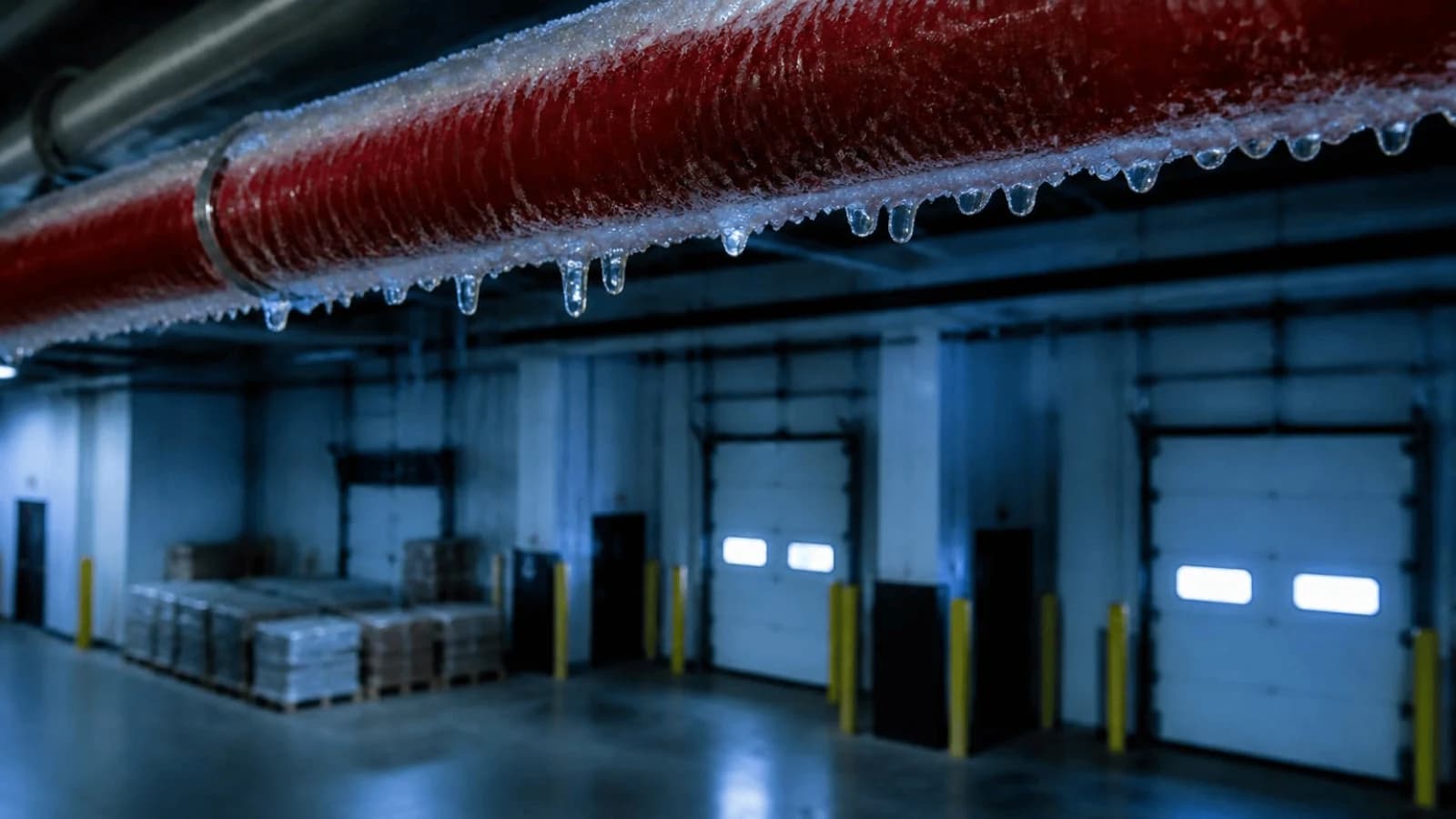
The rest of the list is short. Freezing splits piping and fittings in unheated spaces. Corrosion eventually perforates a pipe or seizes a head. An ordinary-rated head installed too close to a genuine heat source will eventually reach its rating. Manufacturing defects exist and have occasionally led to recalls, which is one more reason the model and date of your heads should be on record. What is not on the list is a head deciding to open by itself for no reason — and every item that is on the list is something a routine inspection is looking for. If you want the full picture of how head age factors in, we covered how often sprinkler heads need to be replaced separately.
Frequently Asked Questions (FAQ)
Will smoke or steam set off a fire sprinkler?
No. Sprinkler heads are activated by heat at the head, not by smoke or steam. Cooking smoke, cigarette smoke and bathroom steam will not open a head, though smoke can set off a smoke detector, which is a separate system with a separate purpose.
Do all the sprinklers go off at once when there is a fire?
Not in a standard system. Each head operates independently when its own heat-sensitive element reaches its rated temperature, so only the heads near the fire open. The exception is a deluge system, which is designed to discharge through all of its open heads at once and is used for special hazards rather than typical commercial occupancies.
What temperature does a fire sprinkler activate at?
It depends on the head. Ordinary-rated heads, the most common type in offices and retail spaces, operate in roughly the 135°F to 170°F range, with intermediate and high-temperature ratings available for hotter locations such as kitchens, boiler rooms and spaces under skylights. The rating is marked and color-coded on each head.
Can a fire sprinkler head go off accidentally?
Yes, but almost always from a specific cause: physical damage from being struck or having something hung from it, freezing, corrosion, or an underrated head installed too close to a heat source. Regular inspection catches most of these conditions before they become a discharge.
County Fire has installed, inspected and repaired commercial fire sprinkler systems in Manhattan, Brooklyn, Queens, the Bronx and Staten Island since 2015, and we are happy to walk a building manager through exactly what is on their ceiling and how it operates. To schedule an inspection or get a straight answer about your system, call (888) 470-3473 or see our fire sprinkler services.