A technician finishes the annual service and hands you a list: four units recharged, two condemned, one due for hydrostatic testing. The recharges you understand. The condemnations are the ones that prompt a phone call, because from the outside those extinguishers looked exactly like the ones that passed.
The decision is not a judgment call, and it is not a sales tactic. NFPA 10 sets out both the intervals that force a deeper level of service and the specific conditions under which a cylinder can no longer go back on the wall.
Four Different Things Can Happen to an Extinguisher
Most of the confusion here comes from four distinct operations getting described with the same word.
A recharge replaces the extinguishing agent and restores operating pressure. It is what happens after a unit is discharged, partially used, or found below pressure. It is routine and inexpensive.
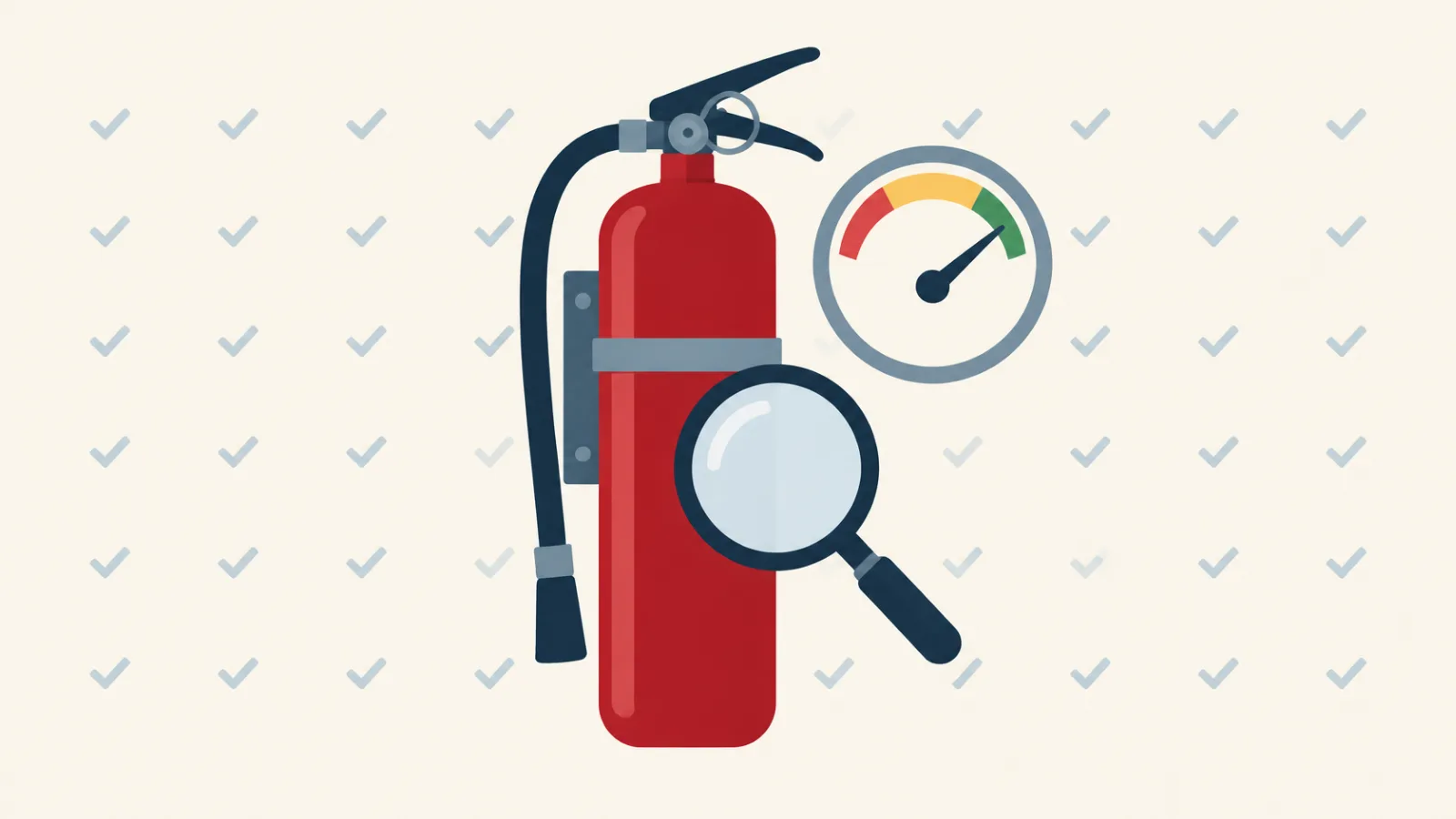
An internal examination empties the unit, removes the valve, and inspects the inside of the cylinder along with the valve, hose, and internal parts. The agent is then replaced.
A hydrostatic test pressurizes the cylinder itself with water, well above its service pressure, to prove the shell can still contain it. This tests the vessel, not the contents.
Condemnation is the outcome when the shell cannot safely be returned to service. A condemned cylinder is not refillable at any price — it is taken out of service permanently, and a reputable company will render it unusable rather than hand it back.
The first three are maintenance. Only the fourth ends the unit's life, and understanding which one you are being quoted for is the difference between a reasonable invoice and a confusing one.
The Intervals That Force a Deeper Level of Service
Extinguishers come due for internal work on a schedule tied to the date of manufacture, not to the date you bought the building.
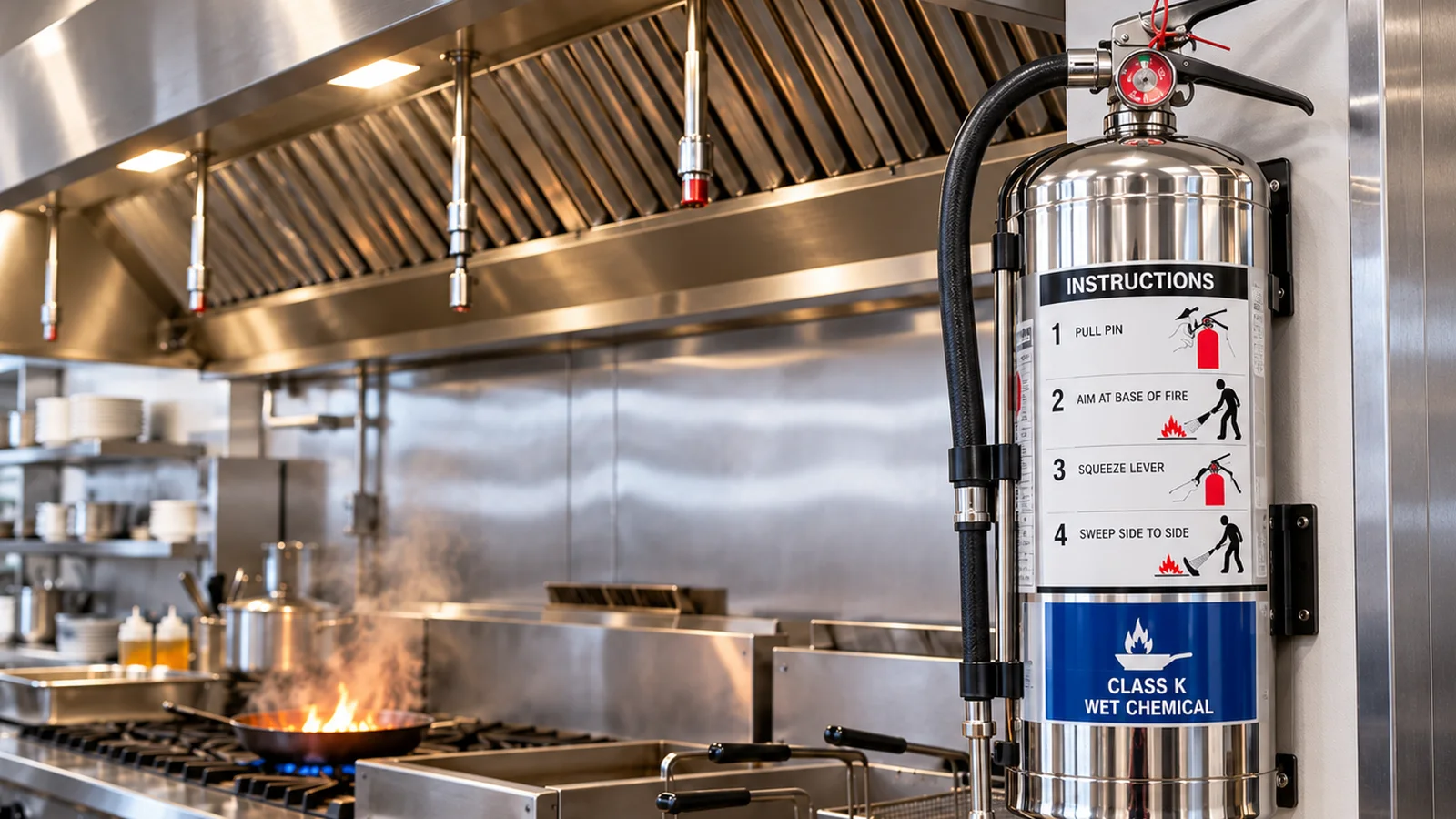
For the common stored-pressure dry chemical unit on most commercial walls, the internal examination falls at six years and the hydrostatic test at twelve. Water-based units, wet chemical kitchen units, and carbon dioxide cylinders run on a shorter hydrostatic cycle of five years, so a Class K unit on a restaurant line reaches that milestone sooner than the ABC unit in the corridor outside it.
Non-rechargeable extinguishers — the inexpensive disposable units — are a different case entirely. They cannot be recharged by design, and NFPA 10 requires them to be removed from service twelve years from the date of manufacture regardless of condition. If a disposable unit is discharged in year three, it is finished in year three.
One qualification worth stating: NFPA revises the standard and New York City adopts editions on their own cycles, so treat these intervals as the structure of the requirement rather than as a permanently fixed table. Your service report should state which interval each unit was handled under.
What Actually Condemns a Cylinder
Condemnation comes from the condition of the shell. The conditions that end a cylinder's life include:
- It fails the hydrostatic test. The shell leaks, distorts permanently, or will not hold the test pressure.
- The shell has been repaired by welding, brazing, or soldering. A pressure vessel that has been heat-repaired cannot be returned to service, which is why a well-intentioned weld on a dented cylinder destroys it.
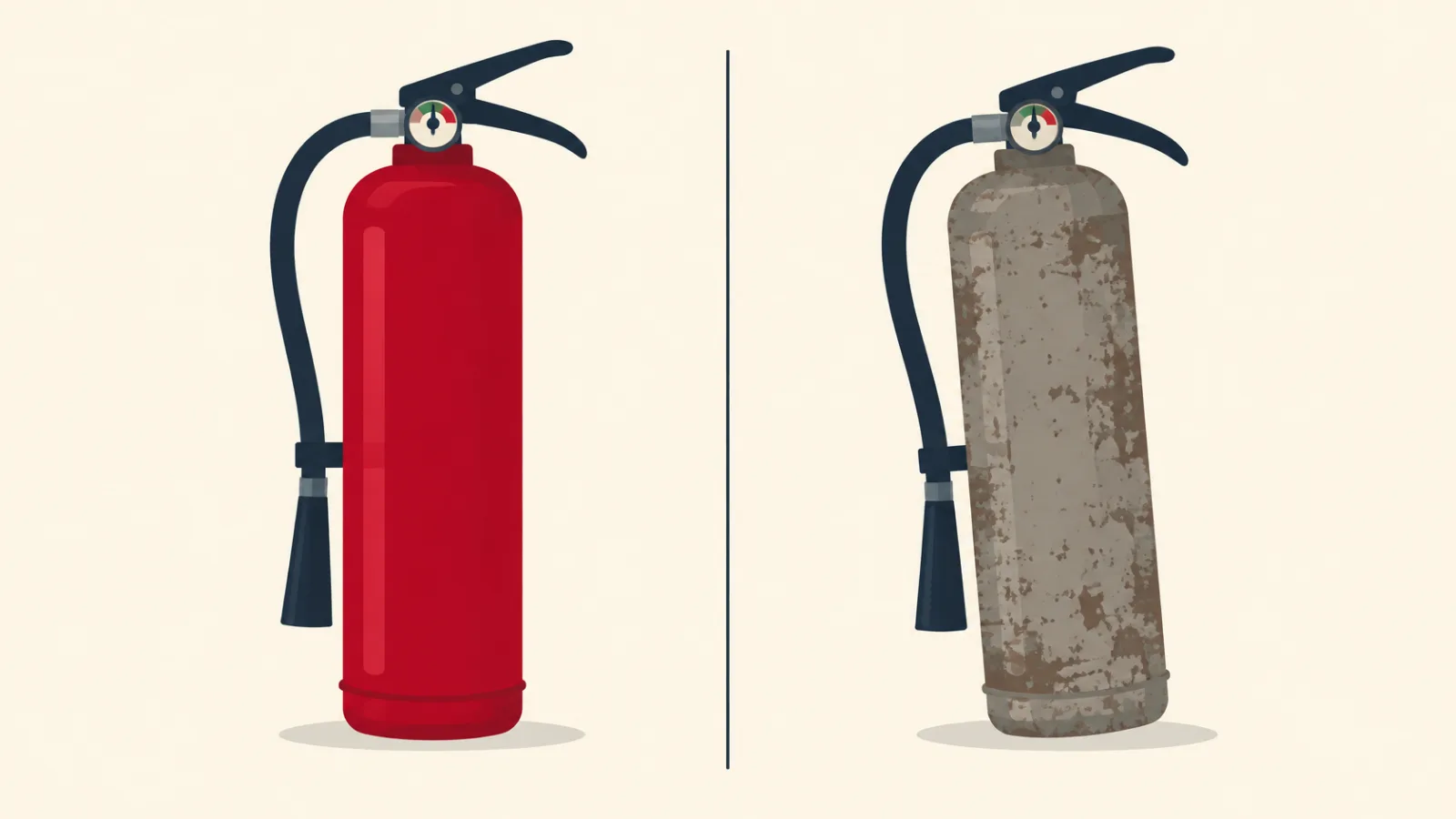
- Corrosion or pitting deep enough to compromise the wall. Surface rust is cosmetic; pitting that has eaten into the shell is not.
- Damage from heat or direct fire exposure, which alters the metal's properties even where the unit looks intact.
- Damaged threads at the valve opening, or a neck that no longer seats the valve correctly.
- Chloride attack on a stainless steel shell, typically from the wrong agent having been loaded into it at some point in its history.
Not every bad-looking finding is a condemnation, and this is where quotes deserve scrutiny. A missing or illegible nameplate has to be corrected, because the operating instructions must be readable — but it is a replaceable label, not a dead cylinder. The same goes for a failed gauge, a cracked hose, or a broken carry handle: those are parts, and parts get replaced.
If a unit is being condemned, ask which condition applies. The answer should be one of the above, and it should appear on the service report.
Age Alone Is Not a Condemnation, But Economics Matter
There is no rule retiring a rechargeable extinguisher at a set age. A steel cylinder that passes its hydrostatic test and shows no disqualifying condition can stay in service for decades, which is the real argument for specifying rechargeable units in a commercial building in the first place.
What changes with age is the arithmetic. For a small ABC unit, the combined cost of an internal examination, a hydrostatic test, and a recharge can approach the cost of a new extinguisher that arrives with a fresh manufacture date and resets both clocks. For larger units, carbon dioxide cylinders, and wheeled units, servicing remains clearly worthwhile.
So the honest version of the conversation is: condemnation is technical and not negotiable, but replace rather than service is sometimes a budget decision on a perfectly legal cylinder. A service company should tell you which of the two it is recommending. If a quote proposes replacing a dozen units and none of them is actually condemned, you are entitled to ask why.
One thing not to do is replace a unit simply because it was discharged. A rechargeable extinguisher that was used correctly is a recharge, usually a same-visit one.
What You Should Get Back in Writing
Every unit that had internal work done should come back with a verification-of-service collar — the plastic ring seated between the valve and the cylinder neck, which can only be fitted with the valve removed. It is physical evidence that the internal examination happened, and an inspector who knows to look for it will.
Alongside that, expect the service tag showing the date and the servicing company, and a report listing each unit, what was done to it, and the next interval due. For condemned units, the report should name the condition that condemned them.
Keep that report with your monthly inspection records rather than in a separate file — the two together are what demonstrate continuity, as our guide to monthly extinguisher inspections sets out. If condemnations have left gaps in coverage, the replacement units need to match the hazard and the required rating for that area, not simply the size of the bracket already on the wall; our guide to choosing and sizing extinguishers covers that.
Frequently Asked Questions (FAQ)
How do I know whether my extinguisher can be recharged or has to be replaced?
Check whether it is rechargeable at all — the nameplate says so, and disposable units cannot be refilled. For a rechargeable unit, it comes down to the condition of the cylinder. If it passes a hydrostatic test and has no disqualifying damage, corrosion, or prior heat repair, it can be serviced and returned to the wall.
How long does a commercial fire extinguisher last?
A rechargeable steel cylinder has no fixed retirement age and can remain in service for decades if it keeps passing its internal examinations and hydrostatic tests. Non-rechargeable units are capped at twelve years from the date of manufacture. In practice, cost of service rather than age is what retires most small units.
My extinguisher was used once. Do I need a new one?
Almost certainly not, if it is a rechargeable unit. Any discharge, even a brief one, means it must be recharged before going back into service — a partially used extinguisher is not a usable extinguisher. But that is a recharge, not a replacement.
What is the plastic collar around the neck of my extinguisher?
That is the verification-of-service collar, and it is the record that the unit's valve was removed for internal maintenance. Because it cannot be installed without taking the valve off, it cannot be faked by someone who only wiped the unit down and punched a tag. Its absence on a unit whose paperwork claims internal service is a genuine red flag.
County Fire Inc. has serviced portable extinguishers across the five boroughs since 2015, and every unit we handle comes back with the interval it was serviced under and the reason behind any condemnation documented. Call (888) 470-3473 or see our extinguisher maintenance service to get your building's units assessed and the schedule put on paper.