How to Choose the Right Fire Extinguisher Class for Your NYC Building
The extinguishers already hanging in your building were chosen by someone — a previous managing agent, a contractor closing out a renovation, or whoever arrived first with a case of multipurpose units. Whether they match the hazards in the rooms they are mounted in is a separate question, and it is the one an inspector is actually asking.
The letters stamped on an extinguisher label are not product tiers. They describe what is burning, and an extinguisher rated for the wrong fuel can be worse than no extinguisher at all.
What the Five Letters Actually Classify
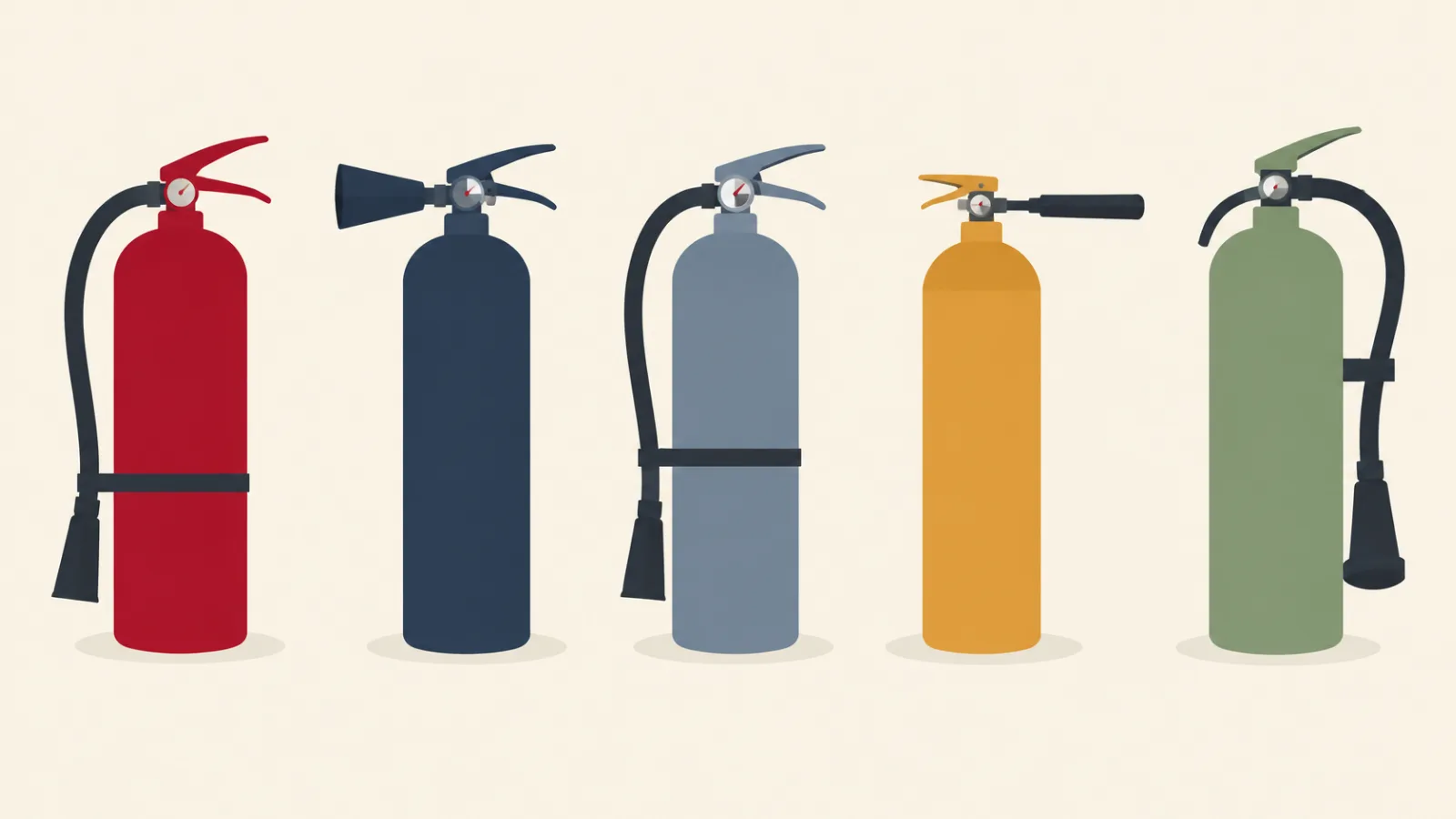
NFPA 10 sorts fires by fuel, and every portable extinguisher is listed for one or more of those classes.
Class A is ordinary combustibles: wood, paper, cardboard, textiles, and most plastics. This is the default hazard of offices, corridors, lobbies, and general storage.
Class B is flammable and combustible liquids and gases: solvents, lubricating oils, paints, and fuels. Boiler rooms, generator rooms, paint lockers, and parking garages sit here.
Class C is not a fuel. It is a statement that the extinguishing agent is non-conductive and can be used on energized electrical equipment without putting the operator in a circuit. Cut the power and the same fire reverts to Class A or Class B.
Class D is combustible metals — magnesium, titanium, sodium, potassium. These need a specialized dry powder agent and appear in machine shops and fabrication spaces, not in typical commercial tenancies.
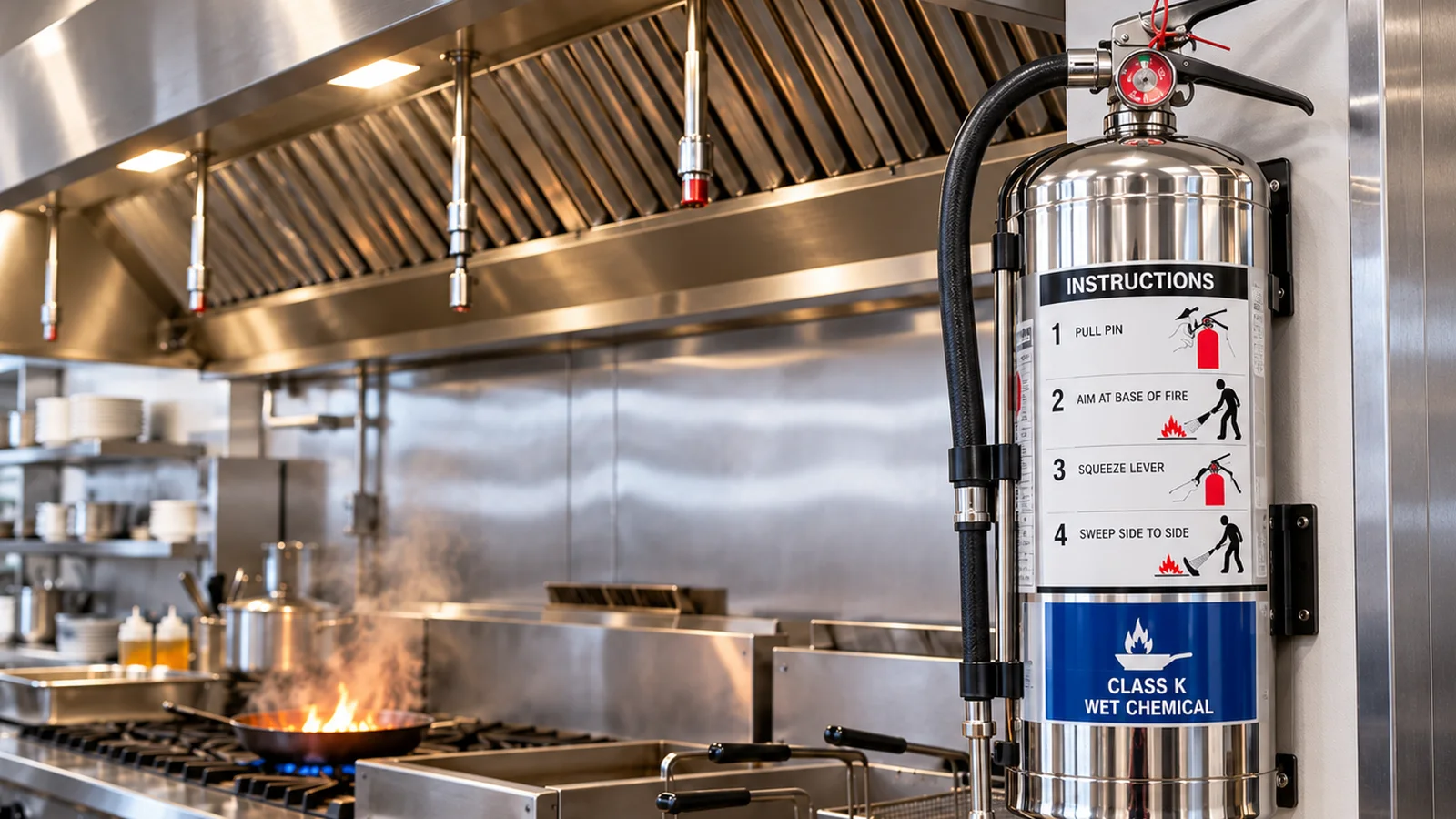
Class K is cooking media: vegetable oils and animal fats in commercial cooking appliances. It uses a wet chemical agent.
One detail that trips people up: Class A and Class B ratings carry a number in front of the letter, while Class C and Class K do not. Those letters certify that the agent is appropriate, not how much fire the unit will put out.
Match the Class to the Room, Not to the Building
Very few buildings have a single hazard, which is why "what class does my building need" is the wrong question. NFPA 10 asks you to classify hazards area by area, and the answer usually differs floor to floor.
An office floor or residential corridor is Class A. A mechanical or boiler room with fuel oil, lubricants, and solvents is Class B, and in practice gets a BC- or ABC-rated unit because energized equipment is in the same room. An electrical switchgear room needs an agent rated for Class C. A compactor or trash room is Class A. A parking garage is Class B. A commercial kitchen line needs Class K, plus Class A coverage for the ordinary combustibles elsewhere in the space.
Once you know which class each area needs, the quantity and position are a separate exercise driven by floor area and travel distance — covered in detail in our guide to choosing and sizing extinguishers for a commercial space. Class tells you which unit. Sizing tells you how many and where.
Where Multipurpose ABC Is the Wrong Choice
ABC dry chemical covers three classes in one cylinder, which is exactly why it became the default. It is the right call in most corridors and most mechanical rooms. There are three places it is not.
Commercial kitchens. Where cooking appliances use vegetable or animal oils, NFPA 10 calls for a Class K extinguisher. Wet chemical works by saponification — it reacts with hot oil to form a soapy layer that seals the surface and blocks re-ignition. Dry chemical does not do that, and discharging it at a grease fire risks splashing burning oil. Restaurant requirements are covered separately in our guide to extinguisher requirements for NYC restaurants and commercial kitchens.
Server rooms and sensitive electronics. ABC is non-conductive, so it is permitted on energized equipment. The problem comes afterward. Monoammonium phosphate residue is mildly acidic and draws moisture from the air, so it keeps attacking circuit boards and connectors long after the fire is out. Carbon dioxide or a listed clean agent puts the fire out and leaves nothing behind.
Combustible metals. Class D is its own agent for a reason. Standard dry chemical can react with a burning metal and intensify it.
Lithium-Ion Batteries Do Not Have a Class
This one matters more every year in New York City, and it is widely misunderstood. Class D covers combustible metals, including lithium metal — it does not cover lithium-ion cells. NFPA 10 defines no extinguisher class for lithium-ion batteries.
The reason is mechanical. A failing lithium-ion cell goes into thermal runaway: it generates its own heat through an internal chemical reaction and propagates to neighboring cells. Putting out visible flame does not interrupt that reaction, so a unit that knocks down the fire can leave a pack that reignites minutes later.
That does not make your existing extinguishers useless. A water or ABC unit can control the ordinary combustibles burning around the battery and cool adjacent cells, which buys evacuation time and is worth having nearby. But for a building with e-bike parking, a bike room, or powered mobility device charging, the protection that actually works is upstream of the extinguisher: where devices are stored and charged, how far that area sits from egress, what separates it from occupied space, and whether detection in that room reports to a monitored panel. Treat it as a storage and detection problem, not a shopping problem.
Frequently Asked Questions (FAQ)
Does every floor of my building need a Class K extinguisher?
No. Class K applies where commercial cooking appliances use vegetable or animal fats — a restaurant line, a cafeteria, a staff kitchen with a fryer or griddle under a hood. An office pantry with a microwave and a coffee maker is a Class A space. Putting Class K units on floors that do not cook adds cost and annual service with no compliance benefit.
Can one ABC extinguisher cover an electrical closet?
It can, because ABC dry chemical is non-conductive and carries a Class C listing. Whether it should depends on what is in the closet. For panelboards and conduit, ABC is reasonable. For racks of network or control equipment you cannot easily replace, carbon dioxide is the better specification because the residue from dry chemical causes its own damage.
What class do I need for a parking garage?
Class B is the governing hazard, since the fuel of concern is gasoline and oil. Most garages are equipped with ABC units, which satisfies the Class B requirement while also covering ordinary combustibles in storage areas and stairwells on the same level.
Who decides which class my building actually needs?
The hazard in each area decides, and NFPA 10 sets out how to classify it. In practice a licensed extinguisher company walks the building, identifies the hazard in each space, and specifies accordingly — which also produces the documentation an inspector will ask for. Guessing from a catalog is where most mismatches start.
County Fire Inc. has specified and serviced portable extinguishers across the five boroughs since 2015, and a hazard walk-through is the fastest way to find out whether what is on your walls matches what is in your rooms. Call (888) 470-3473 or see our extinguisher sales and installation service to have the classes verified, supplied, mounted, and tagged.