The Hidden Dangers of a Leaking Fire Sprinkler Head: Why "Minor" Fire System Issues Lead to Catastrophic Failures
The Problem with Ignoring the Warning Signs

When you see a leaking fire sprinkler head, you are only seeing the symptom, not the disease. Commercial fire sprinkler systems are designed to hold back highly pressurized water (or pressurized gas, in the case of dry systems) 24 hours a day, 365 days a year.
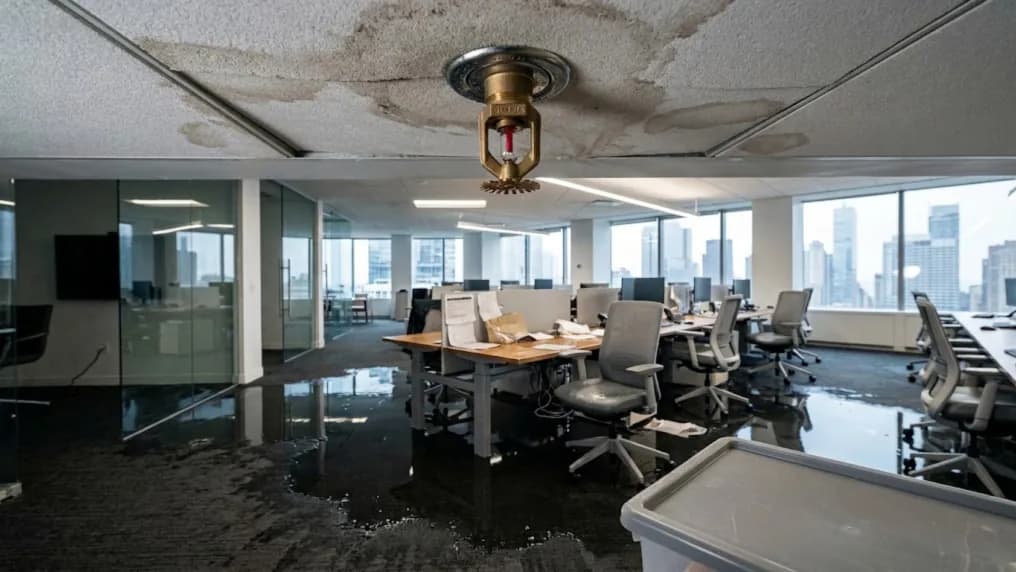
When a leak occurs, it means the structural integrity of the seal, the pipe, or the thermal element of the sprinkler head has been compromised. If the system cannot hold its standard static pressure, it cannot be trusted to deliver the necessary dynamic pressure required to extinguish a commercial fire. A compromised head may fail to activate at the correct temperature, or worse, it may rupture prematurely, causing thousands of dollars in water damage to your inventory, electronics, and property.
Many commercial property owners and facility managers don’t realize the severity of these early warning signs until a failed inspection or, worse, an emergency exposes a fully compromised system.
Why This Happens—The Mechanics of System Degradation
Fire sprinkler systems degrade quietly over time. Understanding why these mechanical failures occur is critical for proactive facility management. The most common culprits include:
- Microbiologically Influenced Corrosion (MIC): This is one of the most destructive forces in a fire suppression system. MIC occurs when microorganisms inside the steel pipes react with the water and metal, creating localized pits and pinhole leaks. The corrosion you see on the outside of a pipe or head is often just the tip of the iceberg; the inside of the pipe may be entirely choked with rust and sludge.
- Failing O-Rings and Seals: Over time, the rubber O-rings and gaskets that keep sprinkler heads and valves watertight become brittle due to temperature fluctuations, age, and water chemistry.
- Sediment and Mineral Buildup: Hard water can leave calcium and mineral deposits inside pipes and valves. Over time, this buildup restricts water flow, causing low pressure readings on your gauges and physically locking moving parts, resulting in stuck control valves.
If your commercial fire suppression system hasn’t been professionally evaluated recently, hidden deficiencies like internal pipe corrosion or stuck valves may already exist out of sight.
The Consequences of Ignoring System Deficiencies
Ignoring the early warning signs of a deteriorating fire sprinkler system does more than just jeopardize your physical property; it exposes your business to severe legal, financial, and operational liabilities.
Unmitigated Safety Risks The primary purpose of your sprinkler system is life safety. Low pressure or a stuck valve means that if a fire breaks out, the system will not deliver the gallons-per-minute (GPM) required to suppress the flames. The fire will spread faster than local fire departments can respond, putting employees, tenants, and first responders at severe risk.
FDNY and Local Code Compliance Exposure Fire codes are unforgiving. Local authorities, including the FDNY, mandate strict adherence to NFPA 25 standards for the inspection, testing, and maintenance of water-based fire protection systems. A leaking head or a rusted valve is an immediate code violation. Failing to address these issues can result in civil penalties under the applicable schedule, failed inspections, and in severe cases, the immediate revocation of your Certificate of Occupancy, forcing you to shut your doors.
Severe Financial Impact If a fire occurs and investigators determine that the system failed due to documented, deferred maintenance (like ignoring a known leak), your commercial property insurance provider has grounds to deny your claim entirely. Furthermore, waiting for a system to completely break down guarantees that you will be paying premium, after-hours emergency rates for repairs, rather than scheduled fire sprinkler maintenance and repair.
Operational Disruption and False Trips A compromised system doesn't just fail to open during a fire; it can also open when there is no fire. A corroded, leaking sprinkler head is highly susceptible to "accidental discharge." A single commercial sprinkler head can discharge up to 25 gallons of black, stagnant water per minute, destroying inventory, servers, and drywall before the main valve can be shut off.
Understanding these risks is the first step; scheduling a professional inspection now can help prevent expensive emergency failures and keep your doors open later.
Warning Signs Every Property Manager Must Watch For
To protect your commercial property, facility teams must be trained to spot the early indicators of system fatigue. Catching these signs early is the key to minimizing repair costs and maintaining code compliance.
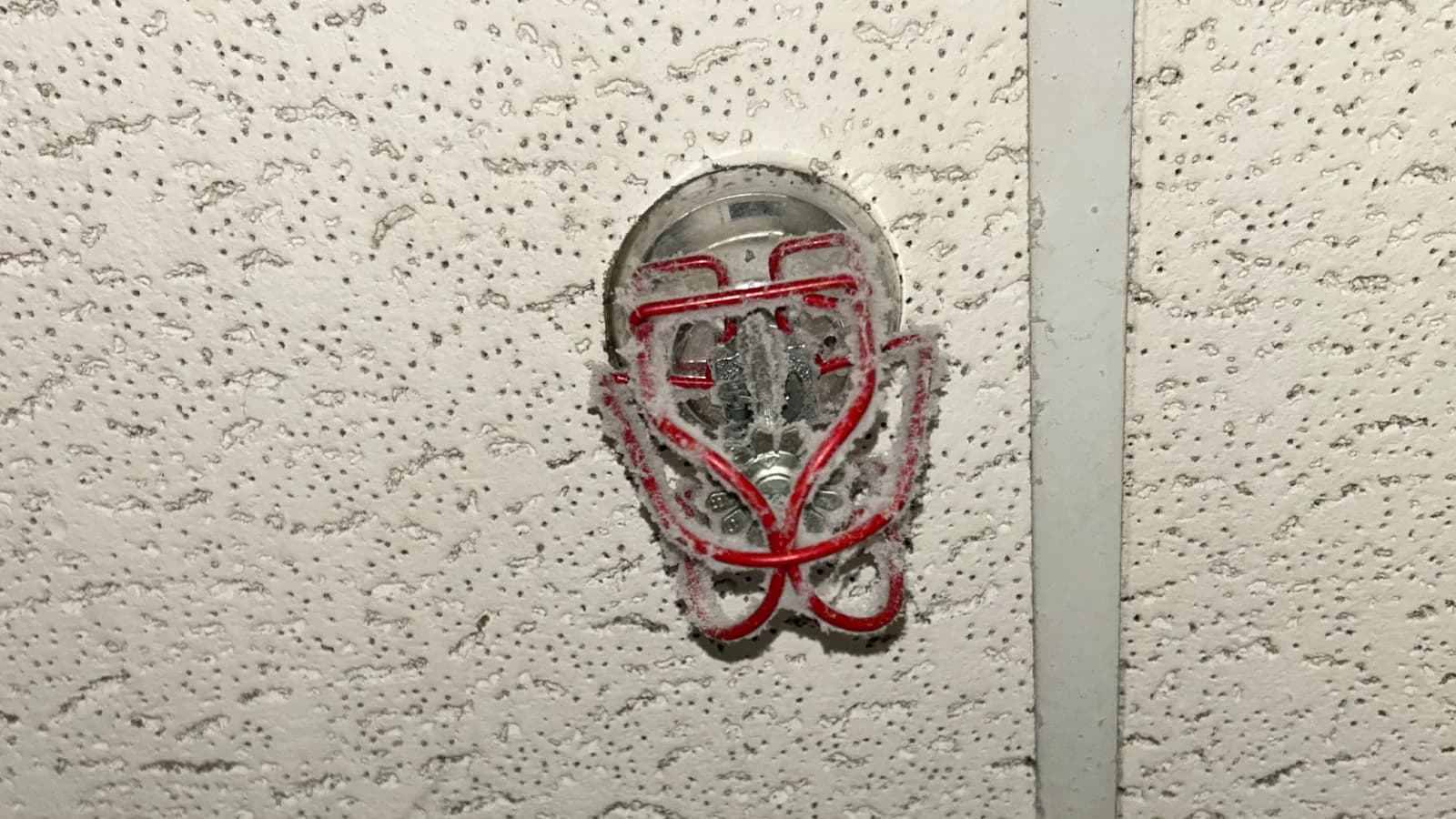
- Weeping or Drip Patterns: Any moisture, dripping, or dried water stains around a sprinkler head escutcheon plate.
- Visual Corrosion or Rust: Orange, brown, or black discoloration, bubbling paint, or crusty buildup on pipes, fittings, or the sprinkler heads themselves.
- Pressure Gauge Discrepancies: Gauges that consistently read below the standard required pressure for your specific system design, indicating a potential hidden leak or a closed/stuck valve.
- Foul-Smelling Water: If you bleed the system and the water smells like rotten eggs, it is a strong indicator of advanced Microbiologically Influenced Corrosion (MIC) actively eating away at your pipes.
- Difficult or Stuck Valves: Control valves that require excessive force to turn are unsafe. In an emergency, these must operate smoothly to control the water supply.
If you recognize any of these symptoms in your building, a localized, low-friction diagnostic evaluation can identify the root cause before the system fails.
How County Fire Solves Complex Sprinkler Issues
Comprehensive Inspections & Testing Our certified technicians conduct rigorous, NFPA-compliant visual and physical inspections. We don't just look at the surface; we evaluate the systemic health of your suppression infrastructure, ensuring every gauge, valve, and head meets local fire codes.
Advanced Diagnostics and Compliance Verification If your system is experiencing low pressure or recurring leaks, we utilize advanced diagnostic techniques to pinpoint the structural failure. Whether it's testing for internal MIC or recalibrating pressure switches, we ensure your building is strictly compliant with FDNY and municipal regulations, keeping you completely inspection-ready.
Precision Maintenance & Emergency Repairs From replacing corroded, outdated sprinkler heads to rebuilding stuck control valves and replacing compromised pipe sections, County Fire executes precision repairs that restore your system's integrity. Our goal is to reduce your liability risk, eliminate the threat of accidental water damage, and ensure that if a fire ever occurs, your system responds exactly as engineered. Sprinkler repair is one of the fire protection services we run for commercial buildings across the five boroughs.
Partnering with a dedicated fire protection specialist ensures that when your system is called upon, it performs flawlessly. County Fire removes the guesswork from facility safety.
Frequently Asked Questions (FAQ)
Is a small drip from a sprinkler head actually serious?
Yes. A weeping head points to a failing seal, corrosion, or a pressure problem, and any of those can progress either to a full discharge or to a head that fails to operate during a fire. It also means water is reaching structure and finishes that were never meant to get wet.
Can a leaking sprinkler head just be tightened?
No. A sprinkler head is a sealed, single-use device and has to be replaced rather than adjusted, tightened, or sealed. Painting or over-tightening a head can prevent it from operating at all.
What causes sprinkler heads to start leaking?
The usual causes are corrosion inside the piping, age beyond the head's service life, physical damage from impact, system pressure running higher than design, and heads mounted where ambient temperature sits close to their activation point.