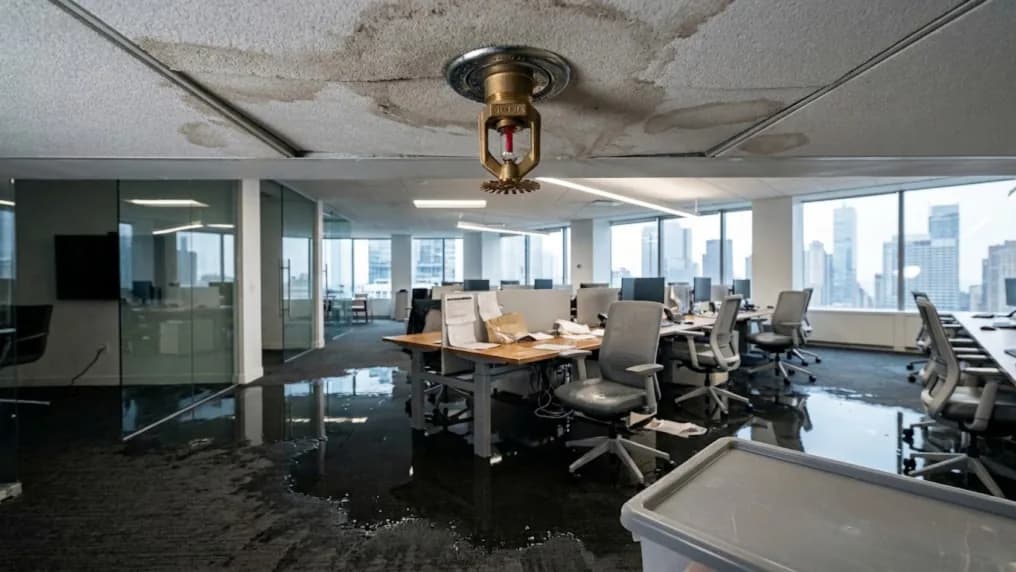
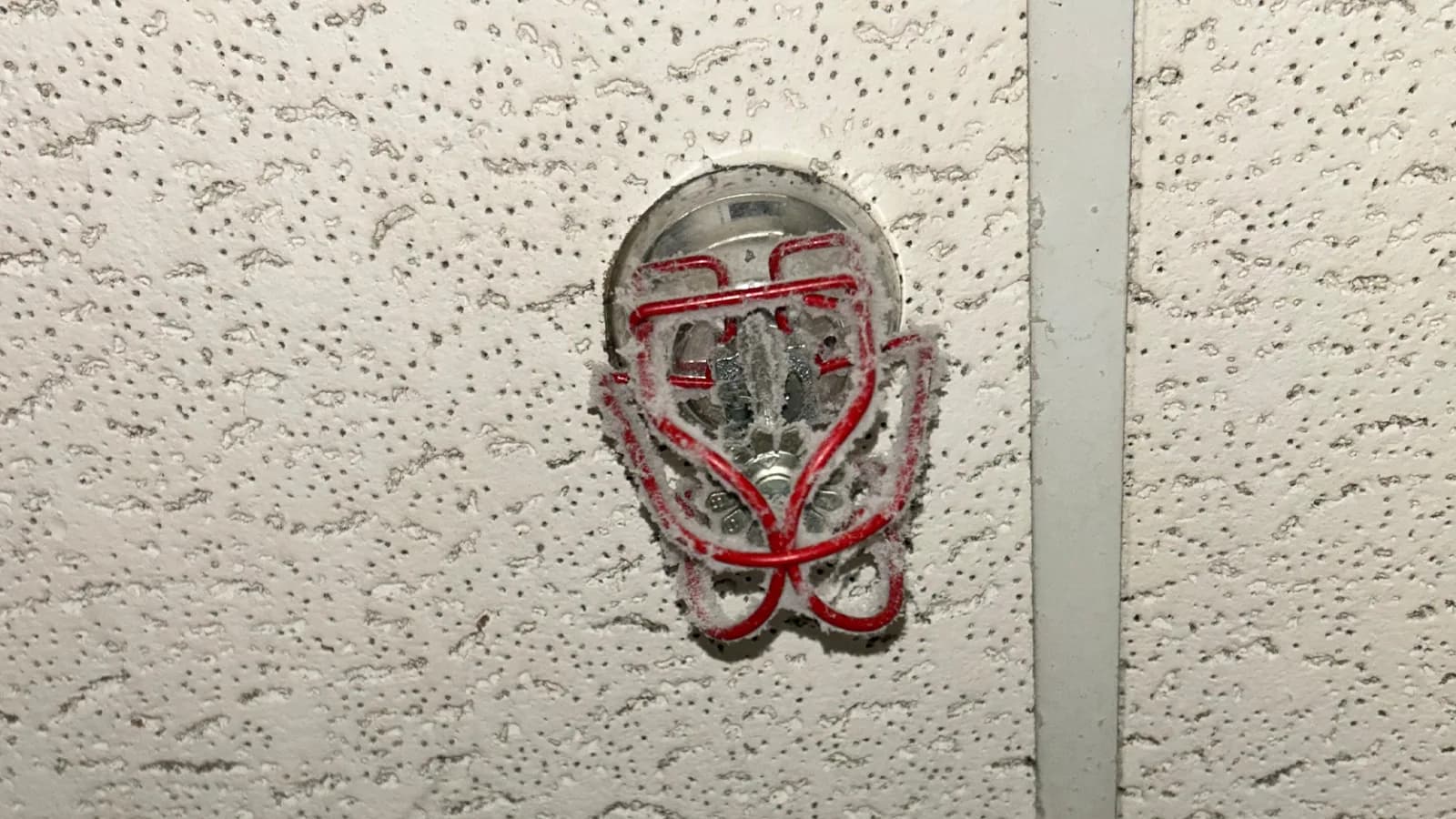
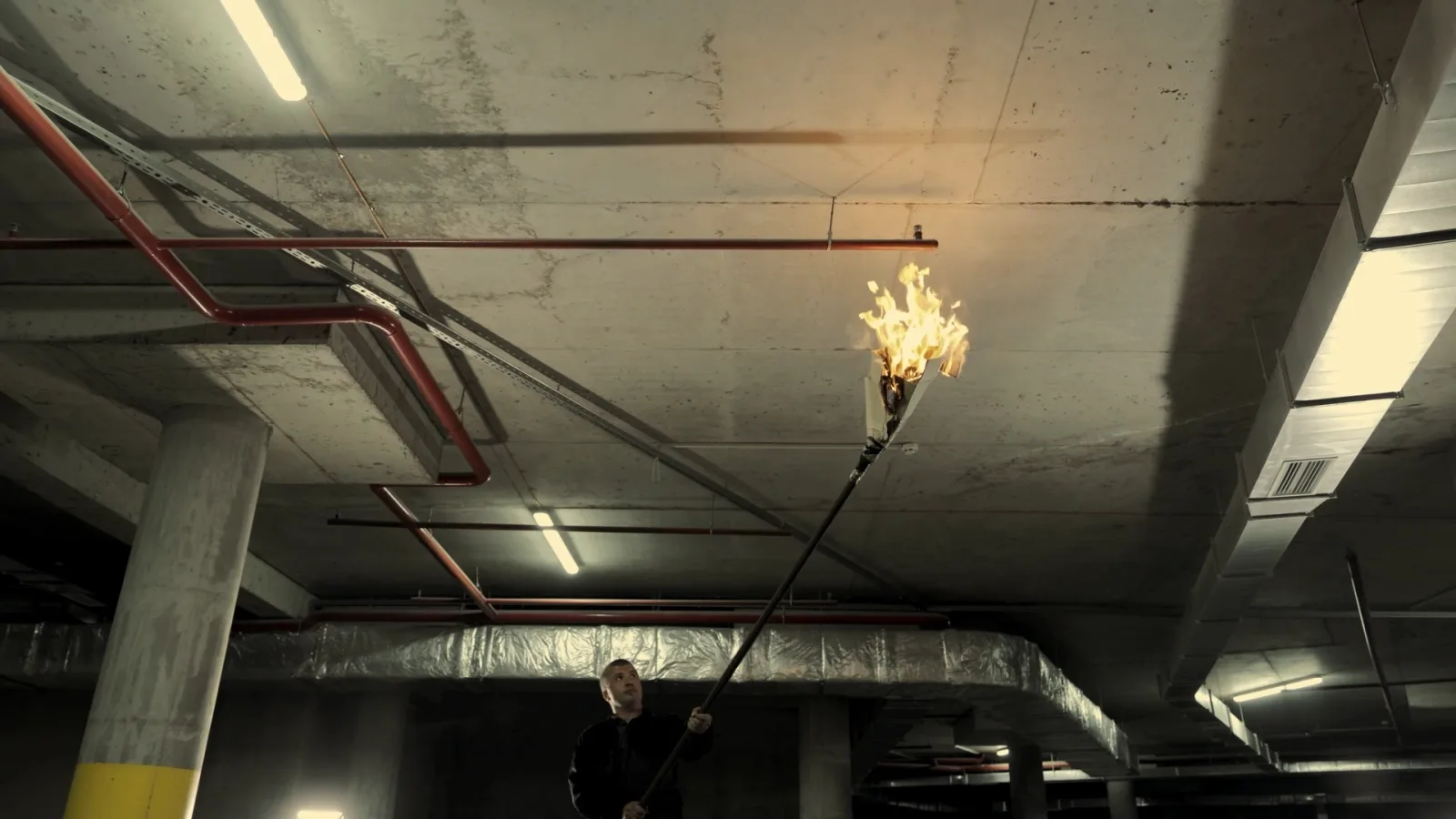
For most reliably heated areas in a New York City building, a wet-pipe sprinkler system is the simpler and faster choice. Dry-pipe protection is generally used where sprinkler piping may be exposed to freezing temperatures, such as an unheated garage, loading dock, canopy, or cold-storage area. Many NYC properties need both types in different sections of the same building.
The correct answer does not come from choosing the system that sounds more advanced. It comes from matching the design to the temperatures, occupancy, layout, water supply, maintenance capacity, and applicable code requirements for each protected area. A New York State registered design professional should make the final selection and document it in the approved design.
How Each System Works, and Why the Sequence Matters
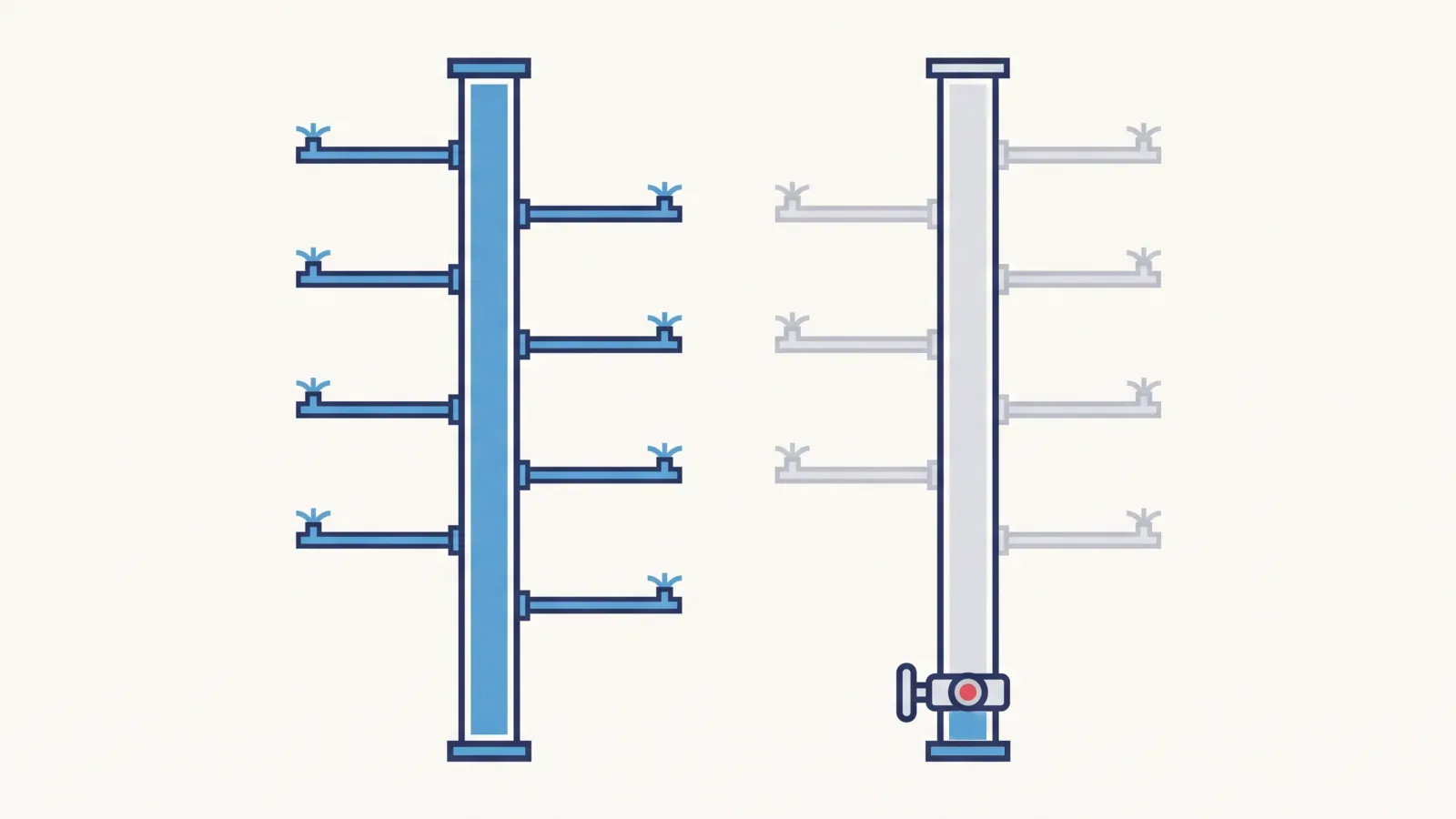
A wet-pipe system keeps water inside the sprinkler piping. When heat operates an individual sprinkler, water can discharge through that sprinkler without first filling the piping. The system is mechanically straightforward, which is one reason wet-pipe protection is normally preferred where the building can keep the piping safely above freezing.
A dry-pipe system keeps pressurized air or nitrogen in the sprinkler piping, with the water held behind a dry-pipe valve. When a sprinkler operates, pressure in the piping falls, the valve opens, and water travels through the pipe to the operated sprinkler. The system is not water-free: water remains on the supply side of the valve, and water can remain trapped in portions of the piping after testing or operation.
That extra sequence is the whole difference. With a wet-pipe system, water is already at the sprinkler when it operates. With a dry-pipe system, the air or nitrogen pressure must fall, the dry valve must trip, and water must travel through the piping before discharge begins. This does not make a properly designed dry system inadequate. It means system volume, pipe arrangement, air pressure, water supply, valve operation, and delivery performance must be addressed in design and acceptance testing.
The practical lesson for an owner is simple: a dry-pipe system should be installed because the environment requires it, not as a general upgrade from wet pipe. Where freezing is not a concern, adding an extra valve sequence and air supply usually creates obligations without creating a corresponding benefit.
Start With the Freezing Exposure, Not the Building Label
The most important question is not whether the property is an office, apartment building, warehouse, or hotel. It is whether every section containing sprinkler piping is reliably protected from freezing.
Heated offices, residential corridors, retail floors, schools, healthcare areas, and other occupied interiors commonly use wet-pipe protection. An attached garage, exterior loading area, unheated penthouse, canopy, or space near frequently open overhead doors may face a different temperature condition even when the rest of the building stays warm.
That is why one property may have a wet-pipe system throughout its occupied floors and a separate dry-pipe zone for an exposed area. Mixed systems are common because buildings do not have one temperature or one use throughout. A multifamily building may have wet-pipe protection in apartments and corridors, with a dry zone in the parking garage. A warehouse may use wet pipe in conditioned areas and dry pipe at loading docks. A commercial property may retain wet protection through tenant floors while an exterior canopy requires a different approach.
Designing by zone avoids adding dry-system complexity where it is not needed while protecting vulnerable piping where freezing is a genuine risk. Dry pipe is not the automatic answer every time cold weather is mentioned. Insulation, listed heat tracing, enclosure changes, or permanent heat may be part of an approved solution. The design professional must evaluate what is permitted and dependable for the space.
The drawings should identify which valve controls each zone, how each area is supplied, where low-point drains are located, and which supervisory signals report from the dry system. Building staff should be able to connect valve-room labels to the areas they control. If existing drawings no longer match the building, start with field verification before planning a renovation. County Fire's sprinkler inspection and testing service can establish current conditions; design decisions belong in the subsequent project scope.
What a Dry System Adds to Your Operating Obligations
A wet-pipe system still needs proper inspection, testing, and maintenance. Control valves must remain correctly positioned, gauges and alarm devices have to function, waterflow tests must be completed when required, and piping conditions cannot be ignored.
A dry-pipe system adds equipment and conditions that ownership must manage. Depending on the design, these can include:
- The dry-pipe valve and its trim
- An air compressor or nitrogen supply
- High- and low-air-pressure supervision
- Low-point drains for removing accumulated water
- Valve trip and water-delivery testing
- Additional attention after any operation or test that introduces water into the piping
New York City applies NFPA 13 with local modifications through Building Code Appendix Q. Those modifications include high- and low-air-pressure alarm and supervisory requirements for dry-pipe systems. The NYC Department of Buildings also identifies dry-pipe valve testing among the tests that may be required during sprinkler work and inspection.
Calling the system "dry" can also create a false sense that there is never water in its piping. Condensation can form, and testing or an actual operation can introduce water that does not completely drain if the pipe pitch, auxiliary drains, or maintenance practices are inadequate. Residual water can freeze in an exposed section, damage piping, or contribute to internal corrosion. That makes drainage and investigation of recurring air loss, pinhole leaks, or slow valve performance important ownership issues rather than minor service observations.
The NFPA's cold-weather guidance emphasizes preparing dry systems before freezing weather and removing water from low points. For an existing system, maintenance records should show that low-point drains are being addressed and that deficiencies found during testing are corrected rather than repeatedly reset. The exact inspection and testing schedule should be determined from the system, the code edition applicable to the property, the approved documents, and the authority's requirements. A generic interval copied from another building is not a reliable maintenance plan.
If your building already has unexplained air-pressure loss, recurring compressor operation, trapped water, or visible corrosion, the next step is a system assessment, not simply increasing the compressor setting. County Fire's sprinkler maintenance and repair service addresses the underlying piping, valve, drainage, and corrosion conditions.
Compare Lifecycle Cost, Not Only Installation Price
A dry-pipe proposal will commonly include components and labor that a comparable wet-pipe zone does not need: the dry valve assembly, air or nitrogen equipment, supervisory devices, auxiliary drainage, and the controls and electrical work supporting them. The pipe layout may also require additional coordination so water can be drained after testing or operation.
The ownership cost continues after installation. Dry systems can require more specialized testing, compressor or nitrogen-system upkeep, cold-weather drainage, and investigation of air loss and internal corrosion. A cheaper layout can become expensive if it creates inaccessible low points or a system the maintenance team cannot manage consistently.
The alternative also has a cost. Keeping an exposed area suitable for wet-pipe protection may require dependable heat, insulation, enclosure work, or listed heat tracing. Those measures consume energy and still need inspection. The correct comparison is therefore not "wet is cheaper" or "dry is safer." It is the full installed and operating cost of protecting each area reliably over the life of the building.
Questions to Answer Before Choosing a System
Before approving a wet-pipe or dry-pipe design, ask:
- Which protected areas are reliably heated during nights, weekends, vacancies, and power or equipment failures?
- Which piping is exposed to outdoor air, open loading doors, garages, roof structures, or other freezing conditions?
- Does the existing piping have adequate pitch and accessible low-point drains?
- Is there a documented history of freeze damage, trapped water, air loss, corrosion, or false supervisory signals?
- Can building staff support the added drainage and maintenance responsibilities of a dry system?
- Will the project alter occupancy, tenant layout, hazard classification, or the available water supply?
- Do the existing drawings and valve labels accurately represent the installed system?
These answers give the registered design professional the information needed to evaluate the system type, hydraulic demand, zoning, filing requirements, and installation sequence. Our fire sprinkler design and installation service covers that work from field survey and hydraulic design through filing, installation, testing, and closeout.
Frequently Asked Questions (FAQ)
Is a dry-pipe sprinkler system safer than a wet-pipe system?
No. Neither arrangement is inherently safer, and dry pipe is not an upgrade from wet pipe. A dry-pipe system exists to solve a temperature problem. Installing one where freezing is not a risk adds an extra valve sequence, air supply, and drainage obligations without a corresponding safety gain.
Does a dry-pipe sprinkler system contain no water?
No. Pressurized air or nitrogen occupies the sprinkler piping, but water is held behind the dry-pipe valve. Water can also remain trapped in sections of piping after testing or operation, which is why pipe pitch and low-point drainage matter.
Does a dry-pipe system take longer to discharge water?
It has an additional operating sequence. Air pressure must fall, the dry-pipe valve must open, and water must travel to the operated sprinkler. A compliant design accounts for that sequence through system sizing, hydraulic calculations, equipment selection, and acceptance testing.
Can one building have wet-pipe and dry-pipe sprinkler systems?
Yes. A building can use wet-pipe protection in heated occupied areas and a separate dry-pipe zone in an unheated garage, loading dock, canopy, or another area exposed to freezing.
Is a dry-pipe sprinkler system more expensive to maintain?
It commonly has more equipment and maintenance points than a comparable wet-pipe system, including the dry valve, air or nitrogen supply, supervisory devices, and low-point drains. Actual cost depends on system size, layout, condition, access, and testing requirements.
What air pressure supervision does NYC require on a dry-pipe system?
New York City modifies NFPA 13 through Building Code Appendix Q, which requires that high and low air pressure in the system be monitored so that either condition sends a supervisory signal. That signal must trigger an audible notification and, where the system is otherwise required to report, reach a supervising station. The specific devices and wiring for your building belong in the approved design.
County Fire Inc. designs, installs, inspects, and maintains fire sprinkler systems across all five NYC boroughs. If you are planning a new installation, retrofit, or a change to an exposed area, call (888) 470-3473 and start with a field survey and a documented system recommendation rather than a generic rule. Our fire sprinkler design and installation team can scope the work from survey through closeout.