FDNY Violation Codes Explained: What the Categories Mean and How to Clear Them
Search for an FDNY violation code and you will find confident, contradictory answers. One page tells you a code means a missing inspection log, another attaches it to a system that failed to activate, and neither quite matches the document in your hand.
The codes are real. Most of the meanings attached to them online are not, and the gap between the two is the difference between correcting the right thing and paying to correct the wrong one.
What an FDNY Violation Code Actually Refers To
The FDNY consolidates Fire Code provisions into numbered violation categories for enforcement purposes. In the department's own rules they are written out in full — "Violation Category" followed by a number and a subject. Violation Category 1 covers portable fire extinguishers and fire hoses. Violation Category 12 covers fire protection systems. Violation Category 16 covers ventilation. The list continues across the rest of the Fire Code's subject matter.
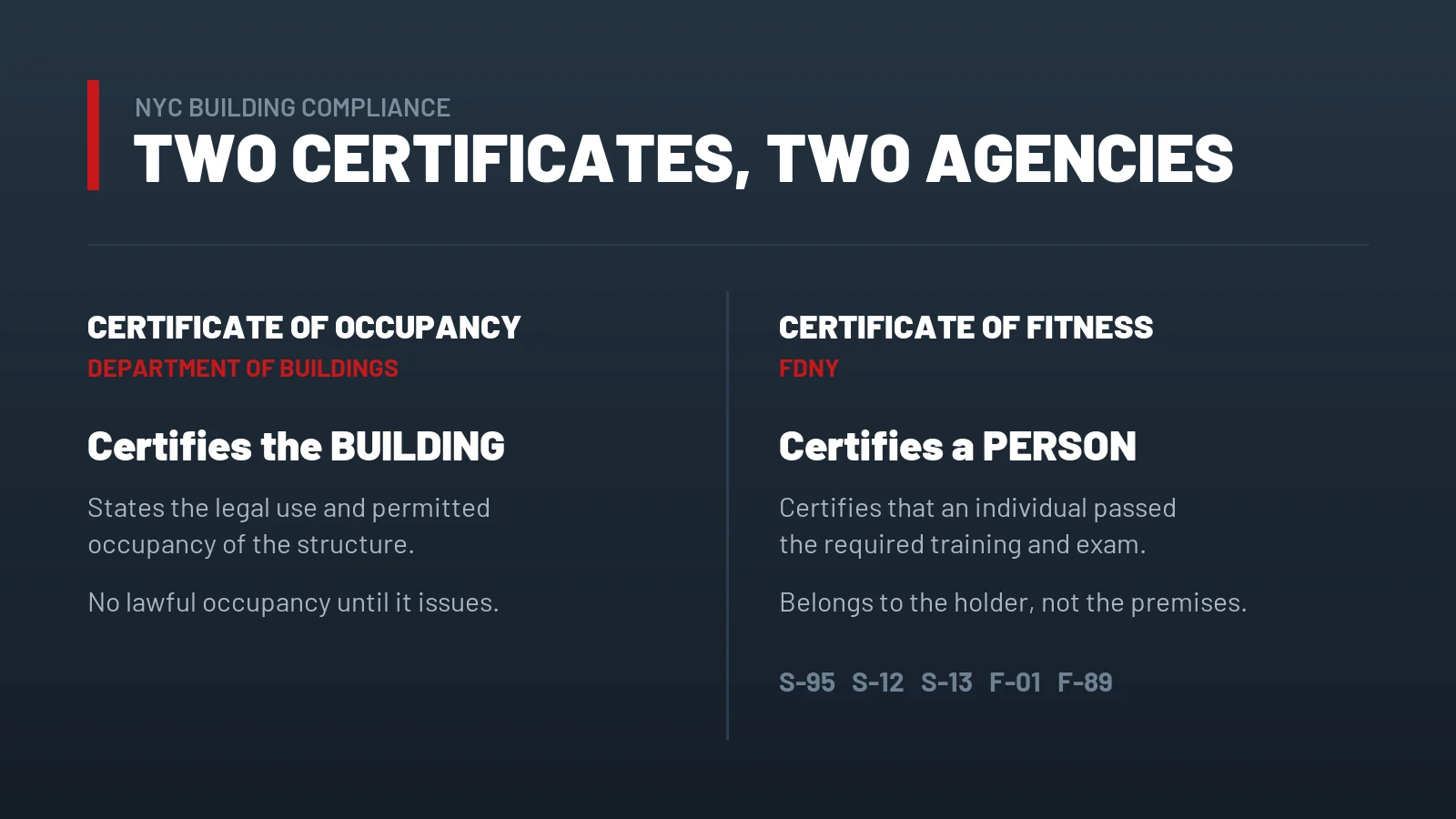
Two things follow from this. The first is that a category is a grouping of code sections by subject, not a description of a specific failure. It tells you which part of the building is implicated, not what you did wrong. The second is that the actual requirement lives in the Fire Code section cited alongside the category. That section is the text that defines what was expected of you, and it is the text worth reading before spending anything.
The shorthand form is real. The department's penalty schedule writes these as VC 1, VC 12, VC 13 and so on, pairing each with an OATH code such as BF01 or BF12 and the penalty attached to a first and subsequent offence. So if you have seen a code written that way, you were not misled about the format.
What circulates online are the wrong meanings. Several widely-copied summaries attach fire alarm failures to those numbers — a missing inspection log, a system that failed to activate, a skipped annual test. The official schedule does not agree. VC 13 is Flame-Resistant Materials. VC 21 is Portable Containers. VC 22 is Stationary Tanks. Not one of the three concerns fire alarm testing, and a building owner who reads one of those summaries and books an alarm inspection has spent money on the wrong system entirely.
Work from the citation printed on your own document. Where a code list and your paperwork disagree, the paperwork governs.
The Categories Commercial Buildings Meet Most
Most findings against NYC commercial properties cluster in a few categories.
VC 1, Portable Fire Extinguishers and Fire Hoses, accounts for a large share, largely because the requirement is continuous rather than annual. Extinguishers must be present, mounted, accessible, and tagged, and the tag is what an inspector verifies in seconds.
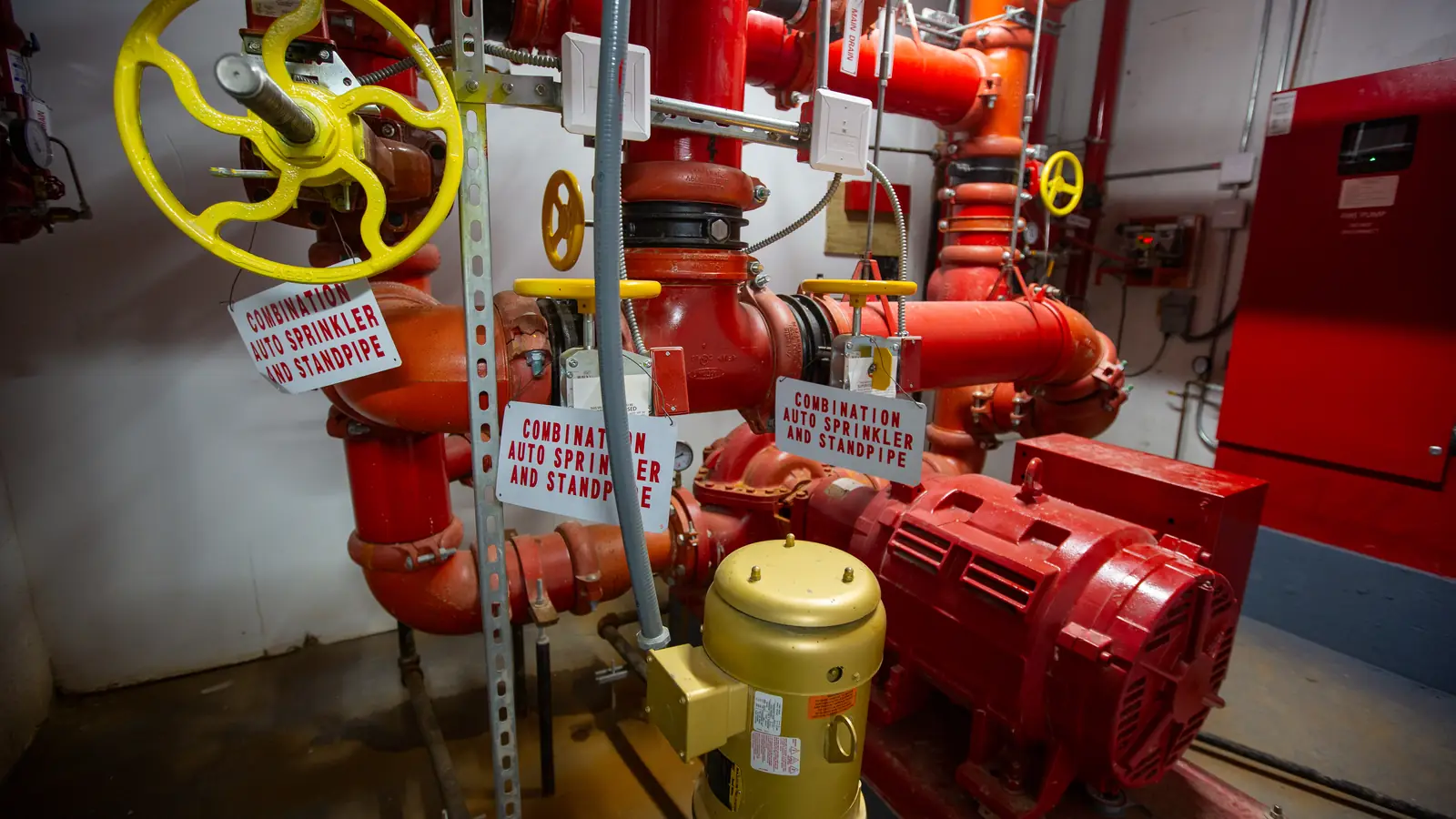
VC 12, Fire Protection Systems, covers the built-in equipment — alarm, sprinkler, standpipe, and related components. Findings here usually concern testing intervals, records, or an impairment that was never reported or corrected. This is the category most often at issue when a building's alarm or sprinkler system is cited, and the one the misleading code lists most often point away from.
VC 5, Recordkeeping, is the quiet one. It does not require anything to be broken. It requires that you can produce what the code says you should have kept.
VC 9, Rooftop Access and Means of Egress, and VC 16, Ventilation, round out the common set — the latter mattering most in buildings with commercial kitchens, where hood and duct condition is inspected alongside the suppression equipment over the cooking line.
Knowing the category tells you who to call. It does not tell you what to do, because two buildings cited under the same category can require completely different work depending on the section referenced and the condition observed.
The Document Matters as Much as the Code
A category number means little until you know what kind of document delivered it.
A Violation Order contains a freeform description of the condition, the required remedy, and an explicit correction period. It has no Environmental Control Board hearing attached and therefore no initial financial penalty. These are typically issued for conditions treated as an immediate hazard, so the absence of a fine indicates urgency rather than leniency.
A Notice of Violation instead uses standard violating-condition checkboxes and is adjudicated at a hearing, where monetary penalties are possible and where you have a forum to contest a finding you believe is mistaken.
The same underlying condition can arrive either way, and your response differs accordingly. We cover the anatomy of these documents in more detail in how to read your FDNY inspection report.
How a Finding Actually Gets Cleared
Clearing is a separate step from repairing, and the distinction accounts for most of the escalation we see.
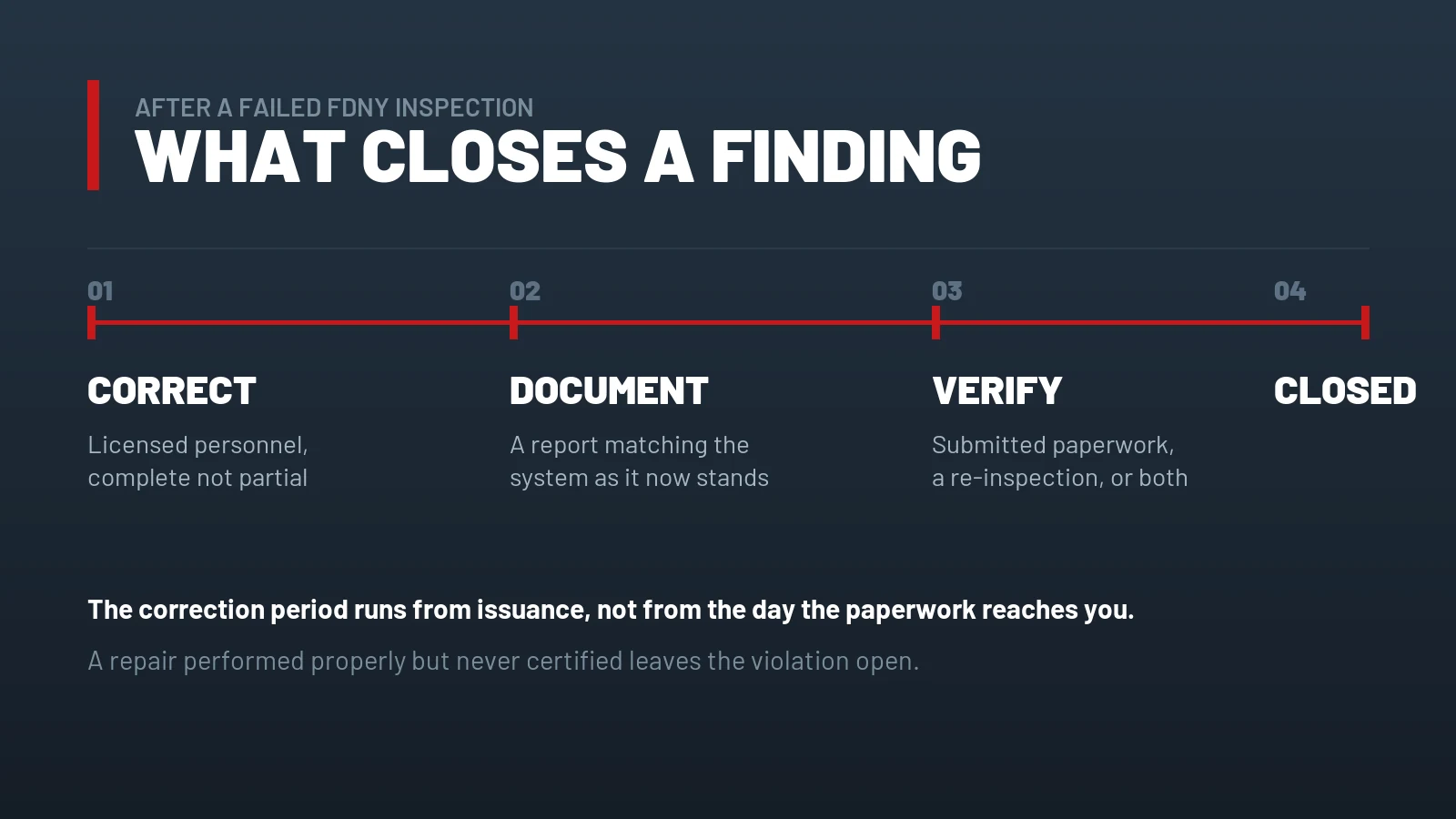
The correction generally has to be performed by appropriately licensed personnel, documented in a form the department accepts, and verified — through submitted paperwork, a re-inspection, or both. Until that verification is complete the finding remains open against the property regardless of the condition of the equipment.
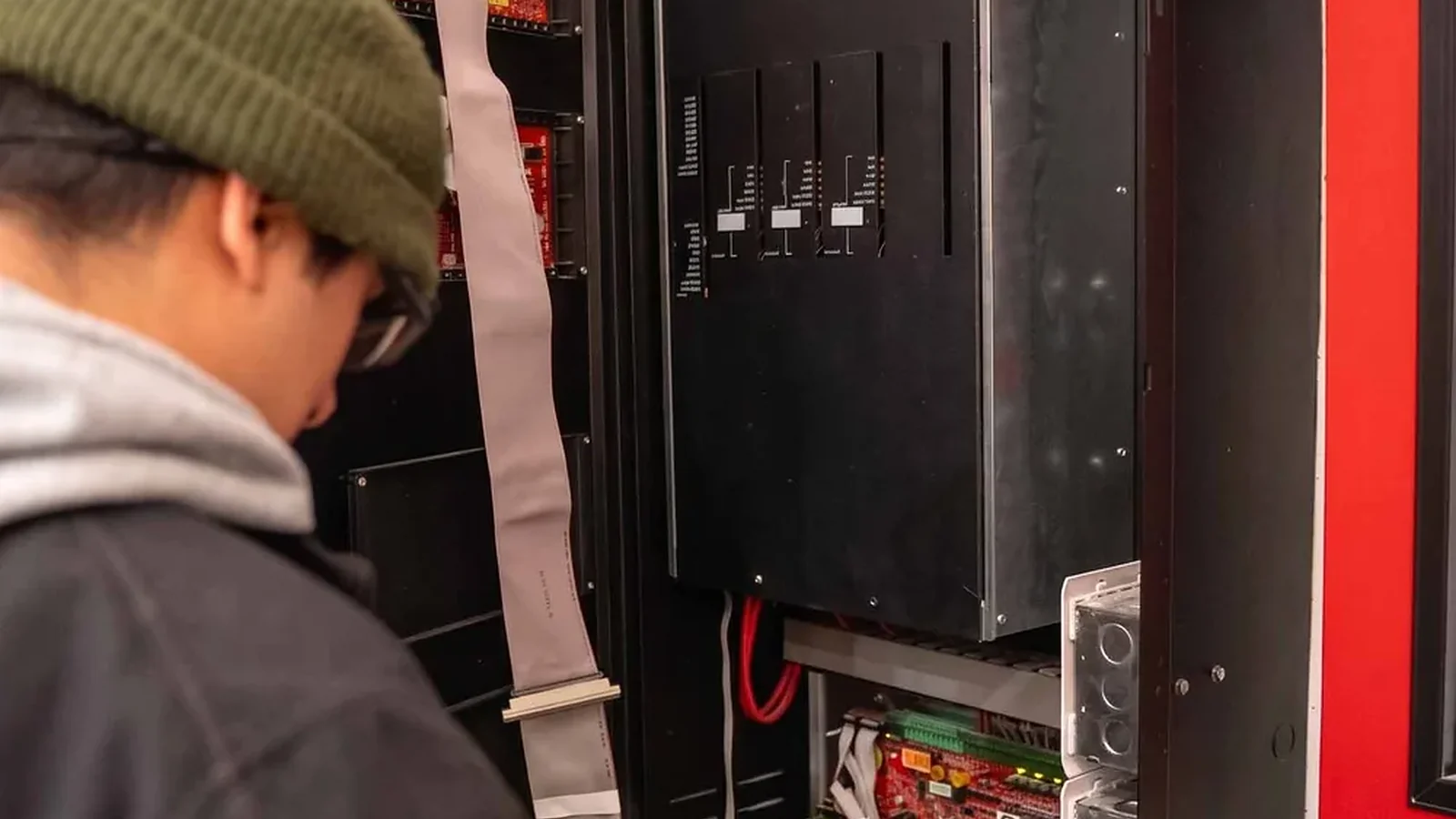
Which route you take depends on the system cited. Findings against detection and notification equipment run through fire alarm violation removal. Findings against suppression piping, valves, or heads run through sprinkler violation removal. Tagging, mounting, and servicing findings run through extinguisher violation removal.
In each case the deliverable is the same in kind: the physical correction plus the record that proves it, produced by someone licensed to produce it.
Why the Deadline Is the Part to Protect
Correction periods are stated on the document and run from issuance, not from the day the paperwork reaches whoever handles compliance. In a building where mail passes through a managing agent, that difference alone consumes a meaningful share of the window.
Missing the deadline rarely results in the original finding simply persisting. It generally means escalation, a re-inspection, and a compliance history that is visible during financing, sale, and insurance renewal long after the underlying condition was resolved. Our FDNY compliance resources cover what to keep on file and how to shorten the path from finding to clearance.
Frequently Asked Questions (FAQ)
Why do online lists of FDNY violation codes disagree with each other?
The code format itself is genuine — the department's penalty schedule uses it, alongside an OATH code for each category. The disagreement is over what each number covers. Several widely-copied summaries assign fire alarm failures to VC 13, VC 21, and VC 22, which the official schedule lists as Flame-Resistant Materials, Portable Containers, and Stationary Tanks. Check any code list against the citation on your own document before acting on it.
Does the violation category tell me what I did wrong?
Not by itself. The category groups Fire Code sections by subject, so it identifies which part of the building is implicated. The specific section cited alongside it defines the actual requirement, and that section is what determines the scope of the correction you owe.
Can I clear an FDNY violation myself?
The physical condition can sometimes be corrected in-house, but clearing generally requires documentation produced by appropriately licensed personnel and, in many cases, verification by the department. A repair completed correctly but never certified leaves the finding open, which is the most common reason a resolved problem still shows against a property.
County Fire Inc. has worked FDNY findings for NYC building owners since 2015, across alarm, sprinkler, and extinguisher systems in all five boroughs. If you are holding a violation and the citation does not match anything you have read online, call (888) 470-3473 or start with our FDNY compliance overview.