The inspector has left and you are holding a document that decides what happens next. Read it correctly and most of what it asks for is manageable. Read it loosely, miss what it actually requires, and a correctable finding turns into a penalty and a second visit.
The difficulty is that the paperwork is written in the department's vocabulary rather than yours. Here is how to work through it in the order that matters.
Start With What Kind of Document You Are Holding
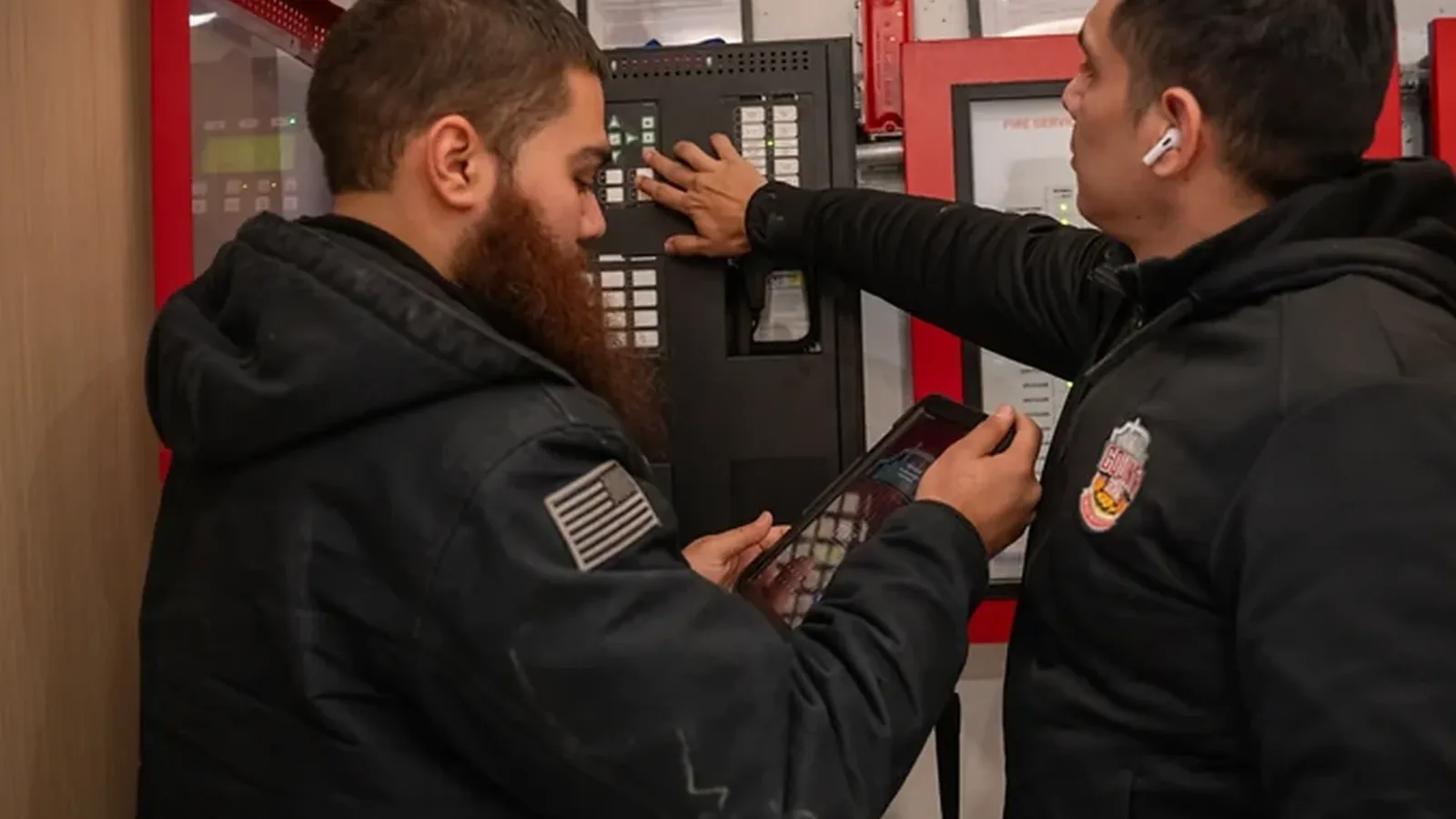
Before anything else, identify the document. The FDNY issues several, and they behave differently.
A Violation Order carries a freeform description of the condition, the remedy required, and an explicit correction period. There is no Environmental Control Board hearing attached to it, which also means there is no initial financial penalty. Violation Orders are typically issued for conditions treated as an immediate hazard, so the absence of a fine is not a signal that the matter is minor — it is a signal that the department expects the condition fixed rather than argued.
A Notice of Violation works differently. Instead of a freeform description it uses standard violating-condition checkboxes, and it is adjudicated at a hearing. That path carries the possibility of monetary penalties, and it gives you a forum to contest the finding if you believe it is wrong.
That distinction sets everything downstream: whether your next move is to schedule a repair or to prepare for a hearing, whether you are working against a stated correction period, and what proof you will eventually need to produce. Confirm which document you have before you make a single phone call.
Find the Violation Category and the Cited Code Section
FDNY rules consolidate Fire Code provisions into numbered violation categories for enforcement purposes. They are written as "Violation Category" plus a number and a subject — Violation Category 1 covers portable fire extinguishers and fire hoses, Violation Category 12 covers fire protection systems, Violation Category 16 covers ventilation, and so on through the rest of the list.
Two things are worth understanding about this structure. First, the category tells you which part of your building is implicated, which is usually enough to know who needs to be called. Second, the category is a grouping, not the requirement itself. The specific Fire Code section cited alongside it is what actually defines what you were supposed to do.
Read that section rather than working from the summary line on the form. Summary text is compressed for the document and frequently omits the qualifier that determines whether the requirement applies to your occupancy at all. Owners regularly spend money correcting something adjacent to what was cited because they never read past the short description.
Treat the Remedy and the Correction Period as One Instruction
The remedy states what must be done. The correction period states by when. Neither means much without the other, and the deadline generally runs from issuance rather than from the day the document reaches whoever handles compliance for the building — which is often not the same day.
If the remedy is ambiguous, the issuing District Office is the correct place to resolve it, and the question is worth asking early. An expensive pattern is to guess at scope, complete work in good faith, and discover at re-inspection that the department wanted something narrower or broader. Clarify first, then commit the labor.
It also matters that whatever you do is documented as you do it. Work that cannot be evidenced later is, for compliance purposes, work that did not happen.
Understand What Actually Closes the Finding
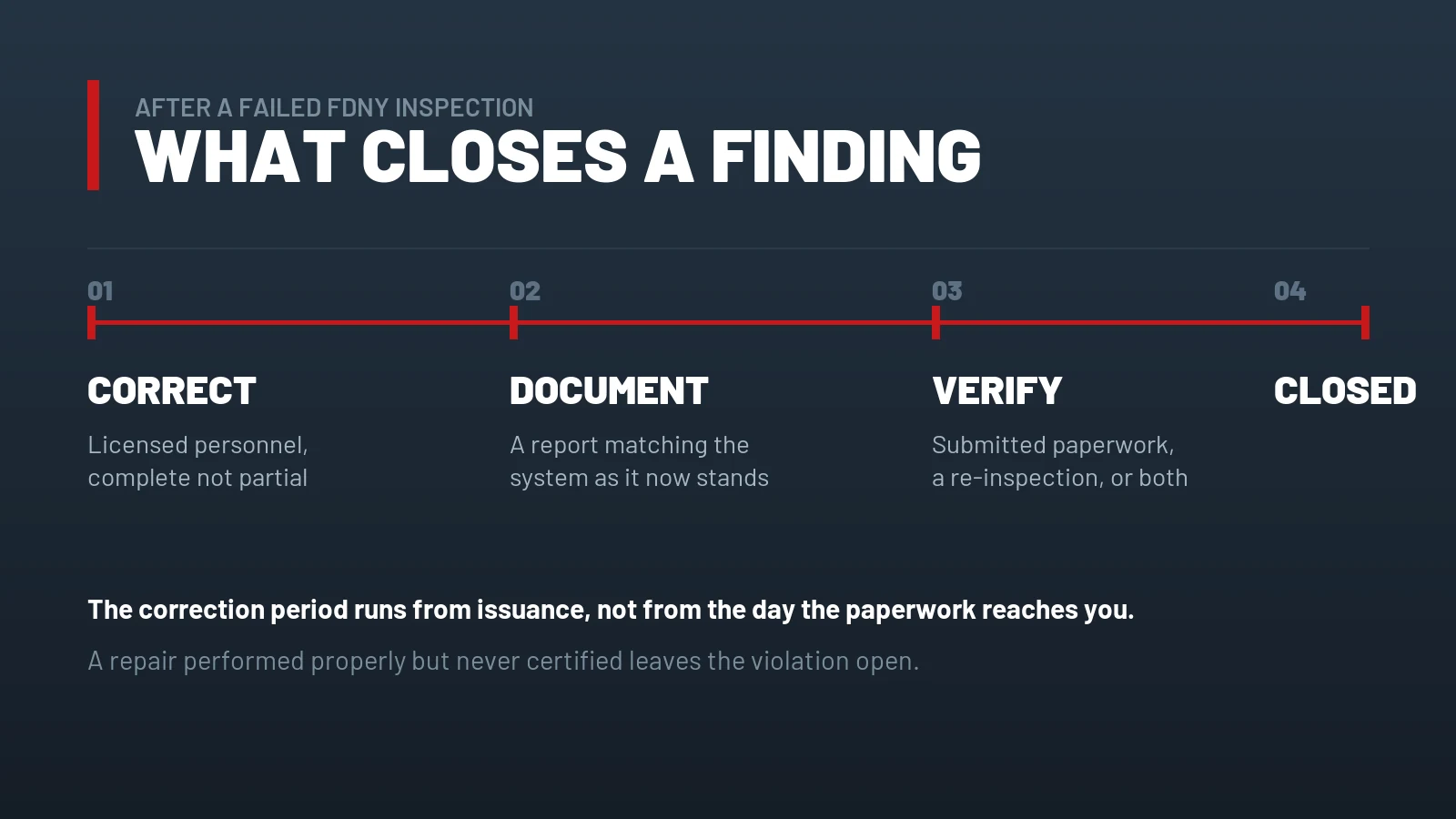
Correcting the condition and clearing the violation are two separate events, and the gap between them is where most avoidable escalation lives.
Clearing generally requires that the correction be performed by appropriately licensed personnel, documented in a form the department accepts, and in many cases verified — by submitted paperwork, by re-inspection, or both. Until that verification lands, the finding stays open against the property no matter how thoroughly the underlying problem was solved.
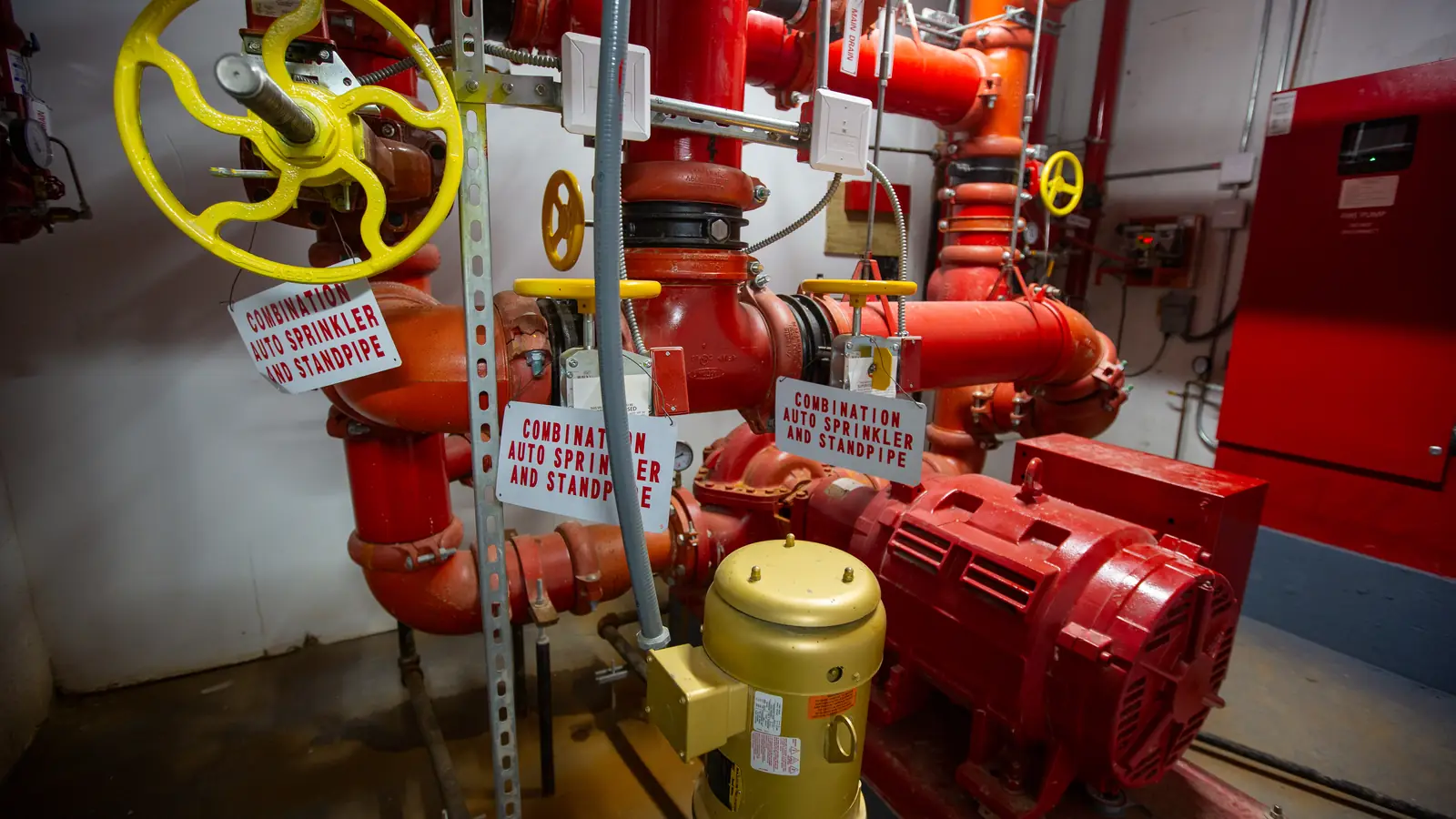
This is also where the right contractor matters. A licensed fire protection contractor performing the repair produces the report that demonstrates compliance as a matter of routine. Whoever was already on site may fix the physical problem perfectly well and leave you without the documentation that actually closes it. Depending on the system cited, that path runs through fire alarm violation removal, sprinkler violation removal, or extinguisher violation removal.
Where Owners Most Often Lose Time
Three patterns account for most missed deadlines. Records that exist but cannot be located quickly, because they live with a former vendor or in an inbox nobody still monitors. Repairs completed without the certification the department expects, which restarts the clock rather than stopping it. And deadlines calculated from the wrong date.
None of these are technical problems. They are administrative ones, and they are the reason a building with working systems can still accumulate open violations. Our FDNY compliance resources walk through what to keep and where.
Frequently Asked Questions (FAQ)
What is the difference between a Notice of Violation and a Violation Order?
A Violation Order carries a freeform description of the condition, the required remedy, and a correction period, and has no hearing or initial financial penalty attached. A Notice of Violation uses standard violating-condition checkboxes and is adjudicated at a hearing, where monetary penalties are possible. Confirm which you are holding before deciding whether to schedule repairs or prepare a response.
How long do I have to correct an FDNY violation?
The correction period is stated on the document itself and varies with the severity of the condition. Anything treated as an immediate hazard carries the shortest window. The clock generally runs from issuance rather than from when the document reaches the person responsible for compliance, so confirm the date on the form rather than assuming.
Does correcting the condition automatically clear the violation?
No. The correction has to be documented and, in many cases, verified through submitted paperwork or a re-inspection before the finding is closed. A repair performed correctly but never certified leaves the violation open against the property, which is why the documentation matters as much as the work.
County Fire Inc. has been resolving FDNY findings for NYC building owners since 2015, and the documentation that closes a violation is part of the job rather than an afterthought. The corrections behind that paperwork run across our full range of fire protection services. If you are holding a report and are not certain what it requires, call (888) 470-3473 or start with our FDNY compliance overview.