Managing NYC Fire Code Compliance Across a Real Estate Portfolio
One building is a set of inspection dates. Twenty buildings are a system. Each address carries its own duties, records and exposure.
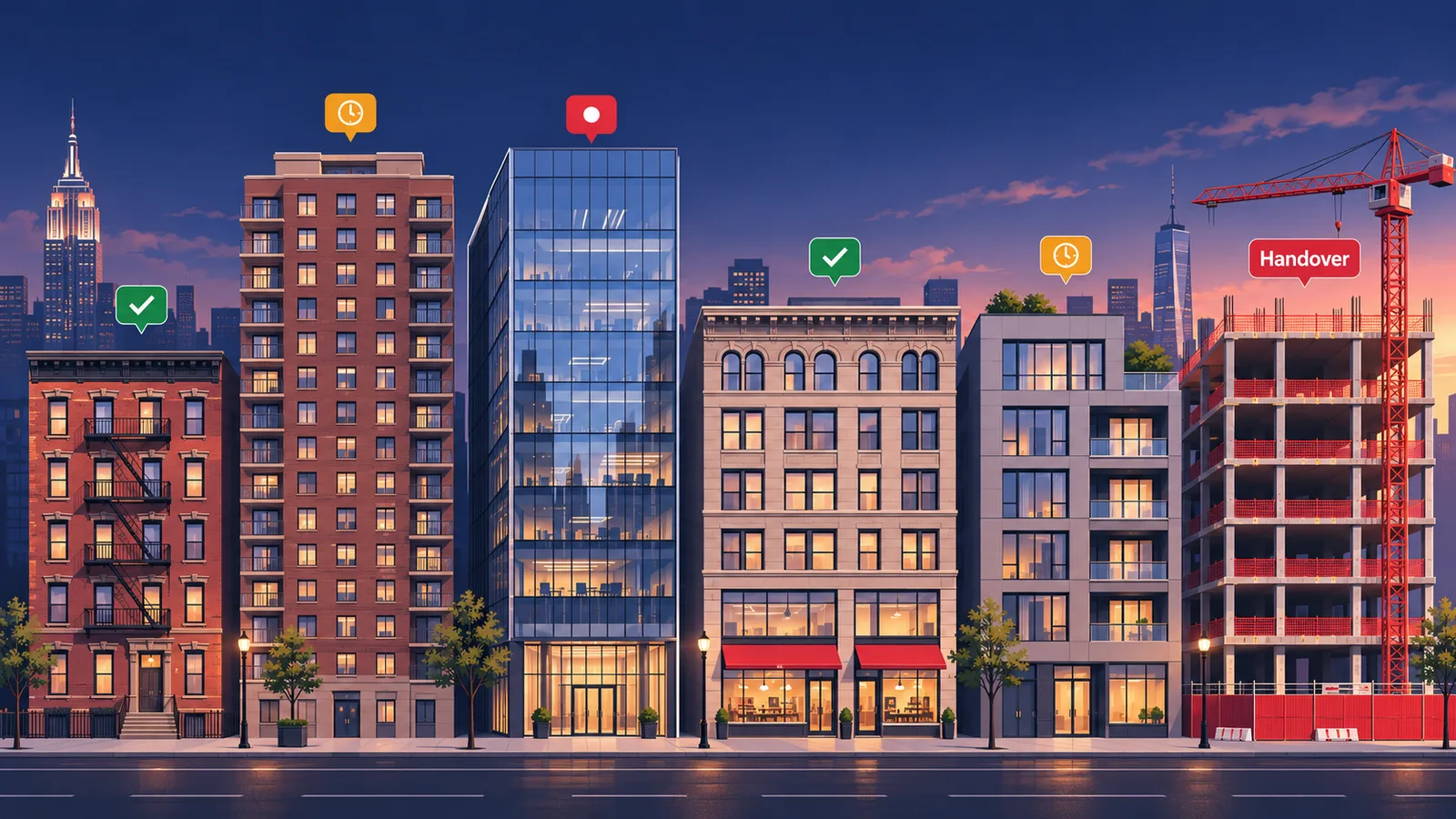
Real estate companies that stay ahead of NYC fire code compliance do four things well. They know what is installed in every building. They name one person for each duty. They keep records they can produce on demand. They check every address for violations on a schedule.
Who this is for: owners, asset managers, property managers, developers and general contractors with more than one NYC building. Download the 2027 register · Request a portfolio compliance review
Responsibility Does Not Stop at the Managing Agent
The NYC Fire Code is direct about who answers for a building. FC 107.5 makes the owner "responsible at all times for the safe maintenance of a building," including correcting violations. FC 202 defines owner broadly. It covers any lessee, agent or other person "directly or indirectly in control of real property," including a designated managing agent.
So the owner, the asset manager and the management company can all carry the duty at once. Name who owns each obligation at each building, in writing. A vendor can do the work, but the duty stays with you.
Two codes split the job. The Building Code decides whether a building needs a system. The Fire Code governs how you maintain, test and document it (BC 901.1, FC 901.1).
Build a Register for Every Building
Start with one register for every address. A spreadsheet works. Fill each field from documents, not memory.
| What to record | Why it matters |
|---|---|
| Occupancy type and height | Sets which duties apply |
| Systems: alarm, sprinkler, standpipe, extinguishers, emergency lighting, ARCS/BDA, kitchen suppression | Each has its own standard |
| Vendor and contract end date per system | Shows gaps and renewals |
| Last inspection and test dates | Shows what is overdue |
| Central station and account number | Needed before any test or shutdown |
| Certificate of Fitness holders on staff | Some duties need a certified person |
| Open violations and compliance dates | The deadlines that cost money |
| Where records are kept | You must produce them on request |
2027 Edition · Excel workbook
Download the NYC Portfolio Fire Compliance Register for 2027
Track every building's tests, notices, records and violations in one workbook, with a live dashboard that flags what is overdue.
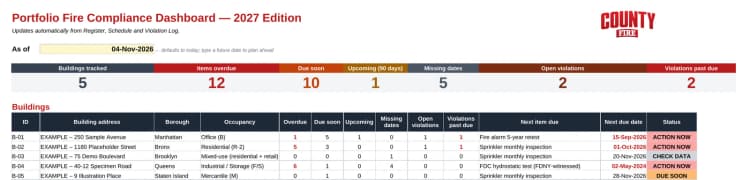
- Dashboard that rates every building: Action now, Due soon, Check data, On track
- 19 NYC tests and notices per building, with code citations
- Violation log for FDNY, DOB, HPD and OATH items
Reference tool only. Not legal advice. Sent to your work email.
Walk each building for egress too. Keep exits, stairs and egress paths free of obstructions at all times (FC 1027.3).
Apartment buildings
Apartment buildings need a fire and emergency preparedness guide, plus a notice posted in each unit (FC 406.2.1). Send the full guide to residents at least once every three calendar years. Send an annual bulletin during Fire Prevention Week in October. Keep proof of each distribution (3 RCNY 401-06).
HPD duties apply too. Provide and install approved smoke and carbon monoxide detecting devices in each unit, and replace them at the end of their useful life (HMC §27-2045, Local Law 157 of 2016). Keep self-closing doors in good repair. HPD treats a defective one as an immediately hazardous violation with 14 days to correct (Local Law 63 of 2022).
Office buildings
Larger office buildings need a fire safety and emergency action plan, run by a Fire and Life Safety Director with the F-89 Certificate of Fitness. This covers high-rise or large-area office buildings with more than 500 occupants, or more than 100 above or below street level. It also covers buildings that previously needed a fire safety director (FC 404.2.1). Office buildings 100 feet or more in height also carry the sprinkler duty in our Local Law 26 guide.
Recurring Tests by System
FC Table 901.6.1 assigns NFPA 72 to fire alarms, NFPA 25 to sprinklers and standpipes, and NFPA 10 to extinguishers. NYC adds these intervals:
| System | Routine interval | Multi-year test | Source |
|---|---|---|---|
| Fire alarm | NFPA 72 schedules; smoke detectors cleaned every 6 months, tested yearly | Full retest every 5 years from acceptance | FC 907.20.2, 907.20.5.1; 3 RCNY 907-01 |
| Sprinkler | Monthly visual inspection by certified staff; other tests per NFPA 25 | Fire department connection (FDC) hydrostatic test every 5 years, FDNY-witnessed; dry pipe valve trip test every 5 years | FC 903.5, 903.6, 912.6 |
| Standpipe | NFPA 25 schedules | Hydrostatic and flow test at least every 5 years, FDNY-witnessed | FC 905.12, 905.12.1 |
| Emergency lighting | 30-second test monthly; 90-minute battery test yearly | None set in FC 1027.9 | FC 1027.9 |
| Portable extinguishers | Monthly inspection; annual servicing by an approved company | Hydrostatic test per NFPA 10 | FC 906.2.1 |
| ARCS/BDA | Daily console check; annual inspection and test | Recertification every 5 years | 3 RCNY 510-01 |
| Kitchen suppression | Semiannual inspection | Retest every 5 years | FC 904.5.2, 904.5.3 |
Sources: Fire Code Chapter 9 and the FDNY rules. NFPA 72 and NFPA 25 set the device-level intervals, so have your contractor list them in the service agreement. Your contractor books FDNY-witnessed sprinkler and standpipe tests with the FDNY Inspection Request form. See our guides to sprinkler head replacement and ARCS/BDA compliance.
Put Every Date on One Calendar
Put every recurring duty on one calendar: the tests above, guide and bulletin dates, Certificate of Fitness renewals, central station contracts and summons compliance dates. Two habits help:
- Schedule by building, not by vendor, so a manager sees everything due at one address.
- Group work where systems overlap, such as alarm and sprinkler inspections.
County Fire generally coordinates sprinkler and fire alarm inspections together, helping building managers streamline scheduling and address the shared components where these systems interact. What each visit tests is still set by NFPA 25, NFPA 72, and the agreed service scope.
Choosing one vendor or several is a separate decision, covered in our vendor guide.
Keep Records You Can Produce in Minutes
Keep inspection, testing and servicing records on the premises or another approved location for at least three years. Make them available to any FDNY representative (FC 107.7). The code, the rules or a referenced standard can set a different period.
The usual failure is missing paper, not missing work. Have every vendor send reports to a location you control, filed by address and date. Keep the last two residential guides and bulletins there too, with proof of distribution (3 RCNY 401-06). Our FDNY inspection checklist covers what to have ready.
What each record must show
- Fire alarm. An Alarm Log Book stays at the main fire alarm control panel. It is bound, written in ink, and covers one calendar year. It logs who is on duty, each time the system goes off line and is restored, and each alarm with its location, detector type and probable cause. A separate log tracks smoke detector maintenance (3 RCNY 907-01).
- Sprinkler and standpipe. Note every defect on the inspection report. Keep a detailed record of each monthly inspection (FC 901.6.2.1, 903.5).
- Emergency lighting. The code sets the tests but no field list. As best practice, record the date, test length, result and tester.
Recordkeeping is its own summons category in the FDNY penalty schedule (3 RCNY 109-03). Missing records can cost you even when the work was done.
Some records need longer than three years. Keep residential sprinkler flow test reports for at least 5 years (FC 903.5.1) and ARCS logbooks for 6 years (3 RCNY 510-01). Central stations keep their own logs for 6 years (3 RCNY 901-01). As best practice, keep acceptance reports and as-built drawings for the life of the system.
Check Every Address for Violations on a Schedule
A summons left with a superintendent can pass its compliance date unnoticed. Check every address on a fixed schedule:
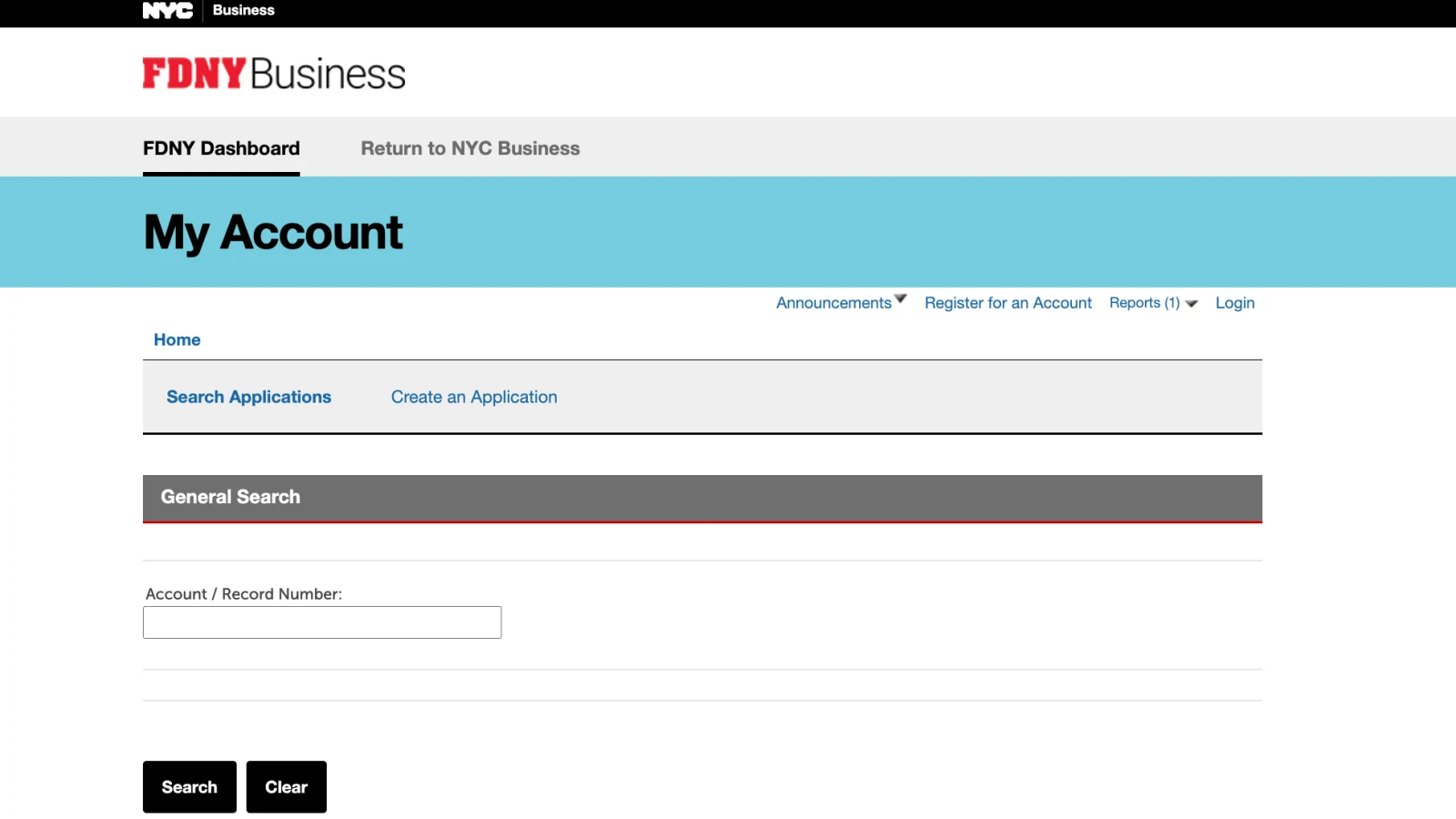
- FDNY Business for Certificates of Correction and reinspection requests
- OATH Summons Finder for FDNY summonses and hearing dates
- DOB BIS and DOB NOW for Buildings Department violations
- HPD Online for Housing Maintenance Code violations
- NYC Open Data for the FDNY violations dataset, which you can filter by address in bulk
The violation type decides how you close it. Clear a summons by filing a Certificate of Correction through FDNY Business by the compliance date. Clear a violation order with a reinspection request (FDNY violations page). See our guide to looking up FDNY violations and our FDNY compliance page.
Use One Impairment Procedure for Every Building
When a sprinkler, standpipe or fire alarm system goes out of service, run the same written procedure everywhere (FC 901.7):
- Name an impairment coordinator for each building. If you name no one, the owner is the coordinator (FC 901.7.1).
- Notify before shutting down. Tell the central station and insurance carrier. Tell occupants if a sprinkler or alarm system will be out for more than 30 minutes (FC 901.7.3).
- Tell the FDNY when (FC 901.7.5):
- a standpipe is out of service for any period
- a sprinkler or alarm system is out on more than one floor
- a sprinkler system is not restored within 8 hours
- a fire alarm is out 8 hours or more in a 24-hour period
- Keep a fire watch, or evacuate. Trained staff may cover the first 4 hours in areas of 50,000 square feet or less. After that, patrols need F-01 fire guards (FC 901.7.2).
Notify the FDNY when central station monitoring stops or the provider changes (FC 907.15.1). Our fire alarm monitoring page explains that connection.
Adding a New Building to the Portfolio
For developers and general contractors, compliance starts before the first tenant moves in. No one may occupy a building until its required alarm, sprinkler, standpipe and suppression systems are tested and approved (FC 901.5.1). Where the code requires it, acceptance tests take place before an FDNY representative (FC 901.5).
The DOB certificate of occupancy worksheet asks for the FDNY Letter of Approval for fire suppression and fire alarm work. FDNY's 2020 fire alarm approval guidance puts the full process at twenty to twenty-four weeks. The central station connection must be active before that inspection is scheduled. Plan fire alarm and sprinkler work around that lead time.
At handover, collect:
- As-built drawings and equipment specifications, kept on site at an approved location (FC 907.19)
- The NFPA 72 record of completion from the installing contractor (FC 907.18)
- Acceptance test reports and the FDNY Letters of Approval
- The central station account, registered with the FDNY before it receives signals (3 RCNY 901-01)
- The acceptance date, which starts the 5-year fire alarm retest clock (FC 907.20.5.1)
Add the building to your register on the day you take it over, not after its first inspection.
Frequently Asked Questions (FAQ)
Is the property manager or the building owner responsible for FDNY compliance?
Both can be, because FC 202 defines owner to include agents and anyone in control of the property. Agree in writing who handles each duty, but plan as though the FDNY can hold either party to it.
How often do NYC apartment buildings have to distribute the fire safety guide?
Send the full guide at least once every three calendar years, and to new tenants at lease signing. Send an annual bulletin during Fire Prevention Week, and keep proof of each distribution (3 RCNY 401-06).
What is the fastest way to check FDNY violations across many buildings?
Filter the FDNY violations dataset on NYC Open Data by your list of addresses. Then confirm each item in OATH Summons Finder and FDNY Business before you act.
Who needs a Fire and Life Safety Director?
Larger high-rise and large-area office buildings, including those that previously needed a fire safety director (FC 404.2.1). The director holds the F-89 Certificate of Fitness, since the older F-58 has not been valid since 2020.
Do we need a fire guard every time a sprinkler system is shut down?
You need a fire watch or an evacuation whenever a sprinkler, standpipe or fire alarm system is out of service (FC 901.7.2). After the first 4 hours, F-01 fire guards must keep the watch.
What fire protection records does the FDNY expect on site?
At least three years of inspection, test and servicing records (FC 107.7). That includes the Alarm Log Book at the fire alarm panel and the sprinkler inspection reports.
What happens to fire compliance when a new building is handed over?
Maintenance, testing and records become the owner's job from acceptance. Collect the as-built drawings, record of completion, FDNY Letters of Approval and central station details, and add the building to your register that day.
County Fire works with owners, managers and builders across Manhattan, Brooklyn, Queens, the Bronx and Staten Island on alarm, sprinkler, extinguisher and ARCS/BDA service. Call (888) 470-3473 or request a portfolio compliance review.
FDNY-licensed contractor · NICET-certified technicians · All five NYC boroughs · (888) 470-3473