One Fire Protection Vendor or Several? A Guide for NYC Buildings
Most NYC buildings did not choose to have four fire protection vendors. It happened one contract at a time: an alarm company from the original fit-out, a sprinkler contractor the managing agent already used, an extinguisher service that came with the last tenant, and a radio system installer nobody has heard from since the sign-off.
Whether to move to a single vendor or keep multiple fire contractors is a fair question, and the honest answer is not always "use one company." The right choice depends on system coverage, credentials, coordination, records, accountability, and how well your current contractors perform.
The Owner's Responsibility Stays the Same
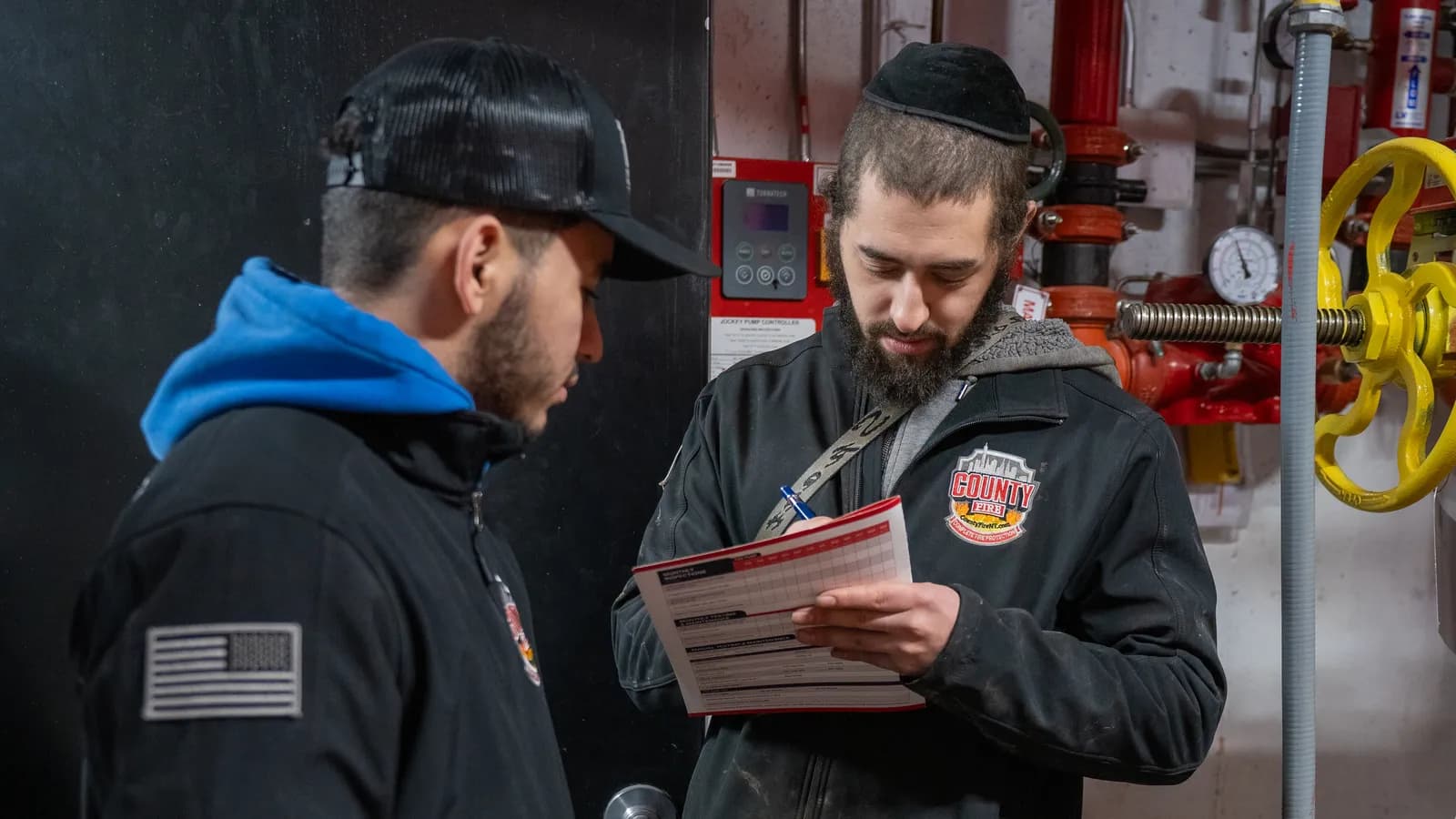
Hiring more vendors does not divide the obligation. The NYC Fire Code requires that fire protection systems "be maintained in good working order at all times" (FC 901.6), and that duty sits with the owner however many contractors touch the building. FC Table 901.6.1 then assigns each system its maintenance standard: NFPA 72 for fire alarm, NFPA 25 for sprinklers and standpipes, NFPA 10 for portable extinguishers, and NFPA 17A for wet chemical kitchen systems.
Records follow the same logic. FC 107.7 requires inspection, testing, and servicing records to be kept on the premises or another approved location for at least three years, unless the code, the rules, or a referenced standard specifies a different period. The records must be available to the FDNY, with copies provided on request.
When an inspector asks for the sprinkler, alarm, and extinguisher records, the owner has to produce all of them. With one vendor that is one request; with four, it is four offices and four filing habits. None of that makes multiple vendors wrong, but the coordination work falls to you.
Company Approvals, Personal Credentials, and Trade Licences
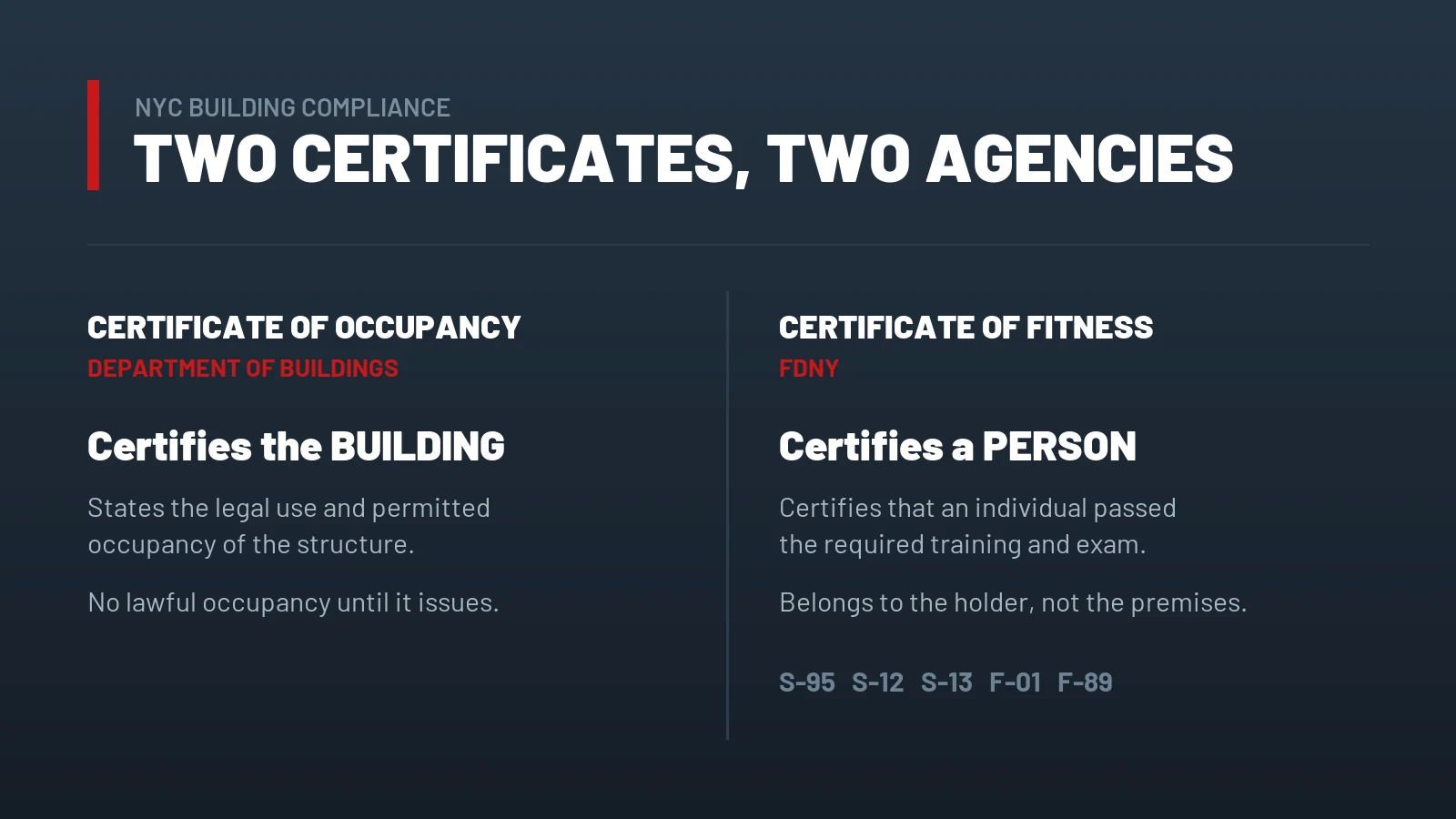
No single licence covers fire protection in New York. Each system has its own requirements, and they sit at three levels: approvals held by the company, Certificates of Fitness held by individual people, and trade licences required where the construction codes call for one (FC 901.6.3).
| System | Company level | Individual credential | Trade licence, where required |
|---|---|---|---|
| Fire alarm | FDNY company recognition under 3 RCNY 115-01, renewed yearly; at least one principal holds an S-97 | S-98 technician | Master electrician |
| Sprinkler and standpipe | None set in FC 901.6.3 | S-12 sprinkler, S-13 standpipe, S-14 multi-zone standpipe | Master Fire Suppression Piping Contractor |
| Portable extinguishers | Servicing company certificate, renewed annually (FC 901.6.3.1) | W-96 | None set in FC 901.6.3.1 |
| ARCS/BDA | ARC Systems Approved Company | B-03 for testing | Confirm with the installer |
| Kitchen hood suppression | S-17 technicians work for an S-71 holder's company | S-17 | Master Fire Suppression Piping Contractor (FC 904.5.2) |
A provider offering several of these services needs the appropriate company approvals, qualified personnel, and applicable trade licences for each one. When you evaluate any vendor, County Fire included, ask who will be on site, which credentials they hold, and under whose licence the work is done. Check that the company approval is current too: the FDNY's fire alarm company FAQ states that servicing must stop if the company certification expires, even when the individual certificates are still valid. Also confirm whether specialist work is performed directly or through a qualified subcontractor. Our Certificate of Fitness guide covers how these credentials work.
Where Coordination Matters Most
In a multi-vendor building, the risk worth planning for sits less in any one contractor's work than at the points where one contractor's scope ends and another's begins.
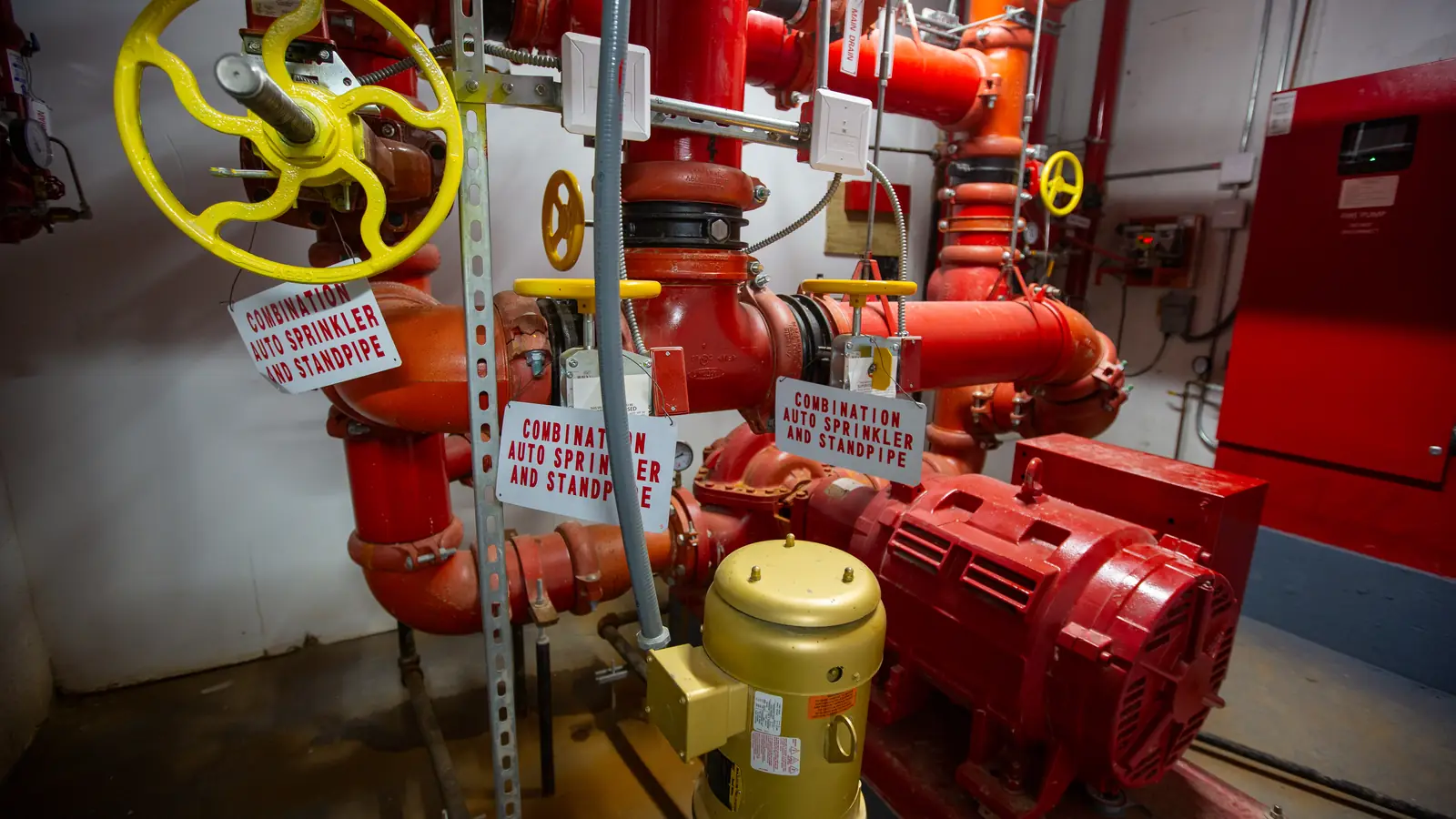
The clearest example is the sprinkler waterflow switch and the valve tamper switches. Physically, they sit on the sprinkler system. Electrically, they are initiating devices on the fire alarm panel, and in a monitored building their signals travel on to the central station. Confirming that a waterflow or supervisory condition produces the right signal at the panel involves both trades. When two vendors split that work, each may record its half without anyone confirming the connection between them. We explain how the two systems connect in fire sprinkler vs fire alarm.
County Fire generally coordinates sprinkler and fire alarm inspections together, helping building managers streamline scheduling and address the shared components where these systems interact. What each visit tests is set by NFPA 25, NFPA 72, and the agreed service scope for the building. That applies to our fire alarm inspection and testing and sprinkler inspection work alike.
The same seams appear elsewhere:
- Deficiency handoffs. A sprinkler inspection notes a supervisory trouble at the panel. If the report never reaches the alarm contractor, the item can carry forward to the next inspection.
- Impairments. Taking a sprinkler zone out of service changes what the alarm panel shows and what the central station receives. Every party affected needs to know before the valve is closed.
- Monitoring. If a third company holds the monitoring contract, it is one more party to notify before testing and to confirm signals with afterwards.
- Scheduling and access. Tests that need both trades need both calendars and, often, two rounds of access arrangements.
NFPA 4 is a national standard that addresses integrated testing of interconnected fire protection and life safety systems. It does not appear among the maintenance standards in FC Table 901.6.1, so it is not an NYC maintenance requirement, and a combined inspection visit is not the same thing as an NFPA 4 integrated test. Its premise is still useful: someone has to own the connections.
Comparing the Two Operating Models
Neither model guarantees an outcome; these are tendencies to weigh:
| Decision factor | Single coordinated provider | Multiple specialist providers |
|---|---|---|
| Scheduling | Potentially fewer coordination points | Requires cross-vendor scheduling |
| Documentation | Potentially easier to consolidate | Requires centralised, owner-controlled records |
| System interfaces | Easier to coordinate where one provider covers both systems | Requires clearly assigned responsibilities |
| Accountability | One party answers for the coordinated scope | Each contract must define where its scope ends |
| Specialist expertise | Qualifications must be verified for each service | Can retain system-specific specialists |
| Vendor flexibility | Greater dependence on one provider | Flexibility across contractors |
When More Than One Contractor Is the Right Answer
Some buildings need a second vendor.
Specialised systems. Commercial kitchen hood suppression is its own discipline. FC 904.5.2 requires a licensed Master Fire Suppression Piping Contractor holding a Certificate of Fitness, or a Certificate of Fitness holder working under one, to inspect, test, and service these systems at least semiannually. County Fire's kitchen work covers the portable Class K extinguishers; the hood system belongs with a contractor holding the credentials that work requires.
A contractor who performs well. If your sprinkler contractor has kept clean records for years and answers the phone, replacing them for tidiness alone is a poor trade. Coordination can be fixed in the contracts.
Portfolio purchasing. Owners with many buildings sometimes split work by region or by system to keep pricing competitive. That can work, as long as each building still has one person who sees the whole picture.
New installations. A newly installed system may come with warranty terms that tie early service to the installer.
If you keep several vendors, make the seams explicit. Name who confirms the waterflow and tamper signals at the panel. Require deficiency reports to reach you and the other trade when an item crosses systems. Keep every record in one place you control, and schedule overlapping alarm and sprinkler work together.
How to Decide for Your Building
Start with an inventory:
- Every fire protection system installed, including standpipes, ARCS/BDA, and kitchen suppression
- The current vendor for each system, and its contract renewal date
- Last inspection and testing dates
- Each vendor's credentials and written service scope
- Outstanding deficiencies or open violations
- Monitoring arrangements and who holds that contract
- Who is responsible for testing the shared devices
- Where the inspection records are kept
Then look at your last two FDNY inspections or violation notices. If the deficiencies sit at the interfaces, such as a supervisory signal not reaching the station or records that could not be produced, coordination is the problem to solve, through consolidation or through clearer contracts. If they trace to one system and one contractor's work, the problem is that contractor's performance.
Finally, compare what a single provider would actually cover against your list. Our fire protection services span alarm, sprinkler, extinguisher, and ARCS/BDA work. A consolidated contract that still leaves the kitchen hood or monitoring with someone else is not a single vendor, but fewer vendors can still be the right outcome.
Frequently Asked Questions (FAQ)
Is it cheaper to use one fire protection company for everything?
It can be, but the line-item price is only part of the comparison. Potential savings come from fewer site visits, scheduling overlapping alarm and sprinkler work together, and less staff time spent chasing records and arranging access. Compare total annual cost and effort, not one quote against another.
Can one company legally do fire alarm, sprinkler, and extinguisher work in NYC?
Yes, if it has the company approvals, qualified personnel, and trade licences each service requires. For fire alarm, that means FDNY company recognition with S-97 and S-98 holders. For sprinklers, S-12 holders working under a Master Fire Suppression Piping Contractor where the work requires one. For extinguishers, a servicing company certificate and W-96 technicians.
Does a combined sprinkler and fire alarm inspection count as an integrated systems test?
Not automatically. A combined visit is a scheduling and coordination arrangement, and what it tests depends on NFPA 25, NFPA 72, and the agreed scope. NFPA 4 integrated testing is a separate standard that NYC's Fire Code does not list among its maintenance standards.
Who is responsible if a sprinkler waterflow switch fails to signal the alarm panel?
The owner is responsible to the FDNY for keeping both systems in working order. Between contractors, it depends on what each contract says, which is why confirming that signal should be assigned to one named party in writing.
Do I have to keep fire protection records if my contractor already has them?
Yes. FC 107.7 requires records to be kept on the premises or another approved location for at least three years, unless a different period applies, and made available to the FDNY. A contractor's files may not be reachable when an inspector arrives.
Should I switch vendors in the middle of a violation?
Clearing the open item first, or making its correction the new vendor's first task with the old records handed over, keeps the paperwork that closes the violation in one place. Changing contractors mid-correction can split it between two companies.
If you are weighing consolidation, County Fire can review your existing alarm, sprinkler, extinguisher, and ARCS/BDA service coverage across Manhattan, Brooklyn, Queens, the Bronx, and Staten Island, identify potential coordination gaps, and discuss which services may be consolidated. Call (888) 470-3473 or request a vendor coverage review.