The Hidden Fire Risks in Your Commercial Kitchen (And How to Stay Inspection-Ready)
Imagine it is 7:30 PM on a Friday night. Your dining room is fully booked, tickets are pouring into the kitchen, and your culinary team is operating at peak capacity. Amid the organized chaos of open flames, high-heat fryers, and sizzling cooktops, a subtle hazard is growing right above their heads. Within seconds, a sudden flare-up catches the microscopic grease particulates lining your exhaust hood.
The Core Problem with Deferred Fire Safety Maintenance
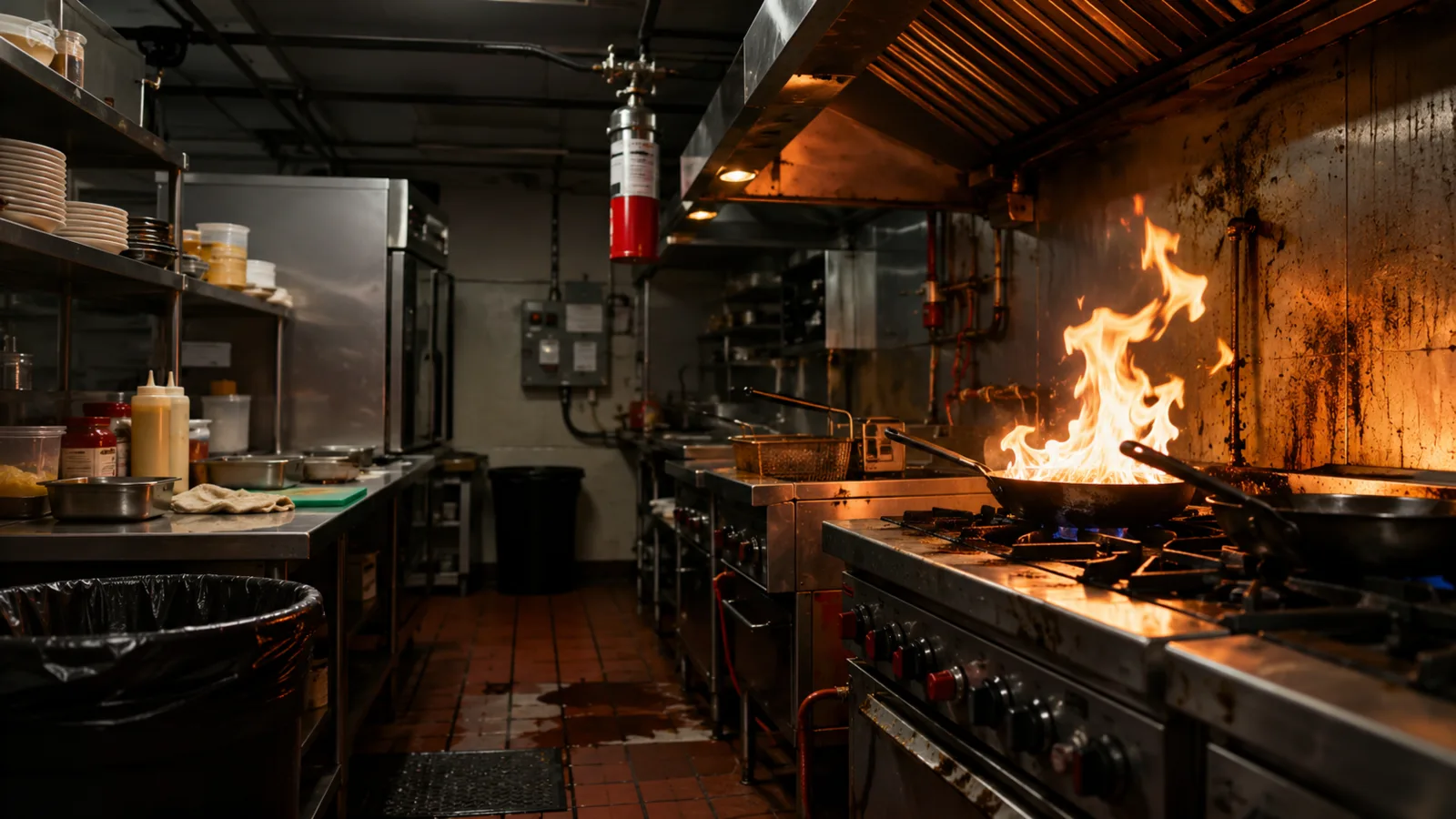
In a perfectly maintained kitchen, the fire suppression system activates instantly, extinguishing the Class K fire before the dining room even realizes what happened. But what if your system hesitates? What if a neglected fusible link fails to melt, or a blocked nozzle fails to disperse the chemical agent?
For restaurant operators and commercial property owners, the kitchen is the beating heart of your business—but it is also your greatest liability. Grease buildup, relentless heat, and open flames mean that small problems can escalate into catastrophic emergencies in a matter of seconds.
Many property owners don’t realize these critical warning signs until a failed inspection or sudden emergency exposes their vulnerability. Evaluating your system proactively is the first line of defense against operational disaster.
Why Commercial Kitchen Fire Systems Fail
Commercial kitchen fire suppression systems are complex marvels of engineering designed to tackle the most stubborn, aggressive fires—specifically those fueled by cooking oils and animal fats. However, their effectiveness is entirely dependent on meticulous, ongoing maintenance.
Technical failures rarely happen overnight; they are almost always the result of operational neglect. The primary culprit is vaporized grease. As grease travels up into the hood and ductwork, it coats every surface, including the sensitive mechanical components of your suppression system. Over time, this sticky residue can encase the fusible links—the heat-sensitive triggers designed to snap and release the extinguishing agent. When coated in hardened grease, these links become insulated from the heat, drastically delaying or entirely preventing system activation.
Furthermore, daily kitchen operations take a toll on equipment. High-pressure washdowns, accidental bumps from kitchen staff, and rigorous cleaning routines can inadvertently shift discharge nozzles, pointing the fire retardant away from the hazard zones.
If your fire suppression system hasn’t been professionally evaluated in the last six months, hidden mechanical deficiencies and grease accumulation may already exist within your cooking hood.
The Devastating Consequences of Ignoring Maintenance
A professional compliance inspection today can help prevent expensive emergency system failures, regulatory fines, and prolonged, brand-damaging closures later.
Warning Signs to Watch For
Protecting your restaurant requires vigilance. While comprehensive testing must be handled by certified professionals, your management team should be trained to identify visual red flags during daily operations.
Look out for these clear indicators that your kitchen fire suppression system is compromised:
- Excessive Grease Accumulation: If you can visibly see heavy, dripping grease on the exterior of the hood, the filters, or the suppression nozzles, your system is in danger.
- Outdated Service Tags: Check the inspection tag hanging from your system's manual pull station or chemical cylinder. If it has been more than six months since the last punch, you are currently operating outside FDNY fire code requirements.
- Clogged or Misaligned Nozzles: The discharge nozzles hovering over your fryers and cooktops should be capped with clean blow-off covers and aimed directly at the center of the cooking appliances.
- Compromised Pull Stations: The manual pull station should be easily accessible, clearly marked, and entirely free of grease, obstruction, or damage.
Noticing any of these red flags in your kitchen? A quick, low-friction professional evaluation can identify isolated issues before they trigger a full system breakdown or draw the ire of a fire inspector.
How County Fire Solves Complex Fire Risks
Kitchen suppression, extinguishers, and the alarm devices around them are covered together under our fire protection services, which is what keeps a cooking line inspection-ready.
Partnering with a dedicated fire protection specialist ensures that when the inspector arrives, your documentation and equipment are flawless, resulting in total peace of mind.
What an Inspector Checks in a Commercial Kitchen
An inspection of a commercial kitchen moves along the cooking line in a fairly predictable order, and knowing that order is most of what it takes to be ready for one.
The hood and duct system comes first. The inspector looks for grease on the filters, inside the hood plenum, and along any accessible duct run, then asks for the cleaning record showing when the last service happened and who carried it out. Filters need to be in place, seated correctly, and free of the gaps that let grease bypass them entirely.
The suppression system follows. Nozzles have to sit over the appliances they are rated to protect, with the correct caps fitted and no grease crust obscuring them. Because appliances get moved during renovations and equipment swaps, a system that was correct on the day it was installed is frequently wrong a year later. The inspector also checks the manual pull station for the system, whether it is reachable, and the date on its semiannual service tag.
Portable extinguishers are next: a Class K unit within the required travel distance of the cooking line, mounted, tagged, and unobstructed, alongside the general extinguishers covering the rest of the space.
Finally the inspector turns to paperwork — hood cleaning records, suppression service reports, extinguisher tags — and to the condition of egress out of the kitchen. Blocked exits and propped fire doors get cited routinely, because they are among the easiest things to see and the easiest to correct.
Nothing on that list is expensive by itself. What makes a kitchen inspection expensive is discovering all of it at once, on the day somebody is standing in your kitchen writing it down.
Protect your building before small issues become major emergencies.
County Fire helps commercial property owners stay compliant, protected, and inspection-ready.
Ready to secure your property?
- Call Us: (888) 470-3473
- Visit Us Online: countyfire.us
Schedule your comprehensive pre-inspection evaluation.
Frequently Asked Questions (FAQ)
How often does a commercial kitchen hood suppression system need service?
Hood suppression systems require semiannual inspection by a qualified contractor, with routine visual checks between those visits. Cooking volume drives grease accumulation, so a heavy-use kitchen often needs hood and duct cleaning considerably more often than the minimum interval suggests.
What class of fire extinguisher does a commercial kitchen need?
Class K extinguishers are required wherever cooking oils and fats are in use, because water and standard dry chemical agents can spread a grease fire rather than stop it. A Class K unit supplements the hood suppression system; it does not replace it, and both are expected to be present and serviced.
Why does grease buildup matter so much?
Grease is fuel, and it collects in hoods, filters, and duct runs where nobody sees it. That accumulation gives a small flare-up at the cooking line a continuous path to travel into the duct and through the building. Documented cleaning at the right intervals is what keeps that path closed.